
Extendable Farmhouse Table UK: How to Choose the Right Design
The best extendable farmhouse table is one that feels right even when nobody’s coming over. It’s easy to focus on how many people a table can seat at its largest, but its closed size matters every day. If you’re choosing an extendable farmhouse table UK homes can enjoy for years, start with the space it needs to fit and the way you use it.
Think about the room the table will occupy, the number of people who usually dine there and the extra seating you want for family meals or gatherings. Get that balance wrong and a generous table can feel awkward. Get it right and it becomes a natural centrepiece for everyday life. This guide covers how to plan the table’s dimensions in both positions, compare practical extension details and choose farmhouse features that suit your room. The Table Guy is a family-run business established in 2014, handcrafting farmhouse tables and table extensions to order in a UK workshop. A clear plan helps shape a made-to-order table around your home.
Table of Contents
Plan an Extendable Farmhouse Table Around Your Everyday Room
A table that works for a full house can feel oversized on an ordinary Tuesday. Start with the room as you use it most, then work out how much space you can make for guests. This room-first approach helps you choose an extendable farmhouse table uk homes can use comfortably every day, while still allowing for larger gatherings.
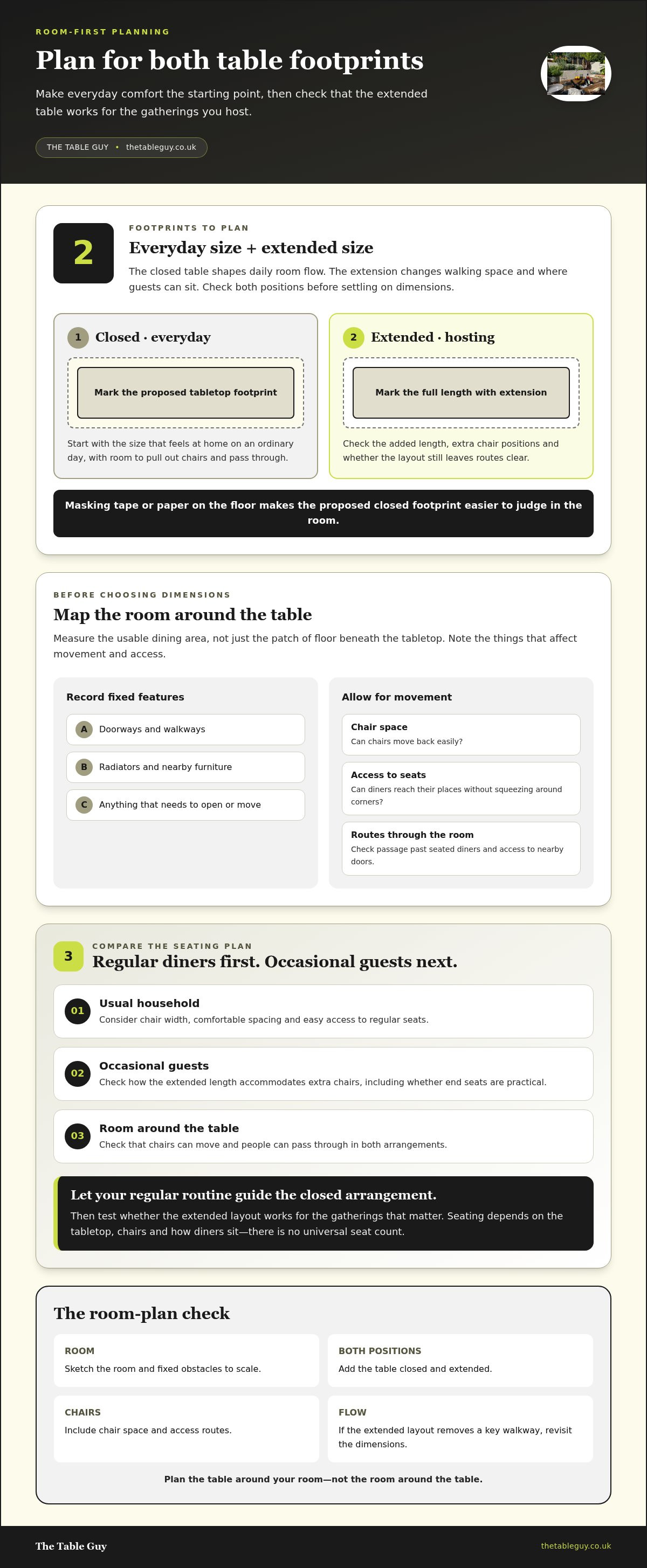
Measure the dining area, not just the patch of floor where you picture the tabletop. Note doorways, walkways, radiators and nearby furniture, including anything that needs to open or move. The table should feel at home when closed, with enough room to pull out chairs and pass through without squeezing around corners.
For a broader look at extension planning, explore our extendable dining table guide. The base and shape matter too. If you’re considering a trestle, this overview of trestle table design explains its traditional form.
Measure the table footprint before deciding on seating
First, record the usable floor space and mark fixed obstacles on a simple plan. Then use masking tape or paper to mark the proposed closed tabletop footprint on the floor. This makes it easier to judge the table’s scale in the room than measurements on a page alone.
Allow space for chairs to move back and for people to reach their seats. Check the main routes through the room as well. A table may fit between the walls but still make it awkward to pass a seated diner or open a nearby door.
Compare closed and extended table dimensions
Plan for two footprints: the table as it sits every day, and its full length with the extension in place. The added length changes the available walking space and where guests can sit. Check whether chairs at the ends or along the sides would block a route or conflict with nearby furniture.
A scaled sketch makes the comparison clearer. Draw the room and fixed obstacles to scale, then add the table in both positions, including chair space and access routes. If the extended layout only works by removing a key walkway, revisit the dimensions before settling on a design. This helps you plan a table around your room rather than asking the room to work around it.
Match Farmhouse Table Seating to How You Host
Think first about who sits at your table on an ordinary day, then consider the occasions that genuinely call for extra places. An extendable farmhouse table uk households choose should make regular meals comfortable and provide added capacity for gatherings they actually host. There’s no universal seat count. Usable space depends on the tabletop’s dimensions, the chairs and how diners sit.
How many people should an extendable farmhouse table seat?
Start with your usual household and the people who join you often. Then picture a typical larger gathering, rather than designing around a rare maximum. Chair width matters: broad chairs take up more room, while compact ones may allow a different arrangement. Consider whether anyone prefers extra elbow room, too.
End seats can add useful places, but they aren’t automatically comfortable or practical. The table’s shape and base, nearby walls and the space needed to pull chairs out all affect access. Include the chairs you intend to use in your planning, and treat any seating estimate as specific to that combination of table and chairs.
Balance regular seating with occasional hosting
Compare two arrangements before deciding: your everyday setup and the larger layout you’ll use when the table is extended. The right balance keeps regular meals comfortable without letting occasional capacity dictate the room’s daily flow.
A table sized for the biggest gathering you might host can take up valuable everyday space, even if those extra seats are used only occasionally. Let your regular routine guide the closed arrangement, then check that the extended layout works for the gatherings that matter. For more design considerations, read the custom farmhouse dining table guide.
Thoughtful choices can also support a longer-lived home. The National Wildlife Federation’s article on sustainable furniture offers a broader perspective on furniture and the planet. To explore farmhouse tables and table extensions as you shape your plans, visit The Table Guy’s farmhouse tables.
Choose Farmhouse Materials and Details for Lasting Everyday Use
Farmhouse character comes from the whole design, not one defining feature. Consider the table’s proportions, the visibility of the wood grain and details such as the shape of the legs and edges. A substantial top can feel warmly rustic, while simpler lines and a more even finish can give a farmhouse table a cleaner, more polished presence.
Select a farmhouse look that feels at home in your room
Think about the furniture already around the table. Chunkier proportions and prominent grain may sit comfortably among relaxed, textured pieces. A neater silhouette may suit a room with simpler lines. Neither look is automatically better. Choose a design that feels considered in your space, with the table both closed and extended. For further inspiration, explore this farmhouse table style guide.
Consider timber character, finish and practical care
Visible grain gives a timber surface variation and character, while the finish affects its appearance and the care routine you’ll prefer. Picture the table during a busy meal: are spills likely, and would you rather wipe the surface promptly or accept a more lived-in look? Follow the care guidance for the particular finish chosen, rather than assuming every surface needs the same treatment.
Use these trade-offs to guide your choice. The right balance depends on your taste and household habits.
A made-to-order table and an antique or reclaimed piece offer different starting points. An antique or reclaimed table comes with an existing form, dimensions and character, so the room and routine may need to accommodate what’s already there. With a made-to-order farmhouse table, the design can be planned around your space and preferences. This lets you bring together the look you want and the practical requirements of everyday life.
Before settling on a design, weigh appearance against everyday use: how the table sits with surrounding furniture, how it feels during meals and what care you’re comfortable giving it. Those choices help shape a table that feels right beyond the first impression.
Work Through a Practical Extendable Farmhouse Table Checklist
A useful table brief turns room measurements and hosting habits into design decisions. Before settling on an extendable farmhouse table, write down what it needs to do when closed and when extended. Keep the details practical. A clear brief makes it easier to plan a made-to-order design around your home.
Build a clear table brief from your measurements
Gather your notes in one place, including fixed obstacles and the chairs you expect to use. Then work through this checklist:
Room: Record the dining area’s usable dimensions, doorways, walkways, radiators and nearby furniture.
Closed footprint: Note the maximum table length and width that feel comfortable for everyday use, including room to pull out chairs.
Extended footprint: Write down the space available when the table is at its full planned length, and mark how this affects access around the room.
Regular seating: List the people who usually dine together and measure the width of the chairs you intend to use.
Occasional guests: Note how many additional places you’d like for real gatherings, then consider where chairs could go without blocking routes.
Farmhouse character: Describe the look you prefer, from more rustic proportions and visible grain to a cleaner, more polished feel. Add any finish or care priorities.
Check that the extension plan suits real life
Think about how often you’ll extend the table and who will usually prepare it for guests. If the design uses separate extension components, consider where you’ll store them when they’re not in use and whether that spot is convenient. These practical details matter as much as the extra seating.
Finally, revisit your room plan with the table extended. Check walking routes and chair positions, not just the outline of the tabletop. If the larger layout makes a doorway awkward to reach or leaves little room to move, refine the intended dimensions or hosting plan before finalising the brief. Focus on the space and day-to-day use you need the design to accommodate.
With measurements, seating needs and style preferences set out, you’ll have a concise starting point for a bespoke table. Explore made-to-order farmhouse tables and extensions as you plan a design around your room.
Bring Your Extendable Farmhouse Table Plan to Life with Bespoke Craft
You’ve considered how the table fits your room, who usually sits around it and what you’d like it to look like. Together, those details create a practical design brief for a table planned for everyday meals as well as special gatherings. For an extendable farmhouse table UK homes can enjoy as part of daily life, measurements and routines matter as much as style.
What to include when planning a made-to-order table
Bring your room plan and notes together before settling on dimensions. Include the table’s intended closed and extended footprints, the regular seating arrangement, occasional guest numbers and the chairs you plan to use. Add the farmhouse character you prefer, such as a more rustic or pared-back look, along with any finish and care priorities.
Be clear about the details that make the most difference to your household. Perhaps keeping a walkway open is essential, or you want to seat visiting family without making the everyday table feel oversized. A concise brief keeps those priorities in view as dimensions and design come together.
Why work with an artisan furniture maker?
The Table Guy is a family-run maker established in 2014, handcrafting farmhouse tables and table extensions to order in its UK workshop. Made-to-order furniture starts with your room, routine and preferences, rather than asking you to adapt your home around a standard, mass-produced flat-pack table.
You don’t need to decide every detail at once. Start with the essentials: what fits when the table is closed, how much space is available when extended, how you host and which farmhouse details feel right in your home. These requirements give the design a useful foundation.
For more practical guidance, read our extendable dining table guide. Then explore The Table Guy for handcrafted farmhouse tables and table extensions made to order. Bring your measurements and ideas together to plan a table around the way you live.
Start Planning a Table That Fits Your Home
A successful extendable farmhouse table uk choice starts with the way you use your dining room every day. Measure the closed footprint first, then make sure the extended table still leaves room to move. Balance your usual seating with the guests you genuinely host, and choose farmhouse details and finishes that suit your home and preferred care routine.
Those decisions give you a clear brief: room dimensions, everyday and occasional seating, extension needs and the look you want. The Table Guy is a family-run business established in 2014, handcrafting farmhouse tables and table extensions to order in a UK workshop. Your measurements and priorities can help shape a made-to-order design around your space and routine.
Start planning your bespoke farmhouse table. A thoughtful plan helps create a welcoming centrepiece for ordinary meals and the gatherings you’ll remember.
Frequently Asked Questions
How do I measure a room for an extendable farmhouse table?
Measure the dining area and note fixed obstacles such as doorways, radiators and nearby furniture. Plan both the table’s closed and fully extended footprints, allowing space for chairs to move and people to pass around it. Mark the proposed dimensions on the floor with masking tape, or draw a simple layout to scale. Check that both arrangements leave usable routes before settling on a table size.
How many people can sit around an extendable farmhouse table?
Seating capacity depends on the table’s dimensions, the width of your chairs, end seating and the extension design. Start by planning for the people who dine together regularly, then consider how many extra guests you’d like to accommodate occasionally. Rather than relying on a universal seat count, map out your actual chairs around the proposed table and check that each place feels comfortable in your room.
Are extendable farmhouse tables suitable for everyday use?
Yes, an extendable farmhouse table can suit everyday dining if its closed footprint works for your room and its extension fits your routine. Choose a comfortable daily size first, rather than allowing rare large gatherings to dictate the whole design. Consider how straightforward you’ll find extending it when needed. Farmhouse character, from rustic to more polished, can be planned to complement different dining spaces.
What should I consider when choosing an extension for a farmhouse table?
Consider how often you’ll extend the table, how much extra room the extended layout needs and who will set it up. If the design uses separate extension components, think about where you’ll store them between gatherings. Include these practical preferences in your design brief. You can plan how you’ll use the table without settling on a particular mechanism.
Will an extended farmhouse table fit in my dining room?
Check the full extended footprint, not just the length of the tabletop. Include space for chairs to move and clear routes through the room, then map the layout with masking tape or a scale drawing. Look at nearby doors and furniture too. An extendable farmhouse table UK households plan for hosting should still leave the room practical to use, even when extra places are set around it.
Can I have an extendable farmhouse table made to my room dimensions?
The Table Guy makes farmhouse tables and table extensions to order, giving you a starting point for planning around your room. Record the dining area’s dimensions, the table size you’d like when closed and extended, your usual seating and your hosting needs. These notes form a useful design brief, bringing your household’s practical requirements and preferred farmhouse look together.
How do I choose a farmhouse table style that suits my home?
Consider your room’s proportions and existing furniture, then decide whether you prefer a more rustic appearance or a cleaner, polished look. Visible wood character and considered details can shape the table’s overall feel, while the finish affects its appearance and care routine. Write down these preferences alongside your practical needs. A clear style brief helps the table feel at home rather than oversized or out of place.


Comments