
Hand-crafted Refectory Tables: The Ultimate Guide to Bespoke British Dining
What if the table that brings everyone together could be made to fit your room, rather than the other way round? A refectory table has roots in communal dining halls, but its long, generous top and sturdy trestle design feel right at home in a busy British kitchen or dining room. And with a made-to-order design, you can plan around your space, your guests and your style.
If you’re tired of squeezing round a table that’s too small, or shifting benches to make room for awkward legs, you’re not alone. The right design can seat 8 to 12 people and make gathering around it feel easy. Look for solid, hand-crafted quality too, not furniture that only looks substantial at first glance. The Table Guy is a UK family business established in 2014, making furniture by hand in its workshop.
In this guide, we’ll explore the history and defining features of the refectory table, then walk through the practical choices involved in commissioning one, from timber and dimensions to finishes and seating. You’ll discover how a central trestle can work with benches, and how bespoke details can turn a durable dining table into the heart of your home.
Table of Contents
What is a Refectory Table? Monastic Roots to Modern British Homes
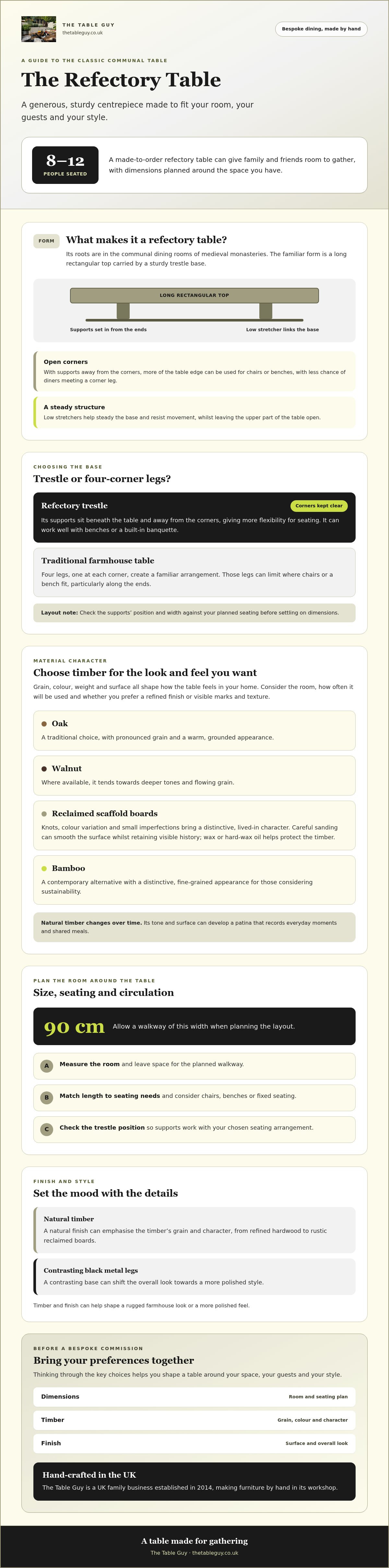
Long, sturdy and made for shared meals, a refectory table takes its name from the communal dining rooms, or refectories, of medieval monasteries. Its defining silhouette is an elongated rectangular top supported by a trestle base, often with low stretchers linking the supports near the floor. As the style moved from monastic dining halls into the homes of the nobility, it became associated with generous banqueting tables built to bring people together. For a concise historical overview, see What is a Refectory Table?
Its appeal in British homes is practical as well as historical. A long top gives family and friends room to gather, while the trestle arrangement can keep bulky legs away from the corners and seating positions. In 2026, dining design favours honest materials and statement tables that act as a focal point. A substantial, made-to-order piece suits that mood, bringing communal dining back to the centre of everyday home life.
The Anatomy of a Trestle Base
Picture two sturdy supports beneath the top, joined by a low stretcher. These bars, sometimes described as circumferential stretchers, help steady the base and resist movement, whilst their position near the floor leaves the upper part of the table open. On some designs, a central pedestal-style support takes the place of legs at the corners.
That open space matters. With supports set in from the ends, more of the table edge can be used for chairs or benches, and diners are less likely to meet a corner leg with their knees. The long rectangular top completes the recognisable refectory silhouette, making the table feel grounded and well suited to a shared meal.
Refectory Table vs Farmhouse Table
A traditional farmhouse table commonly has four legs, one at each corner. That familiar arrangement is straightforward, but the legs can limit where chairs or a bench fit, particularly along the ends. A trestle design places its main supports beneath the table and away from the corners, offering more flexibility for seating. To explore the other form, see this guide to a custom farmhouse dining table.
This distinction is especially useful with a built-in banquette. A refectory trestle can leave the long edge clearer, so the table can sit closer to fixed seating without a row of corner legs getting in the way. Check the position and width of the supports against your planned seating before choosing dimensions.
The refectory style is the more architectural choice, because its trestle structure gives the table a strong, deliberate presence whilst keeping the corners open for flexible seating.
Choosing the Right Timber: From Traditional Oak to Reclaimed Scaffold Boards
Timber shapes more than the look of a refectory table. Its grain, colour, weight and surface all influence how the piece feels in your home and how it stands up to everyday family life. Think about the room’s character, how often the table will be used and whether you prefer a smooth, refined finish or wood with visible marks and texture. The Victoria and Albert Museum’s British furniture-making history collection offers a wider view of how material and craftsmanship have shaped furniture through the centuries.
The Timeless Appeal of Hardwood
Oak is a traditional choice for a substantial dining table, with a pronounced grain and a warm, grounded appearance. Walnut, where available, tends towards deeper tones and flowing grain. Both can give a piece a strong sense of permanence, though the exact look varies with the timber and its finish. Over time, natural wood can develop a patina: subtle changes in tone and surface that record the meals and everyday moments shared around it.
Consider the room’s light and other finishes before settling on a colour. A lighter timber can keep a large table feeling open, whilst a darker surface creates a richer focal point. If you’re drawn to a natural look that connects indoor and outdoor spaces, explore this guide to bespoke bamboo garden furniture. Bamboo offers a contemporary alternative, with a distinctive, fine-grained appearance for hosts seeking a material with sustainability in mind.
Rustic and Industrial: Scaffold Board Refectory Tables
Reclaimed scaffold boards bring the marks of previous use into a new piece. Knots, colour variation and small imperfections give the surface its character, so expect an individual, lived-in look rather than uniform boards. Careful sanding can smooth the surface for dining whilst retaining some of that visible history; a suitable wax or hard-wax oil finish helps protect the timber and bring out its grain.
Pine offers another route to a relaxed, workshop-inspired feel. It is often a more cost-conscious choice than premium hardwood, without making a handmade design any less bespoke. Scaffold boards and pine suit interiors where texture matters more than a pristine, formal finish. Decide how much of the timber’s natural variation you’d like to see, and discuss the finish as part of your design choices.
The Table Guy hand-crafts bespoke furniture in its UK workshop using bamboo, hardwood, pine and scaffold boards. If you’re weighing up materials for a table made to suit your home, take a look at The Table Guy’s bespoke table options.
Sizing and Seating: How to Plan Your Refectory Table Layout
Start with the room, not the guest list. Measure the dining area and mark out the table’s proposed length and width, then allow around 90cm between its edges and walls or other furniture for a comfortable walkway. Use masking tape to outline the footprint on the floor. This simple check helps you see whether chairs can be pulled out and people can pass behind them before you commit to a size.
As a planning guide, allow approximately 1.8m of table length for 6 people, 2.4m for 8, and 3m or more for 10 to 12. Actual comfort depends on chair width and how much elbow room you prefer. If guests will sit at the ends, check that the top has enough overhang beyond the trestle supports for knees and chairs, and that the end seats won’t obstruct a walkway. Include carver chairs in your measurements, as their arms need extra width.
The Trestle Advantage for Benches
With no legs at the four corners, a trestle base makes it easier to slide along a bench and find a seat without working around corner posts. Benches can also tuck beneath the top when they’re not needed, helping keep the room clear. For a more formal arrangement, place carver chairs at the head and foot, then use benches along the sides.
Extendable Refectory Tables for Big Occasions
A fixed table suits households that regularly need the same generous seating capacity. If you host a larger gathering only at Christmas or for parties, an extendable design can provide extra space when needed without taking up as much room day to day. Explore the practicalities in this guide to choosing an extendable dining table.
With a bespoke design, ask how the extension leaves will sit with the main top, including how the grain and colour will look when the table is opened. Timber varies naturally; the guide to furniture woods can help you explore the characteristics of different species before discussing your preferences with a maker.
Use this checklist to weigh up your options:
Measure the room with the 90cm walkway in mind, and check the table footprint with chairs pulled out.
Choose fixed length if your everyday and occasion seating needs are much the same.
Consider extensions if you need extra places occasionally but want a smaller footprint most days.
Confirm seating at both ends, trestle position, and space for any carver chairs or benches.
A made-to-order table can be planned around your room and the way you host, rather than forcing your layout to fit a standard size. To explore bespoke table options, visit The Table Guy’s dining tables.
Styling Your Refectory Table: From Rugged to Polished
A long dining table makes a strong visual statement, so let its finish and surroundings set the mood. For a rugged farmhouse feel, pair visible timber grain and a softly finished surface with natural textures, simple ceramics and relaxed linens. For a more polished manor look, keep the tabletop clear, choose considered tableware and add a restrained centrepiece that allows the wood to take focus.
Leg colour can shift the whole impression. Natural wood supports a warm, traditional scheme and lets the trestle feel like part of the table’s solid form. Black metal accents create sharper contrast and a contemporary edge, particularly in a loft-style room with other industrial details. Keep the rest of the palette balanced so the base complements, rather than competes with, the top.
Lighting matters too. A pendant centred above the table helps define the dining area and draw the eye along its length. Choose a fitting whose scale suits the tabletop, and position it so the light feels welcoming without obstructing views across the table. For everyday meals, a simple runner can add colour and texture; for a celebration, make room for serving dishes and a generous spread.
Modern Industrial vs. Traditional Country
Scaffold boards and metal accents can anchor a modern, workshop-inspired interior, especially alongside brick, concrete or pared-back décor. For a country kitchen, chunky oak trestles and a wax finish bring warmth and a tactile, timeworn quality. You can carry a consistent material or colour theme into the next room with bespoke coffee tables in the UK, helping the living and dining spaces feel connected without matching every piece.
The Integrated Prosecco Table: A Modern Twist
For hosts who like to make serving part of the occasion, The Table Guy’s Prosecco tables feature integrated ice buckets. This detail gives a traditional dining setting a sociable party-hub feel, keeping chilled drinks close at hand whilst guests gather around the table. If you’re considering this feature, ask how the inserts are removed and cleaned, and how the surface works for everyday dining when they’re not in use.
Choose styling that can adapt: keep the table uncluttered between gatherings, then add seasonal greenery, candles or a full sharing spread when guests arrive. If you’re exploring a bespoke table with a hosting feature, discuss your dining table ideas with The Table Guy.
Commissioning Your Bespoke Refectory Table with The Table Guy
A bespoke table starts with how you want to use it. Consider the room, how many people you usually seat, whether you prefer chairs or benches, and the look you want from the timber. The Table Guy is a UK family business established in 2014, with pieces hand-crafted in its UK workshop. Rather than choosing a standard size from a catalogue, you can discuss the details that matter to your home.
That conversation can cover dimensions, timber choices such as hardwood, pine or scaffold boards, and the trestle design. You might also discuss a distinctive feature, such as integrated ice buckets for hosting. Share your measurements and preferences early, including how the table will need to fit through doorways and into the dining room. For a large table, check access and delivery arrangements before confirming the design.
The Artisan Process: Why Handmade Matters
Hand-crafting means the table is made as an individual piece in the workshop, rather than supplied as mass-produced flat-pack furniture. Ask about the timber selected for your design, how its natural grain and character will appear, and which finish suits your household. Wax and hard-wax oil finishes are among the options associated with the durability of these tables; discuss their care and suitability for your intended use with the maker.
Every joint and surface deserves care. We take pride in shaping and finishing each piece with attention to the details that make a table feel considered, sturdy and personal.
National UK Delivery and Setup
The Table Guy serves customers nationally across the UK. Delivery and any setup arrangements can depend on the order, so confirm what’s included and how the table will be brought into your home. For a 10 to 12 seater design, measure narrow doorways, hallways, staircases and turns, then share any potential access challenges when discussing your order. This helps you plan with the table’s final destination in mind.
A refectory table is an investment in the daily rituals of home: meals, conversations and gatherings that grow around it. Made to order, it can reflect your preferred size, timber and practical details, with the reassurance of a family-run business focused on hand-crafted furniture rather than mass-produced flat-packs.
Make Room for Gatherings Around Your Bespoke Table
A well-chosen refectory table brings history and generous, communal dining into a modern British home. The right timber sets its character, whilst carefully planned dimensions and a trestle base help make space for family, friends and flexible seating. Personal details, from the finish to an integrated hosting feature, can make the table feel distinctly yours.
The Table Guy is a family-run business hand-crafting furniture in its UK workshop since 2014, with a specialism in large dining tables for 10 to 12 people. Hard-wax oil finishes offer a durable, spill-resistant surface for the bustle of everyday meals and special occasions.
Your table should fit the way you live, not just the room it sits in. Browse our collection of hand-crafted refectory tables and start your bespoke build today. With thoughtful choices and skilled hands behind the making, you can create a lasting centrepiece ready for many gatherings to come.
Frequently Asked Questions
What is the difference between a refectory table and a trestle table?
A refectory table is a long dining table associated with communal meals, whilst a trestle table describes a support structure. A refectory table often uses trestle supports, but the terms don’t mean exactly the same thing: trestle bases can support other table shapes and serve different purposes. If comparing designs, look at the top’s proportions, where the supports sit and whether the arrangement suits your chairs or benches.
How many people can comfortably sit at a 2.4-metre refectory table?
A 2.4-metre table is commonly planned for around eight people, with four seated along each long side. The comfortable number depends on chair width, diners’ elbow room and whether you want seats at the ends. Carver chairs need extra space, and trestle supports may affect end seating. Before settling on capacity, mark out the table and chairs in your room and check that guests can sit down easily.
Are refectory tables suitable for smaller dining rooms?
They can work in a smaller dining room if the dimensions leave enough room to pull out chairs and move around the table. Measure the available floor space, including the area occupied by seating when in use, before choosing a length and width. A bench can be tucked beneath the top when not needed, helping clear the walkway. A made-to-order refectory table can be planned around your room rather than a standard size.
How do I maintain the wax finish on my bespoke wooden table?
Use gentle, routine care and follow the maker’s specific guidance for the finish on your table. Wipe spills promptly with a soft cloth, and avoid abrasive pads or harsh cleaning products that could mark the surface. Don’t assume every wax or hard-wax oil finish needs the same treatment; products and application can vary. Ask which maintenance products are suitable and how to refresh the finish if everyday use dulls it.
Can I choose a different colour for the table legs than the top?
Possibly, but the available combinations depend on the table’s materials and design. Natural timber legs can create a coordinated look, while a contrasting colour or metal base may give the table a more contemporary feel. For a bespoke order, describe the effect you’re after and ask what finishes or leg treatments can be specified. Confirm how the proposed colours will work with the timber grain and your room’s existing palette.
Do refectory tables come apart for delivery into tight spaces?
Some designs may be assembled in sections, but don’t assume a particular table can be dismantled for delivery. Ask the maker how the top and base are constructed and what delivery arrangements apply to your chosen design. Measure the narrowest doorway, hallway, staircase and turn on the route into the room, then share those details before confirming your order. This helps identify access concerns while there’s still time to discuss the design.
Why are refectory tables traditionally made of oak?
Oak has long appealed to furniture makers and householders for its substantial feel, distinctive grain and reputation as a durable hardwood. Its visual character also suits the long, solid proportions associated with traditional refectory designs. Oak isn’t the only suitable timber, though. Hardwood, pine, bamboo and scaffold boards each bring different grain, colour and character, so choose according to the look you want and how the table will be used.
Can I have an integrated ice bucket in a traditional refectory design?
Yes. The Table Guy makes Prosecco dining tables with integrated ice buckets, bringing a practical hosting feature to a long, traditional-style dining table. Discuss where you’d like the buckets positioned and how you expect to use the table for everyday meals as well as gatherings. The precise design should be confirmed with the maker, so you can consider serving space, seating and how the feature will fit the overall look.


Comments