
How to Care for a Solid Oak Table: A Practical Guide
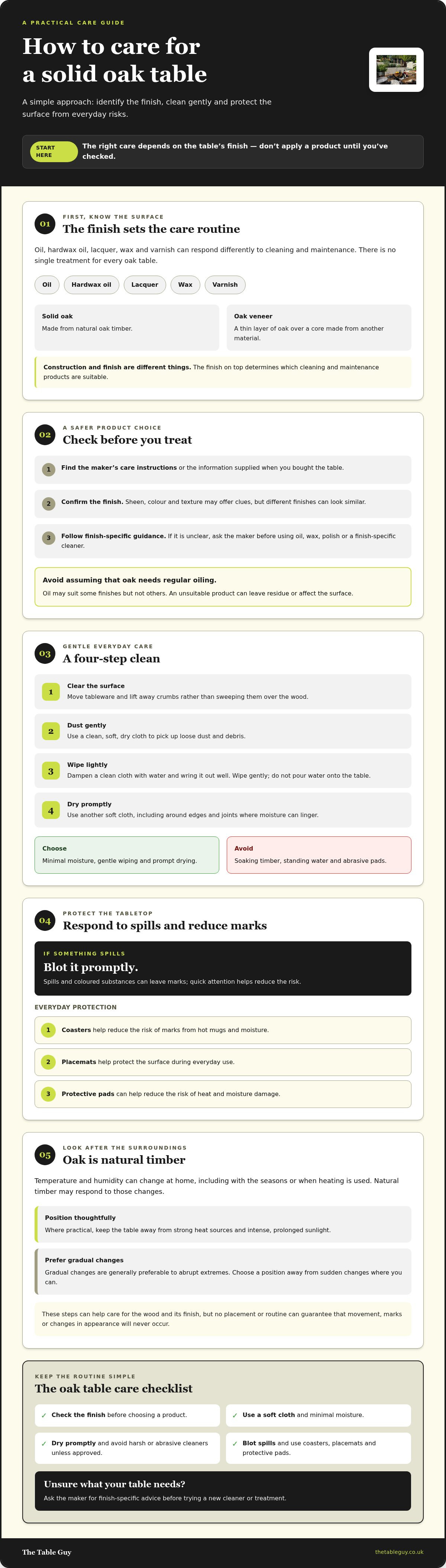
A solid oak table doesn’t need a complicated care routine, but the wrong product can do more harm than everyday dust. If you’re wondering how to care for a solid oak table, start by identifying its finish. Oil, wax, lacquer and varnish respond differently to cleaning and maintenance.
It’s sensible to be cautious. A spill, hot mug or unsuitable cleaner can leave a mark, and it isn’t always clear whether oak needs oiling. There’s no single treatment that suits every table. Gentle cleaning and a few protective habits are usually a better starting point than reaching for polish or oil.
This guide explains how to clean your table without harming its finish, what to do about spills and everyday marks, and how to reduce the risk of heat and moisture damage. You’ll also learn why the finish matters before you apply anything, and when to ask for finish-specific advice. With a little care, you can enjoy the character of your oak table for years.
Table of Contents
How to care for a solid oak table starts with its finish
Good care doesn’t need to be complicated. The key to how to care for a solid oak table is to match your routine to its protective finish, rather than assume every oak table needs the same treatment.
Solid oak is made from natural oak timber, while an oak-veneered table has a thin layer of oak over a core made from another material. That describes how the table is constructed, not what finish is on top. Oil, hardwax oil and lacquer protect wood differently, so cleaning and maintenance advice can vary. The table’s finish determines which cleaning and maintenance products are suitable. For background on how protective treatments work, see Wood finishing.
Don’t assume an oak surface needs regular oiling. Oil may suit some finishes, while another surface may need different care. Applying an unsuitable product can leave residue or affect the finish. Identify the finish first, then follow the care guidance for that table.
How can you tell what finish your oak table has?
Check the maker’s care instructions or the information supplied when you bought the table. This is more reliable than judging by appearance alone: sheen, colour and texture may offer clues, but different finishes can look similar. If the guidance isn’t clear, ask the maker before applying oil, wax, polish or a finish-specific cleaner. Checking first is safer than experimenting on the tabletop.
Why does solid oak respond to its surroundings?
Oak is natural timber, so it can respond to changes in temperature and humidity. Conditions at home may shift with the seasons or when heating is used. Gradual changes are generally preferable to abrupt extremes, but no placement or routine can guarantee that movement, marks or changes in appearance will never occur.
Where practical, avoid placing the table right beside a strong heat source or somewhere exposed to intense, prolonged sunlight. Choose a position away from sudden changes where you can, rather than trying to control every variation in the room. These choices can help you look after the wood and its finish, while recognising that natural timber may change over time.
A simple daily and weekly cleaning routine for a solid oak table
A little regular attention is usually kinder to the finish than occasional vigorous scrubbing. Keep cleaning simple: remove loose crumbs first, use minimal moisture and dry the surface promptly. Before using a household cleaner, check the maker’s care guidance, even if the product is labelled suitable for wood.
What is the safest way to clean an oak table?
Choose a clean, soft cloth. After meals, clear away crumbs and dust so grit isn’t dragged across the tabletop. For a more thorough clean, follow these steps:
1. Clear the surface. Move tableware and lift away crumbs rather than sweeping them over the wood.
2. Dust gently. Use a soft, dry cloth to pick up loose dust and debris.
3. Wipe lightly. Dampen a clean cloth with water and wring it out well. Wipe gently, without pouring water directly onto the table.
4. Dry promptly. Use another soft cloth, paying attention to edges and joints where moisture can linger.
The cloth should be slightly damp, not wet. Don’t soak the timber or leave water standing on the surface, and avoid abrasive pads that could scratch or dull the finish. If residue remains, follow the cleaning method recommended for your table rather than switching to a stronger product.
Which cleaning products should you avoid?
Abrasive scourers and harsh cleaners can damage some finishes, so avoid them unless the maker explicitly approves their use. Multipurpose sprays may also be unsuitable, even if they’re intended for household surfaces. If the care instructions don’t name a product, ask the maker before using it. That’s safer than testing an unknown cleaner on a visible part of the tabletop.
Routine oiling or waxing isn’t automatically necessary. These treatments may suit some finishes but not others, and using them without checking can leave residue or affect the surface. Frequent, gentle cleaning is a better habit than aggressive scrubbing or unnecessary polishing. Keep the maker’s instructions handy when you’re considering a new product.
A straightforward routine helps you care for a table without asking more of its finish than necessary. The Table Guy makes bespoke hardwood tables, with each piece made to order. See examples of bespoke hardwood tables.
Spills, stains and scratches: protect your solid oak table without guesswork
A spill doesn’t automatically mean lasting damage, but acting promptly gives the finish less time to absorb or hold onto moisture and colour. Tea, coffee, wine and sauces can mark some surfaces, while heat and dampness may affect the finish in different ways. The right response depends on the table’s finish, so avoid scrubbing or reaching for a stain remover in a hurry.
What should you do when liquid spills on oak?
Blot a fresh spill, wipe gently and dry the surface promptly. Use a clean, absorbent cloth to lift the liquid without rubbing it across the tabletop. Then remove any residue gently, following the cleaning method recommended for that finish. Dry the area and check it once clean. A remaining mark may need more than routine cleaning, and not every stain can be removed safely at home.
Keep your response calm and simple:
Blot: Press a clean cloth onto the spill to absorb it. Don’t scrub or spread it.
Wipe: If residue remains, use the method recommended in the maker’s care instructions for that finish.
Dry and assess: Dry the surface, then look for any change in colour, sheen or texture.
If the mark persists, pause before trying another product. Repeated cleaning or an unsuitable treatment can affect the finish further. A stain may need specialist attention rather than a stronger household cleaner.
How can you reduce scratches, stains and heat marks?
Small habits can limit everyday wear. Use coasters for drinks and placemats beneath plates or serving dishes. Put a suitable protective pad under hot items, and lift objects when moving them instead of dragging them over the surface. These barriers won’t prevent every mark, but they reduce direct contact with heat, moisture, grit and strongly coloured substances.
For scratches, heat marks or stains that remain after gentle cleaning, don’t assume sanding, oiling or another treatment is the answer. The wrong approach may remove or alter the finish, particularly if you’re unsure what was originally applied. Check the maker’s instructions and seek finish-specific advice before attempting a repair.
A useful principle for how to care for a solid oak table is to respond to fresh spills promptly, protect the surface during everyday use and treat persistent damage as a separate issue from ordinary cleaning. Careful action can help, but it can’t guarantee that every mark will disappear or that natural timber will remain unchanged.
Control heat, sunlight and humidity around your solid oak table
Where a table sits can influence how its timber and finish fare over time. Direct heat, strong sunlight and abrupt changes in room conditions may affect the surface or the wood itself. A sensible approach is to reduce avoidable extremes, not to try to keep your home at one perfect temperature or humidity level.
Oak is natural timber, and its response to the indoor environment can vary with the table’s construction and finish. Gradual seasonal changes are part of life in a home. Aim to avoid sudden, intense exposure where you can, while following any care guidance supplied by the maker.
Where should you place a solid oak table?
Choose a position that works for everyday use, but avoid placing the table immediately beside a radiator, stove or other strong heat source if you have another suitable option. Prolonged direct sunlight, such as sunlight through an unshaded window, may also affect the finish or change the wood’s appearance. Curtains or blinds can reduce exposure at the brightest times of day.
You don’t need to monitor the room constantly. Make considered choices about placement, then use the table as part of your home. If moving it isn’t practical, follow the maker’s advice for that particular finish.
Does oak need special care in winter or summer?
Indoor conditions can shift with the seasons. Heating in colder months and warmer, brighter conditions in summer may create changes in temperature or humidity. Keep the surroundings reasonably stable where practical, but don’t worry about controlling every ordinary seasonal variation. There’s no single room condition that suits every home and every table.
In any season, avoid putting wet items directly on the tabletop or placing hot objects on it without suitable protection. If the table gets damp, don’t try to dry or warm it quickly with a heater, hairdryer or direct sunlight. Sudden changes may be harder on the timber or finish than allowing it to return gradually to normal room conditions. For specific humidity guidance or care concerns, check the maker’s instructions rather than relying on a universal target.
Sensible prevention means choosing a position away from intense heat and prolonged sun, and responding calmly to seasonal changes. It doesn’t mean trying to control every fluctuation in your home. These practical choices are one part of how to care for a solid oak table, alongside following finish-specific care advice.
The Table Guy makes bespoke hardwood tables to order. Examples of its work are available among these bespoke hardwood tables.
Build a lasting solid oak table care routine, and know when to ask for help
A good care routine is one you can follow without second-guessing every product or seasonal change. Clean gently, protect the surface during everyday use and keep the maker’s finish-specific instructions to hand. Oiling, waxing or refinishing isn’t a required step for every solid oak table; the right approach depends on the finish and the advice provided for it.
A practical checklist for ongoing table care
Keep these simple habits in mind as you use your table. Follow its care instructions, especially before trying a new cleaning product.
After meals, clear away crumbs and wipe up spills promptly using a clean, suitable cloth.
Use coasters and protective pads for hot, wet or strongly coloured items.
Before applying a new cleaner, oil or polish, check the maker’s guidance for the table’s finish.
There’s no need to polish or treat the surface simply because time has passed. A gentle, consistent routine is a better starting point than adding products without a clear reason.
When should you seek finish-specific advice?
Ask the furniture maker for guidance if you don’t know what finish is on the table or if a mark remains after gentle cleaning. Avoid sanding, stripping or applying oil or wax until you’ve confirmed what the existing finish requires. If the issue needs more than routine care, speak to the maker or a qualified furniture professional before attempting a treatment.
That’s the practical answer to how to care for a solid oak table: keep up simple cleaning, guard against everyday knocks and spills, and seek informed advice before making a bigger change to the surface. Natural timber and its finish can show signs of use over time, so careful maintenance is about looking after the table, not trying to make it immune to life at home.
The Table Guy makes bespoke furniture to order, including hardwood tables. Find out more about its work at The Table Guy.
Make thoughtful care part of your table’s story
The best care routine is simple: follow the instructions for your table’s finish, clean gently and protect the surface from avoidable spills, heat and sunlight. If a mark remains or you’re unsure which product is suitable, pause before trying oil, wax or a more intensive treatment, and seek finish-specific advice.
That’s how to care for a solid oak table with confidence: match care to the finish rather than relying on a one-size-fits-all routine. Small, consistent habits can help you enjoy the character of natural timber as it becomes part of everyday life at home.
The Table Guy is a family-run business established in 2014, crafting bespoke furniture to order, including hand-crafted hardwood tables. Explore bespoke furniture from The Table Guy and find inspiration for a piece to make your own.
Frequently Asked Questions
How often should you clean a solid oak table?
Clean your table as needed, with a gentle wipe after meals or whenever dust, crumbs or spills appear. For everyday dust, a soft, dry cloth is often enough; use a slightly damp cloth for residue, then dry the surface. Frequent light cleaning is preferable to waiting until dirt builds up and scrubbing hard. Check the maker’s care instructions before introducing a household cleaner or polish.
Can you use a damp cloth on a solid oak table?
Yes, a slightly damp, well-wrung cloth is suitable for many tables, but follow the maker’s instructions for your table’s finish. Don’t pour water onto the surface, use a soaking cloth or leave moisture standing. Wipe gently, then dry the tabletop, edges and joints with a clean, soft cloth. If you’re unsure how the finish responds to water, check with the maker before cleaning.
Should you oil a solid oak table?
Only oil your table if its finish and care instructions call for it. Some finishes may be maintained with oil, while others, such as lacquer, need a different approach. Applying oil to an unsuitable surface may leave residue or affect its appearance. If you don’t know what finish is on your table, ask the maker before oiling, waxing or using a specialist product.
How do you remove a stain from a solid oak table?
Blot a fresh spill with a clean, absorbent cloth, then gently wipe any remaining residue using the cleaning method recommended for the finish. Dry the area and check for a mark once it’s clean. Don’t scrub, sand or apply stain removers without guidance, as the wrong treatment may damage the surface. Persistent marks may need advice from the maker or a qualified furniture professional.
Can sunlight damage a solid oak table?
Prolonged direct sunlight may affect a table’s finish or change the appearance of the wood over time. If practical, position the table away from the strongest sun, or use curtains or blinds to reduce exposure during bright periods. You don’t need to keep the room dark or constantly monitor the table. Follow the maker’s advice for your particular finish, as materials can respond differently.
How do you protect a solid oak table from heat and water marks?
Use coasters for drinks, placemats for plates and protective pads beneath hot dishes. Wipe up spills promptly, blotting rather than rubbing, and dry the surface afterwards. Lift items instead of dragging them across the tabletop to help avoid scratches. These habits reduce direct contact with heat and moisture, though they can’t prevent every mark. Check the maker’s care guidance before treating any damage.
Does a solid oak table need different care in winter?
Usually, the same gentle routine applies throughout the year, but indoor conditions can shift as heating is used and the seasons change. Keep the table away from direct heat where practical, and avoid trying to dry or warm it suddenly. Don’t place wet items on the surface. Oak can respond to its surroundings, so follow the maker’s instructions if you’re concerned about seasonal changes or need specific guidance.


Comments