
Industrial Dining Table with Wooden Legs: The Ultimate Guide to Bespoke Style
- Jezz Leazell
- 4 days ago
- 12 min read
The most authentic industrial look doesn't start with a cold steel frame; it begins with the tactile grain of a well-loved tree. You've likely noticed that many mass-produced industrial replicas feel clinical and thin, lacking the soul required for a true family home. It's frustrating when you can't find a piece that fits your specific room dimensions or when the factory style feels more like a warehouse than a sanctuary.
We understand that your home needs a balance of raw edge and inviting warmth. Choosing an industrial dining table wooden legs allows you to capture that structural honesty whilst keeping your space feeling cosy and grounded. In this guide, we'll show you how to combine traditional British joinery with rugged aesthetics to create a bespoke centrepiece. You'll discover how we transform scaffold boards and hardwoods into sturdy furniture that tells a story of craftsmanship. Let's explore how to design a table that fits your life perfectly.
Table of Contents
Defining the Industrial Dining Table with Wooden Legs
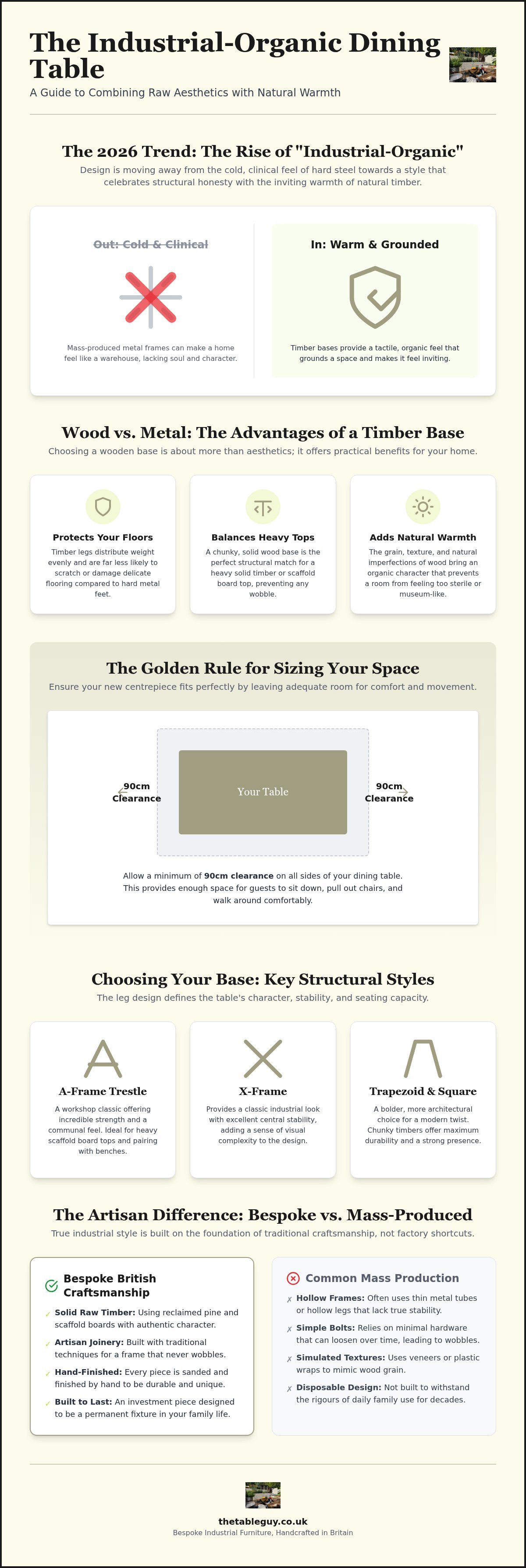
The industrial aesthetic has undergone a significant transformation. In 2026, the trend has moved away from the cold, clinical feel of hard steel and toward what designers call "Industrial-Organic." This style prioritises structural honesty and raw textures but introduces the warmth of natural timber to make a space feel like a home rather than a warehouse. An industrial dining table wooden legs design captures this shift perfectly, offering a rugged centrepiece that feels grounded and inviting.
Choosing timber over metal doesn't mean sacrificing that factory-inspired edge. It's about celebrating the "built-to-last" workshop feel. When we craft these pieces in our UK workshop, we focus on structural visibility; the way the legs support the top is part of the story. To achieve the necessary industrial weight, we utilise chunky, oversized dimensions. Thin, spindly legs simply won't do. You need substantial timber that commands attention and promises decades of service.
The Aesthetic Balance of Wood on Wood
Maintaining a raw factory feel without using metal elements requires a keen eye for texture. The secret lies in the grain patterns and natural imperfections of the wood. We embrace the knots, scars, and unique markings found in scaffold boards and reclaimed pine, as these details provide the "industrial" character that paint or plastic can't replicate. You can create a striking contrast by pairing a smooth, finely sanded tabletop with rugged, structural leg designs. This interplay of textures ensures the piece feels sophisticated whilst retaining its hardworking heritage.
Natural Grain: Acts as the primary "decoration" for the piece.
Structural Contrast: Rugged bases paired with refined tops.
Warmth: Timber bases prevent the room from feeling too "cold" or museum-like.
Why Bespoke Craftsmanship Matters for This Style
Mass-produced "industrial" furniture often relies on thin metal bolts and hollow frames that lack true stability. When you opt for artisan joinery, you're investing in a frame built to handle the weight of a solid timber top without wobbling. Our process involves selecting raw timber that can support large-scale industrial frames, ensuring the table remains a permanent fixture in your family life. Every joint is a testament to traditional skills, designed to withstand the rigours of daily use whilst looking effortless. Industrial wood furniture is a fusion of heritage craft and modern minimalism.
Structural Leg Styles: Choosing Your Industrial Base
The foundation of any great piece of furniture is its base. When designing an industrial dining table wooden legs choice, the structure determines not just the look, but how the table functions in your daily life. Unlike mass-produced furniture that uses standard vertical poles, bespoke industrial designs rely on geometric shapes to create stability and visual weight. These bases are the structural heart of the piece, echoing the functional beauty of old-world factories and workshops.
The style you choose should reflect both your aesthetic preferences and the practical needs of your household. Whether you're hosting large Sunday roasts or using the surface as a creative workspace, the leg geometry dictates everything from legroom to seating capacity. It's about finding that perfect intersection where rugged durability meets thoughtful design.
The A-Frame Trestle: A Workshop Classic
The A-frame trestle is perhaps the most iconic workshop style. Its wide base and angled supports offer incredible strength, making it ideal for heavy scaffold board tops. This design creates a communal, social atmosphere, especially when paired with matching benches. Because the legs angle inwards, they provide a sense of openness at the ends of the table, allowing for more comfortable movement during large family gatherings. It's a quintessential choice for those who value a traditional, hardworking aesthetic that feels deeply rooted in British craftsmanship.
Chunky Square and Trapezoid Bases
For those seeking a bolder, more architectural anchor, chunky square legs are the answer. These bases lean into the "scaffold" aesthetic, using thick timber to provide maximum durability and a sense of permanence. If you want a modern twist on the industrial theme, the trapezoid leg offers a clean, geometric silhouette that feels contemporary whilst maintaining that rugged edge. These styles are particularly effective at grounding a room, turning a simple piece of furniture into a permanent, characterful fixture that won't wobble or warp over time.
X-Frame Legs: Provide a classic industrial look with a sense of visual complexity and extra central stability.
Leg Placement: In our workshop, we carefully calculate leg positioning to ensure your guests have ample knee room.
Seating Capacity: Angled frames like the A-frame often allow for an extra chair at each end, maximising your floor plan.
Getting these dimensions right ensures your table is as practical as it is beautiful. If you are unsure which base suits your room layout, you can explore our full range of bespoke dining tables to see these different structures in action. Each style offers a unique way to frame your space whilst providing the sturdy, long-term investment your home deserves.
Wood vs. Metal Legs: Which is Right for Your Home?
Many high-street retailers would have you believe that "industrial" is synonymous with cold, black steel. Whilst metal legs certainly offer a sharp, factory-inspired edge, they can often feel clinical in a domestic setting. Choosing an industrial dining table wooden legs design allows you to retain that structural honesty whilst introducing a level of tactile warmth that steel simply cannot match. It's a choice between a piece that feels like a machine and one that feels like a handcrafted part of your home.
The decision often comes down to how you want the room to feel. Metal is unapologetically raw, but timber is more forgiving. It invites you to touch the surface and linger over a meal. For a family-run workshop like ours, the goal is always to create furniture that serves as a sturdy, characterful centrepiece for your daily life.
The Warmth Factor in British Interiors
British homes are unique. We often deal with smaller layouts or multi-functional spaces where a massive metal frame can feel overwhelming. Wooden legs soften the industrial look, making it suitable for busy family life. They don't strike the shins as harshly, and they won't scratch delicate hardwood or stone flooring. If you're looking to create a cohesive theme throughout your home, you might consider pairing your dining set with bespoke coffee tables. This creates a unified living-dining area that feels curated rather than cluttered.
Maintenance and Durability Comparison
Practicality is where timber truly shines. Metal legs are typically mass-produced and powder-coated; if they chip, the repair is difficult and often unsightly. Wood, however, develops a beautiful patina over time. It tells the story of your family's life. If a wooden leg gets scuffed by a vacuum cleaner or a pet, a quick buff with some wax usually hides the mark. For a complete refresh, you can sand and restain the timber to suit a new colour scheme in the future.
Stability is another critical factor. Many metal frames are bolted together, which can lead to a frustrating "wobble" as the fixings loosen over years of use. Our handmade wooden frames use traditional joinery techniques. This ensures the table remains a permanent investment. Wood provides superior weight distribution for heavy scaffold board tops, ensuring your table stays level and secure for decades.
Tactile Comfort: Wood stays at room temperature whilst metal feels cold to the touch.
Floor Protection: Timber is naturally more forgiving on delicate floor finishes.
Customisation: You can stain wooden legs to match your existing decor perfectly.
Longevity: Wood can be easily refinished at home; metal often requires professional repainting.
Sizing and Styling Your Industrial Dining Table
Bringing a large-scale piece into your home requires more than just an appreciation for raw timber. Because an industrial dining table wooden legs design often features chunky, oversized supports, the physical footprint is more substantial than a standard flat-pack alternative. You need to account for the visual weight of the base as much as the dimensions of the top. A table that looks perfectly proportioned in a workshop can easily overwhelm a small dining room if the clearance isn't calculated correctly.
We always advise following the "Golden Rule" of dining room clearance: leave at least 90cm of space between the table edge and the nearest wall or piece of furniture. This allows guests to pull out their chairs and move around the room without feeling cramped. If your space is particularly tight, consider using benches instead of chairs. Benches can be tucked completely under the table when not in use, opening up the floor plan whilst maintaining that communal, workshop-inspired aesthetic.
Choosing the Right Capacity
Your table should fit your daily life, not just the occasional party. We craft everything from intimate four-seaters to grand twelve-seater hosting tables that serve as the heart of a home. When calculating your needs, remember that chunky industrial legs can sometimes restrict where chairs sit at the ends of the table. If you love to host but don't want a massive permanent fixture, an extendable dining table offers the perfect middle ground, providing flexible seating without sacrificing structural integrity.
Complementing the Look with Storage
A heavy dining table needs a balanced environment to truly shine. Pairing your centrepiece with industrial bespoke shelving units helps pull the room's textures together, creating a sense of intentional design. You can use sideboards to anchor the space and provide a home for your hosting essentials. To finish the look, we recommend styling with raw materials that echo the table's heritage:
Raw Linens: Soften the hard timber edges with tactile table runners.
Handcrafted Ceramics: Use organic shapes to contrast with the geometric leg designs.
Edison Bulbs: Warm, amber lighting highlights the natural grain of the wood.
Creating a space that feels both rugged and welcoming is a delicate balance. If you are ready to start planning your room layout, you can browse our handmade furniture collections to find the perfect dimensions for your home. We're here to help you measure up and ensure your new table fits your lifestyle as perfectly as it fits your room.
Bespoke British Craftsmanship at The Table Guy
Every piece of furniture that leaves our UK workshop is more than just a surface; it's a testament to a decade of dedication. Since 2014, our family-run enterprise has focused on creating furniture that stands in direct opposition to the disposable, flat-pack culture of mass retail. When you choose an industrial dining table wooden legs design from us, you aren't just buying a product. You're entering a partnership with master craftsmen who value longevity and material authenticity above all else.
Our process is deliberate and hands-on. We begin by hand-selecting raw timber, looking for the specific knots and grain patterns that will give your table its unique character. Whether we're working with rugged scaffold boards or characterful reclaimed pine, we use traditional joinery techniques to ensure your table remains sturdy for decades. We avoid the thin bolts and hollow frames found in factory-made replicas. Instead, we rely on the strength of the wood itself, finishing every piece with a hand-applied wax that protects the timber whilst highlighting its natural beauty.
The Story Behind Your Table
Choosing built-to-order furniture is a conscious decision to favour quality over convenience. By avoiding mass-production methods, we significantly reduce waste and ensure that every scrap of timber is used purposefully. This environmental responsibility is woven into the very fabric of our workshop. We believe that the imperfections in the wood, the small scars and unique swirls, tell a story of heritage that no machine can replicate. Your table becomes a living part of your home, aged by your family's experiences and grounded by British craft.
Designing Your Dream Industrial Table
The beauty of the bespoke journey is that you are in control of every dimension. You can specify the exact thickness of the legs to match the visual weight of your room or choose a tabletop finish that complements your existing decor. For those who love to host, we can integrate signature features like our Prosecco ice buckets directly into the timber. If you're looking for a softer aesthetic, you might want to design a custom farmhouse dining table that retains an industrial edge through its structural visibility.
Ready to create your centrepiece? We're here to guide you through every choice, from the first measurement to the final delivery. Let's build something that fits your life perfectly. Contact our workshop today to start your bespoke order and bring home a piece of furniture with a true British story.
Bring Home a Centrepiece Built to Last
Your home deserves a centrepiece that balances structural honesty with the inviting comfort of natural timber. By opting for an industrial dining table wooden legs design, you've chosen a piece that avoids the clinical coldness of mass-market steel and embraces the tactile beauty of sustainably sourced timber. You now understand how geometric bases like the A-frame or trapezoid can influence your room's flow, and why bespoke dimensions are essential for a comfortable hosting environment.
At The Table Guy, we've been hand-crafting furniture in our UK workshop since 2014. As a family-run enterprise, we take immense pride in every joint and hand-finished wax coating we apply. We don't believe in flat-pack quality; we believe in furniture that tells a story and stands the test of time. It's time to move away from temporary fixes and invest in a table that fits your life perfectly.
Start your bespoke journey and browse our handcrafted dining tables to find the right fit for your home. We're ready to pick up our tools and start work on your unique British centrepiece today.
Frequently Asked Questions
Are wooden legs as strong as metal legs for an industrial table?
Yes, solid timber is incredibly resilient. When we use traditional joinery techniques, a wooden base is just as sturdy as steel. We use thick sections of pine or hardwood to ensure the frame supports the weight of a heavy tabletop without any flex. Unlike mass-produced metal frames that can loosen over time, our handmade wooden structures remain a permanent, rock-solid fixture in your home.
What is the best type of wood for an industrial dining table with wooden legs?
Reclaimed pine and scaffold boards are the quintessential choices for this style. They possess the raw history and texture required for a truly industrial feel. If you prefer a tighter grain and even greater durability, solid oak is a fantastic alternative. Each species reacts differently to our hand-applied waxes, allowing you to tailor the final colour to your specific room layout and decor.
How do I prevent a heavy industrial table from scratching my floor?
Protecting your flooring is simple with timber bases. Because wood is naturally more forgiving than metal, an industrial dining table wooden legs choice is already gentler on your flooring. We suggest applying heavy-duty adhesive felt pads to the bottom of each leg. This allows you to slide the table slightly for cleaning without risk. For stone or tiled floors, rubberised glides provide extra grip and protection.
Can I customise the height of my industrial dining table?
Customisation is at the heart of everything we do in our workshop. Whilst the standard height for an industrial dining table wooden legs design is 75cm, we can easily adjust this. Whether you need a slightly taller surface for bar-height stools or a lower table for specific accessibility reasons, we'll build it to your exact needs. Just share your dimensions with us during the design phase.
How do I maintain the raw look of the wood without it staining?
Maintaining that rugged, unrefined look requires the right protective finish. We use professional-grade waxes that soak into the timber rather than sitting on top like a varnish. This provides a water-resistant seal that prevents staining from daily spills whilst keeping the wood breathable. To keep it looking its best, we recommend a light re-waxing every six to twelve months, depending on how often the table is used.
Will an industrial dining table fit in a modern, non-loft style home?
You don't need a warehouse conversion to make this style work. The beauty of using timber legs is that they bridge the gap between factory ruggedness and domestic warmth. An industrial piece acts as a grounding element in a modern, minimalist home or adds a layer of texture to a more traditional setting. It's about creating a focal point that feels intentional and full of personality.
Do you offer matching benches for industrial wooden leg tables?
We certainly do, and they're one of our most popular additions. Crafting a matching bench ensures the wood grain and finish are perfectly consistent with your table. Benches are particularly useful for smaller British dining rooms because they can be tucked away to save space. We can even customise the length so the bench fits exactly between the wooden legs of your table.
How long does it take to hand-craft a bespoke industrial table in the UK?
Hand-crafting a piece of furniture takes time and meticulous attention to detail. Because we don't use factory assembly lines, our lead times allow us to focus on the quality of every joint and finish. We'll provide you with a clear timeline when you place your order, ensuring you know exactly when your new centrepiece will arrive. It's a steady process that guarantees a long-term investment for your family.


This article treats the subject in a balanced and well-documented way. I found the way the main points are highlighted useful. I read the article in full without skipping any part. It is content useful both for those approaching the topic for the first time.