
Patio Furniture Wood Table: How to Choose the Right One
The most attractive patio furniture wood table may still be the wrong choice for your garden. Timber and finish that suit a sheltered courtyard may weather differently in a spot exposed to rain, strong sun and winter damp. It’s easy to focus on colour and shape, but the table’s setting matters just as much.
Before buying, consider exposure, upkeep and how you’ll use the table. You’ll also need enough room to pull out chairs, move around comfortably and seat the people you usually entertain. Getting these details right can help the table feel like a natural part of your patio, rather than an awkward compromise.
This guide explains how to compare timber, construction, finishes, sizing and seasonal care. The Table Guy makes bespoke furniture to order in a UK workshop, which may help if standard dimensions don’t suit your patio. However, always confirm that the specific table design and finish are suitable for outdoor conditions before ordering.
Table of Contents
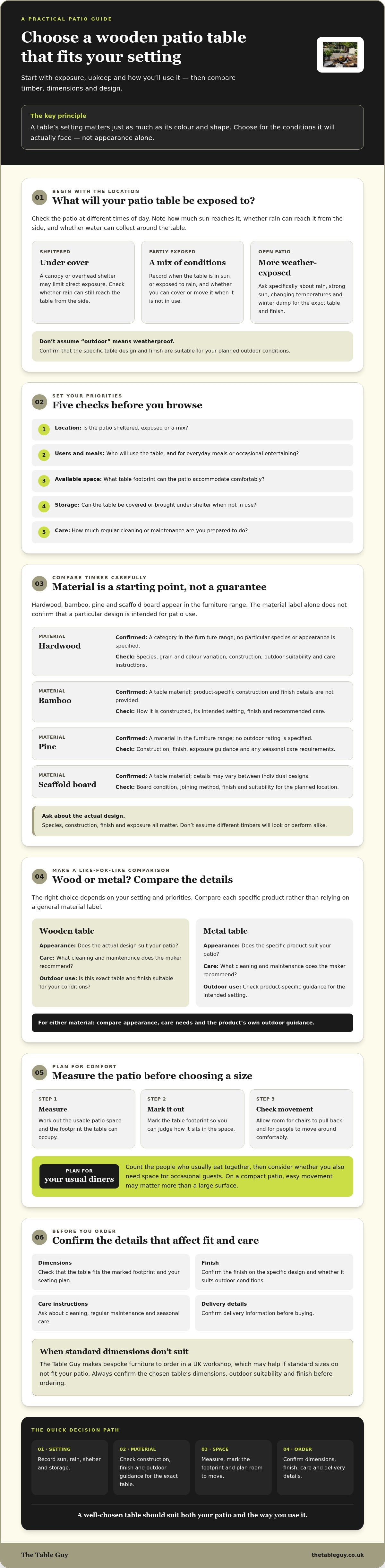
Patio Furniture Wood Table: Start With Where and How You Will Use It
Choose for the conditions your table will actually face, not just the look you admire in a photograph. A patio wood table is an outdoor table made from timber or another wood-based material. But “outdoor” can mean a sheltered spot beneath a canopy or an open patio exposed to rain, direct sun and changing temperatures. Those settings call for different checks before you buy.
A patio furniture wood table should suit its position as well as your home. Note whether water can collect around it, how much sun reaches it and whether you can cover or store it when it’s not in use. These conditions affect what to ask about the timber, finish and ongoing care. A general guide to outdoor furniture materials can help you understand the options, but always check the guidance for the specific table. Don’t assume a material or finish is weatherproof without confirmation.
Will the table sit in full sun, under cover or in the open?
Look at the patio at different times of day, rather than judging it from one visit. Will the table sit in direct sunlight for long periods? Can rain reach it from the side, or is it protected overhead? Could you cover it or move it into shelter when it’s not in use? Make a note of these conditions before contacting a seller. They’ll help you ask focused questions about outdoor suitability and care instead of relying on appearance alone.
What do you need the patio table to do?
Think about a typical week. A table for everyday meals needs a practical surface and enough room for the people who usually dine together. A table for occasional entertaining may need to accommodate additional guests. On a compact patio, easy movement and a useful footprint may matter more than a large surface. Count your usual diners, then consider the shape and dimensions that will serve them without crowding the space.
Before browsing, jot down this quick checklist:
Location: Is the patio sheltered, exposed or a mix?
Users and meals: Who’ll use the table, and for what occasions?
Available space: What footprint can the table occupy comfortably?
Storage: Can the table be covered or brought under shelter?
Care: How much regular cleaning or maintenance are you prepared to do?
Keep these answers to hand as you compare options. They’ll help you set priorities for dimensions and design, and give you a clear basis for checking whether a particular table suits your patio.
Which Wood Suits a Patio Table? Compare Material and Outdoor Suitability
No timber category guarantees that a table is suitable for outdoor use. Species, construction, finish and exposure all affect how a table performs outside. Hardwood, bamboo, pine and scaffold board are materials in The Table Guy’s broader furniture range, but that does not confirm that every design is intended for patio use.
Hardwood, bamboo, pine and scaffold board: what should buyers compare?
Use the material as a starting point, then check the details of the table you’re considering. The comparison below separates what’s confirmed about the furniture range from what you should ask the maker or seller to verify.
Ask to see details or images of the actual design. Don’t assume every hardwood has the same grain, or that bamboo, pine and scaffold board will look or perform alike. A patio furniture wood table needs product-specific information, not just a material label.
Which finish and care details should you check?
Before treating a table as patio furniture, ask whether the maker specifies an outdoor-intended finish for that exact design. Find out how to clean it, whether the finish needs reapplying and whether seasonal covering or storage is recommended. A coating doesn’t automatically make a table weatherproof, and a particular material doesn’t necessarily mean less upkeep. The Royal Horticultural Society’s guidance on seasonal furniture care offers useful background, but follow the instructions for the specific table.
For made-to-order options, explore bespoke hardwood and bamboo tables, alongside pine and scaffold board designs. Confirm outdoor suitability, finish and care details before choosing a table for your patio.
Wooden Patio Table Compared With Metal: Choose for Your Setting
Wood and metal create different impressions, but neither is automatically the better patio choice. Consider how each material will look alongside your paving, planting and existing furniture, then compare the care instructions and outdoor guidance for the exact table. A patio furniture wood table may appeal if you like visible grain and natural variation, while a metal design may suit a more defined, contemporary look. Construction and finish matter as much as the broad material category.
When might a wooden patio table feel like the right fit?
Choose wood if you’d like a surface with natural grain and warm visual character. The tone and shape can connect a patio table with timber details elsewhere in the garden, or soften a space with stone or brick. Grain and colour vary by timber and individual piece, so look at the specific design rather than relying on a general description. For wider background on timber choices and how they may weather, read this guide to best wood for outdoor furniture. Most importantly, confirm that the table is made for the exposure you have in mind.
Appearance alone won’t tell you how much care a table needs. Ask what finish is used, how the surface should be cleaned and whether the maker recommends covering or storing it in particular conditions. A wood table intended for a sheltered patio may have different requirements from one designed for a more exposed position. Get product-specific advice before settling on a design.
When should you compare a metal garden table instead?
Metal is worth considering if you prefer a different surface, shape or contrast with your outdoor setting. Compare the table’s construction and finish, and check the maker’s guidance on cleaning, weather exposure and storage. Don’t assume every metal table is suitable for an open patio, or that metal always needs less care than wood. Weight also depends on the particular design and materials, so check the product details if you expect to move or store it regularly.
Make the choice by comparing your priorities: natural grain or a metal finish, the look that complements your space and the care routine you’re comfortable following. Then confirm the specific table’s outdoor suitability. For more detail on comparing designs and materials, explore this bespoke metal garden table guide. It’s a useful next step, but it doesn’t replace checking whether a particular table suits your patio conditions.
Measure Your Patio and Plan for Comfort, Seating and Seasonal Care
A table can look perfectly proportioned online and still make a patio feel cramped. Before choosing a patio furniture wood table, plan for the table, the people sitting around it and the routes they use to move through the space. Measure the area, then check the product’s actual dimensions and shape before ordering.
How much room should you leave around a patio table?
There’s no single clearance figure that suits every patio. A doorway, narrow path or frequently used garden route may need more room than an open area beside a boundary. Test the fit with these steps:
Measure the usable patio area. Note its length and width, including sections taken up by steps, planters or fixed features.
Check the table dimensions. Compare the stated length, width and shape with your measurements. For a round table, consider its full diameter.
Mark the footprint. Use removable tape or another temporary marker to outline the table on the patio.
Add the seating. Position chairs around the outline, then pull them back as people would when sitting down or standing up.
Test movement and access. Walk between the marked table and nearby doors, paths and other furniture. Check that everyday routes remain comfortable.
Measure with chairs in place, not just around the table edge. If you’re choosing a made-to-order size, use the marked layout to settle on dimensions that suit both your patio and the way you plan to use it.
How can you plan care through the seasons?
Consider the care routine before you choose a table. Ask for instructions covering the exact material and finish, including how to clean it, whether the finish needs reapplying and whether covering or sheltered storage is recommended. A cover or storage option may suit one table and setting but not another. Follow the maker’s guidance rather than applying a general treatment.
If you’re considering bamboo, the linked bamboo garden furniture guide provides material context. Check its details against the particular table you’re considering. It isn’t a substitute for product-specific care advice.
To find a table made to suit your available space, explore bespoke table options, then confirm the dimensions and outdoor suitability before deciding.
Choose a Bespoke Patio Wood Table That Fits Your Home
A standard table may not make the best use of an unusually shaped patio or leave enough room for the seating you need. A made-to-order design can offer more flexibility with dimensions, but custom sizing doesn’t automatically make a table suitable for outdoor use. Check the practical details before you commit.
What should you ask a furniture maker before ordering?
Get clear, product-specific answers. Ask which materials and finishes are available for the design, whether it’s intended for your planned outdoor setting and what care the maker recommends. Confirm the finished dimensions and shape against your measurements and seating layout. Check delivery arrangements directly, including what they cover, rather than making assumptions.
Before ordering a patio furniture wood table, use this final checklist:
Dimensions: Do the table measurements fit the patio, with room for chairs and access routes?
Material: Which specific material is used, and what can the maker confirm about its construction?
Outdoor suitability: Is this exact design suitable for the exposure where you plan to place it?
Finish and care: What finish is used, how should it be cleaned, and does it need ongoing treatment or seasonal storage?
Delivery: What delivery arrangements apply to your order?
If an answer is unclear, ask for clarification before treating the table as patio-ready. A material name or made-to-order description isn’t proof of outdoor suitability.
How can bespoke sizing make your patio work better?
Made-to-order dimensions may help if a standard table feels too long, too wide or poorly suited to your layout. Share your patio measurements, the footprint you’ve tested and how many people you usually seat. Mention nearby doors and paths, and whether the table is for everyday meals or occasional entertaining. These details help explain the size you need, while the maker can confirm what can be made and whether the design is appropriate for your intended setting.
The Table Guy is a family-run business established in 2014, making bespoke furniture to order in its UK workshop. Its confirmed table materials include bamboo, hardwood, pine and scaffold board. Outdoor suitability, finishes and care requirements should be checked for the specific design.
Explore bespoke furniture from The Table Guy and share your measurements and intended use when enquiring. Ask whether the table you have in mind is suitable for your patio conditions.
Make Your Patio Table Choice With Confidence
The right patio furniture wood table starts with your setting and how you’ll use it. Measure for the table, chairs and clear routes through the patio, then compare materials, finish and care guidance for the specific design. Appearance matters, but confirm that the timber and finish are suitable for outdoor exposure before buying.
If standard dimensions don’t suit your space, made-to-order sizing may offer a better fit. The Table Guy makes bespoke furniture in its UK workshop. Confirmed table materials include bamboo, hardwood, pine and scaffold board, though outdoor suitability must be checked for each design.
Have your measurements and intended use to hand, and ask about materials, finish, care and delivery before deciding. Discuss a bespoke table for your space and take the next step towards a patio that feels considered, comfortable and ready to enjoy.
Frequently Asked Questions
Is a wooden table suitable for a patio?
Yes, a wooden table can suit a patio if its specific material, construction and finish are intended for the conditions where you’ll use it. A covered patio and an exposed spot face different levels of rain and direct sun, so check the maker’s guidance before buying. Ask about cleaning and care as well. Don’t assume a table is suitable for outdoor use simply because it’s made from wood.
Which wood is best for an outdoor table?
There isn’t one best wood for every outdoor table. Teak is often chosen for outdoor furniture because its natural oils help it resist moisture, while cedar is also valued for natural resistance to rot and insects. The exact species, construction and finish still matter. Compare product-specific outdoor guidance and care requirements, and check that the table suits your patio exposure rather than relying on a timber name alone.
Can a wooden patio table be left outside all year?
Only if the maker confirms that the particular table is suitable for year-round outdoor exposure. Rain, direct sun and changing temperatures can affect timber and finishes differently, so ask about the intended setting and seasonal care. Find out whether the table should be covered or stored in shelter during harsher weather. Without clear product-specific guidance, don’t assume it’s appropriate to leave the table outside all year.
How do I protect a wooden patio table from rain and sun?
Start by following the care instructions for the exact table, material and finish. Ask the seller how to clean it, whether a protective finish needs reapplying and whether they recommend a cover or sheltered storage. Avoid applying oil or treatment unless it’s suitable for that product. Protection needs vary, so follow the maker’s advice rather than assuming one routine will suit every wooden table.
How do I measure for a patio table?
Measure the usable patio area, then compare it with the table’s stated dimensions and shape. Mark the proposed footprint on the ground, add the chairs and pull them back to check there’s room to sit and stand. Test everyday routes to doors and paths as well. Consider how many people usually dine together, and check the actual measurements before ordering rather than judging by a photograph.
Is a wooden or metal patio table easier to maintain?
Neither material is automatically easier to maintain. Care depends on the specific construction, finish and maker’s instructions. A wooden table may have guidance about cleaning, treatments or seasonal storage, while a metal table also needs product-specific care advice. Compare what each seller recommends for your patio conditions and the routine you’re prepared to follow. Check outdoor suitability for the exact design before choosing by material alone.
Can I order a wooden patio table in a custom size?
Made-to-order furniture can allow dimensions to be considered around your patio and seating needs, but confirm what’s possible with the maker. The Table Guy makes bespoke furniture to order in its UK workshop, with confirmed table materials including bamboo, hardwood, pine and scaffold board. Ask whether a particular design can be made to your measurements, and verify its outdoor suitability, finish, care guidance and delivery arrangements before ordering.


Comments