
Pine vs Oak Dining Tables: Is Oak Worth the Extra Cost
Oak is usually the better fit if you want a harder-wearing dining table that is less prone to dents; pine is often the more affordable option, with a lighter look and softer surface. In a pine vs oak dining table comparison, neither wood is right for every home. Consider how you use the table, the finish you like and how you want it to age. Both can bring warmth and character to a dining room.
It is understandable to focus on the upfront cost, especially for a table that will be part of everyday meals, family gatherings and busy routines. This guide compares cost, durability, maintenance and style to help you decide whether oak’s added resilience matters for your home or pine is a better fit. Consider how the woods differ in grain and colour, along with the practical details that should shape your choice.
Table of Contents
Solid Oak vs Pine: Which Wood Is Best for Dining Tables?
Solid oak and solid pine show the timber’s natural grain. Veneer uses a thin wood layer over a core, so the whole piece is not made from solid timber. If responsible sourcing matters to you, look for FSC or PEFC certification, which indicates certified forestry sourcing.
Oak grain, colour and appearance
Unfinished oak ranges from light to golden medium brown, with a straight grain and medium-to-coarse texture. Its grain can also form distinctive swirling patterns, creating more visual variation than pine’s striped, wavy lines. Oak suits rooms where you want a substantial, natural wood character; its visible grain adds detail without relying on knots.
Pine grain, colour and appearance
Pine is typically lighter than unfinished oak, with striped, wavy grain and frequent knots that give it a rustic look. Its lighter starting colour also takes stain well, giving you more scope to personalise the finish. Compared with oak’s medium-to-coarse texture and swirling grain, pine’s knots and flowing stripes give each tabletop an informal, distinctive character.
Oak and pine ageing
As a table ages, its grain, knots and surface marks all contribute to its character. Oak’s prominent grain and swirling patterns remain visible, while pine’s knots and wavy stripes define its rustic look. Choosing between a pine and oak dining table is partly about which natural details you would rather see as the surface gathers signs of everyday use.
Oak and pine sustainability
Pine can reach maturity in as little as 1.5 to 3 years, depending on species; oak takes around 20 years to reach usable maturity. Faster growth alone doesn’t prove that timber is responsibly sourced. Look for FSC or PEFC certification and consider whether the table is made from solid timber or veneer. The material and its sourcing both matter to your choice.
Choose oak for its varied grain, pine for a lighter, knotty character, or veneer if a thin timber surface better suits your priorities.
Choosing wood based on use, budget and style
Before choosing pine or oak, compare the table’s intended use, available space, finish and overall budget. Oak generally costs more, while pine is a less expensive alternative. Weigh the upfront spend against the qualities that matter most in your home.
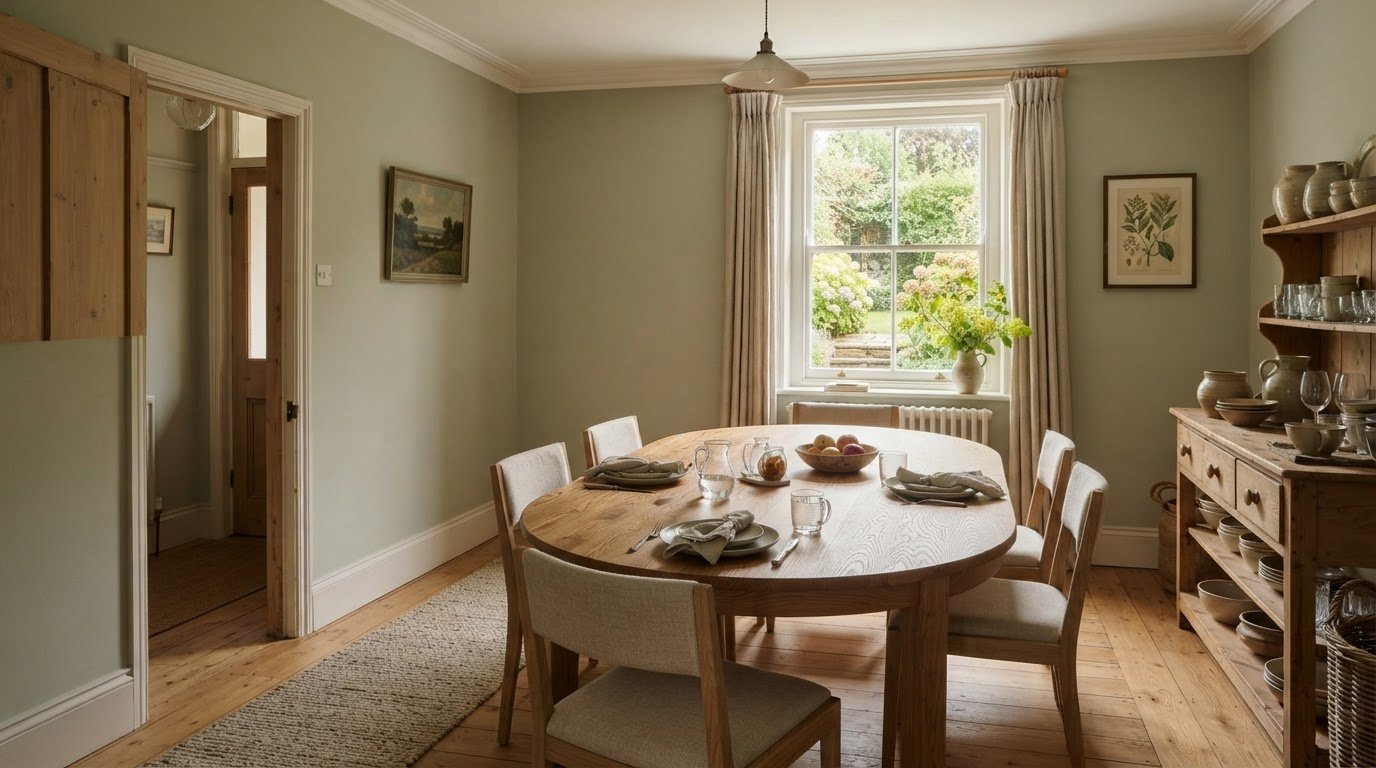
Start with the room. Measure the dining area, allow space to move chairs, and consider how many people use the table daily. Dining-table listings span sizes from 4 foot to 8 foot, so matching the table length to your room is a practical first step. A smaller pine table may suit a compact kitchen; a larger oak table can become the focal point of a dedicated dining room.
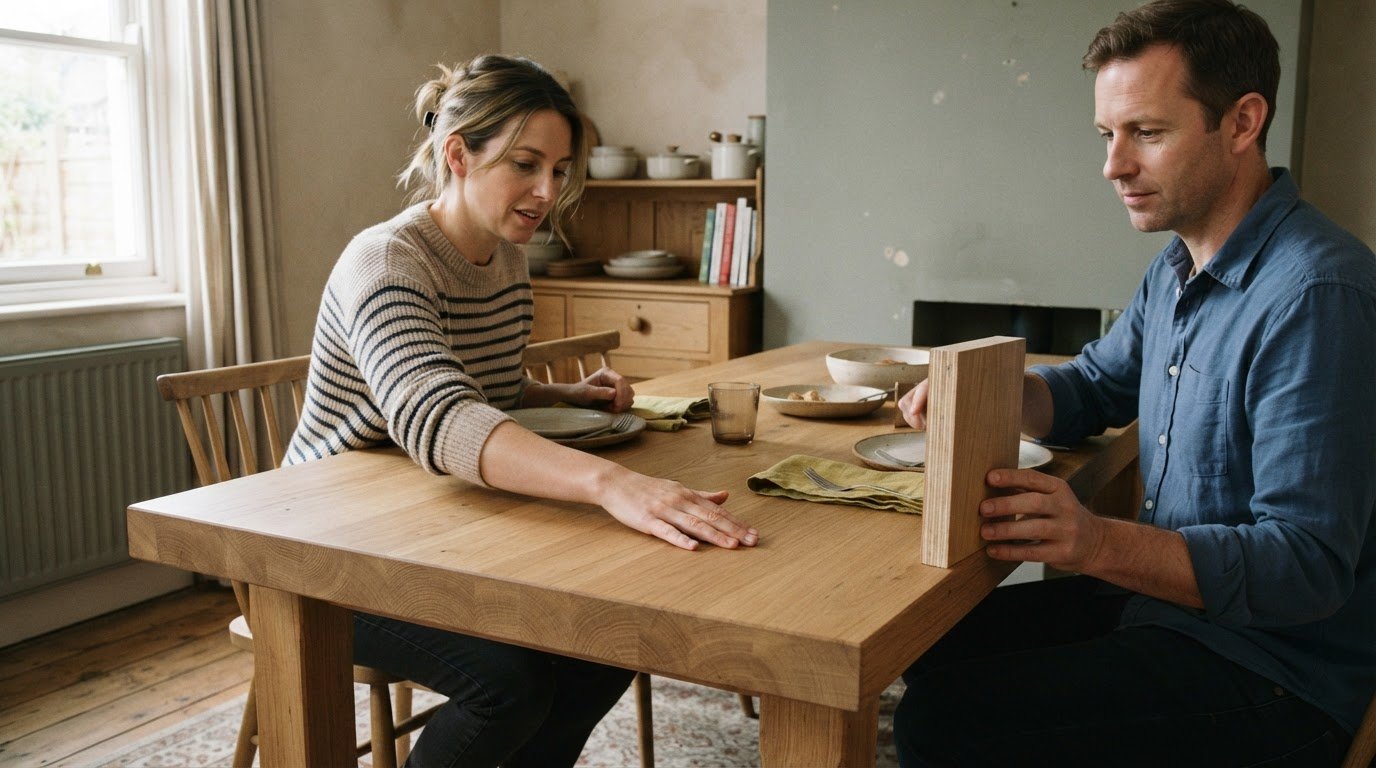
Next, consider everyday use. A busy family table may collect marks from meals, craft projects and homework, while a table used mainly for occasional entertaining has a different workload. Oak is denser and more resistant to dents; pine is softer, so marks may appear more readily. This difference can help you decide whether oak’s added resilience justifies the higher cost.
Style matters, too. Pine’s lighter tone and visible knots suit relaxed, rustic interiors, while oak’s richer colour and pronounced grain can complement a more substantial, traditional setting. A colour finish can help a table coordinate with existing furniture. Compare a sample or finish image with your flooring and room lighting before choosing a shade.
Measure: check the table footprint against the room and chair space.
Prioritise: decide whether lower upfront cost or greater resistance to wear matters more.
Match: compare grain, finish and colour with your dining room.
For a considered comparison of made-to-order pine and hardwood table designs, use these practical checks to narrow the choice to a timber and style that suit your home.
Pine and oak durability and strength
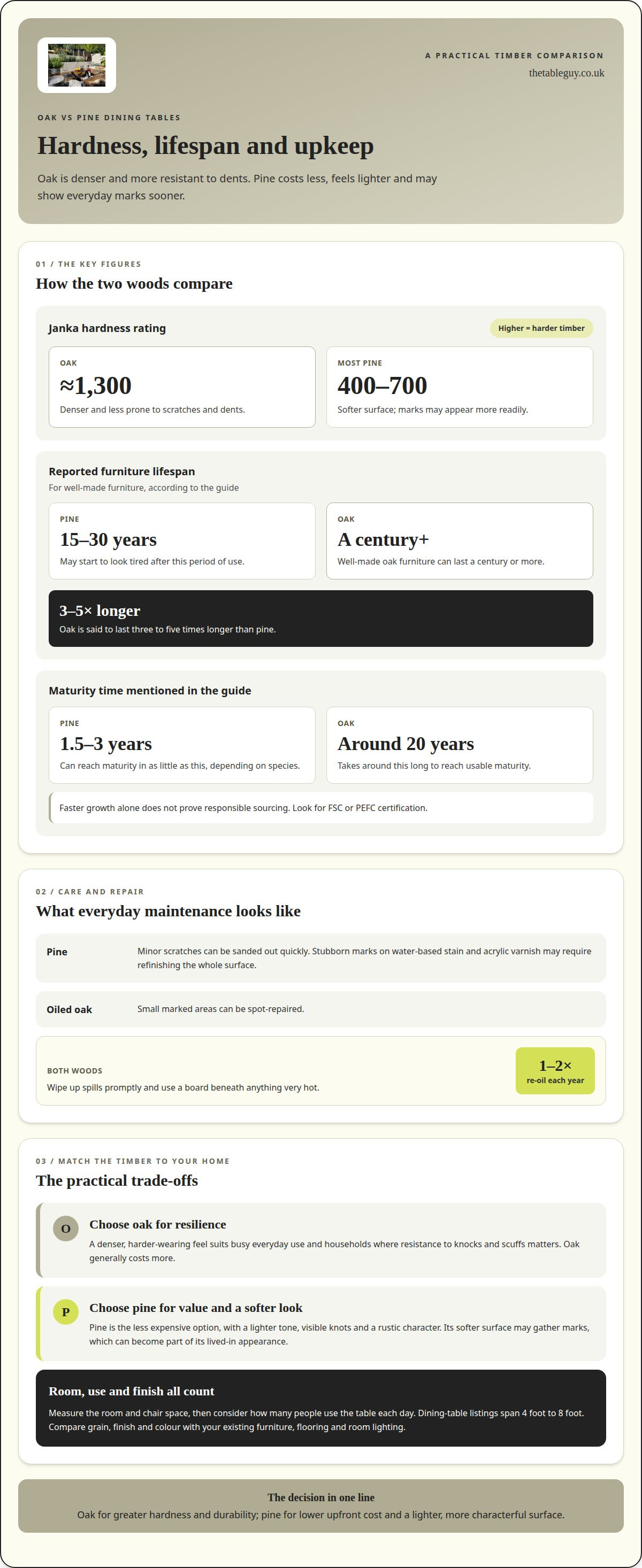
Oak is generally denser, stronger and more durable than pine, making it less prone to scratches and dents. Its Janka hardness rating is around 1,300, compared with most pine ratings between 400 and 700.
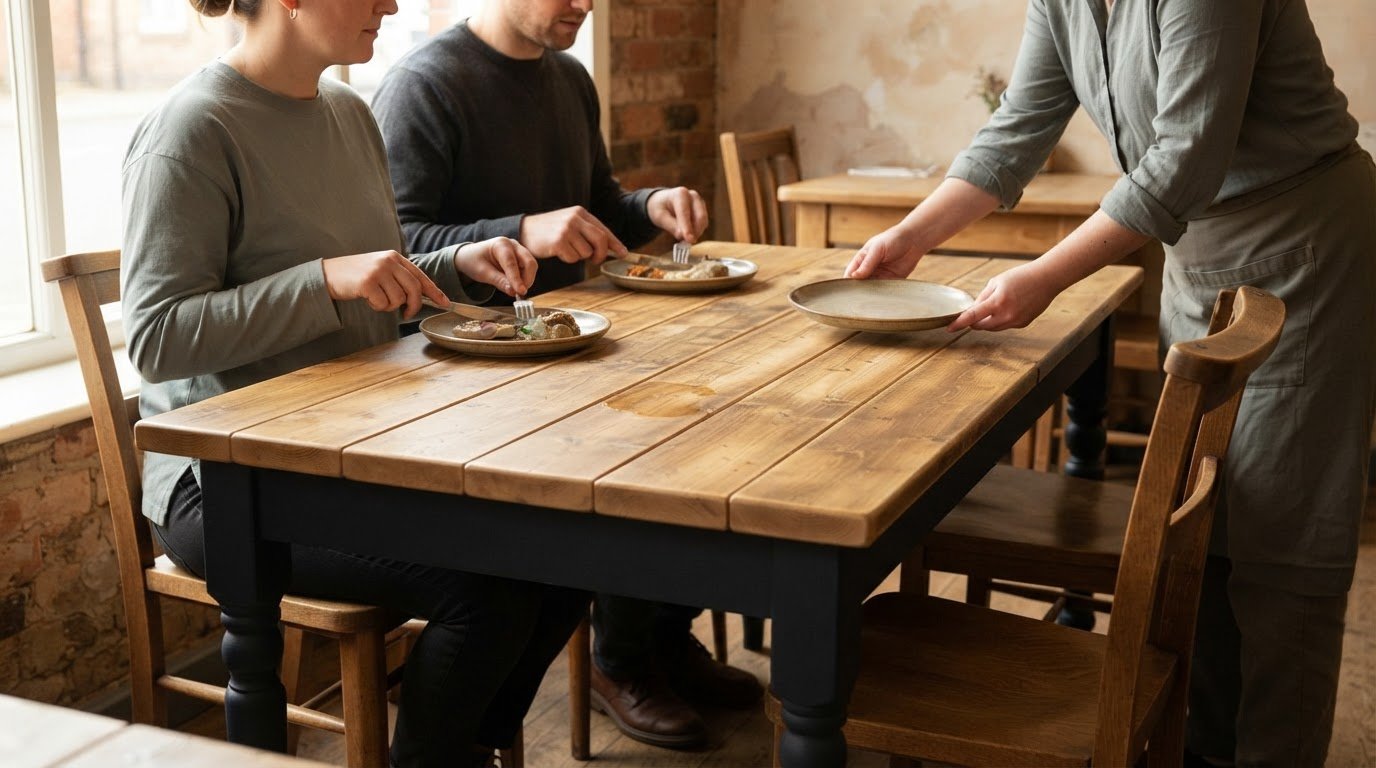
For families with children or pets, oak’s harder surface is better able to resist everyday knocks and scuffs. Pine costs less, but its softer surface may show marks more readily, adding to its lived-in character.
A well-made pine dining table can provide 15 to 30 years of use before it starts to look tired. Well-made oak furniture can last a century or more, and oak is said to last three to five times longer than pine.
That difference matters if you want a table to remain in use for a long time. Pine can still be a practical choice if you are comfortable with a softer surface and expect its appearance to change with everyday use.
Repair depends partly on the finish. A scratch in pine can be sanded out quickly, but stubborn marks on pine finished with water-based stain and acrylic varnish may require refinishing the entire surface. Small marked areas on oiled oak can be spot-repaired.
For either wood, wipe up spills promptly and use a board beneath anything very hot. Re-oiling oak and pine dining tables once or twice a year helps care for their finish.
Choose oak for greater hardness and durability; choose pine if you prefer a softer surface and the option of sanding out minor scratches. The best fit depends on how your household uses the table and how you want it to age.
Softwood and hardwood differences
Oak is a hardwood, while pine is a softwood. These terms describe types of timber, not a simple quality ranking: hardwood does not automatically mean every oak table is better than every pine one. Construction, joints, dimensions and surface treatment also affect how a finished table performs in everyday use.
Weight is one practical difference. Pine is typically lighter, which can make a pine table easier to reposition when rearranging a dining room. Oak is heavier; a solid oak chest of drawers can weigh twice as much as a pine equivalent. That illustrates the difference between the woods, but a table’s weight depends on its design and size.
Think about where the table will stand and how often you might move it. For example, a lighter pine table may be more convenient if you need to shift it to clean beneath it. A fixed dining-room table may suit oak’s heavier feel. Measure the space and check access through doorways before choosing either timber, especially if the table needs to go upstairs.
Strength depends on more than whether the timber is classed as a softwood or hardwood. A well-designed table needs sound construction as well as suitable timber. Look at how the legs meet the frame and how the top is supported. These details help you assess the whole piece rather than choosing by wood category alone.
Choose pine if lower weight and easier repositioning matter in your room.
Choose oak if you prefer a heavier piece and plan to keep it in place.
Assess construction by considering the joints, frame and support beneath the tabletop.
For a closer look at timber options, explore bamboo and hardwood tables and compare how each design could work in your dining space.
The Table Guy: Prosecco Dining Tables
The Table Guy makes Prosecco Dining Tables, farmhouse designs, Bamboo & Hardwood Tables, and Scaffold Board & Pine Tables. If you are weighing oak’s strength against pine’s rustic character, these bespoke timber options are a practical place to start.
Consider the room, how often the table will be used and which finish feels right at home. A hardwood design may suit you if you value oak’s denser feel, while a pine table brings a lighter, more relaxed look. Prosecco Dining Tables offer another distinctive style to consider as you narrow down your choice.
Explore The Table Guy’s bespoke table options and choose a design that suits your home. Get a free quote to discuss your requirements.
Choose a table that feels right for your home
Choosing a pine vs oak dining table is also about the role you want it to play in everyday life. Look beyond the room’s current style: picture shared meals, changing décor and the small routines that gather around a dining table. A well-chosen design should feel at home in those moments, not simply match a colour scheme.
The Table Guy makes Prosecco Dining Tables, Farmhouse Tables and Bamboo & Hardwood Tables to order. These designs offer different directions as you refine the timber, character and overall feel you want. Picture each option in your own space, then choose the one that best suits your home.
Ready to take the next step? Contact The Table Guy to discuss your dining table choice. A thoughtful decision can become the centrepiece of many meals to come.
Frequently Asked Questions
Is oak furniture worth the extra cost?
Often, yes, if you want a dining table to remain a long-term fixture and value oak’s harder surface. Its higher initial cost may make less sense if you expect to change furniture frequently or prefer a lighter look that is easy to personalise. Consider whether you will benefit from oak’s qualities rather than assuming the more expensive timber is automatically best for every home.
Does oak require special maintenance?
Oak does not have one universal care routine; the finish determines what it needs. Waxed oak benefits from a fresh coat every six to nine months, while oiled oak needs re-oiling once or twice a year. Follow the care instructions for the specific finish and use suitable products, rather than applying wax to an oiled tabletop.
How much more expensive is oak than pine?
Oak generally costs more than pine, but the difference varies from one table to another. Size, construction, design and finish all affect the comparison. Compare tables with similar dimensions and construction before judging the price difference. This gives you a fairer basis for deciding whether oak’s qualities justify the extra spend for your intended use.
Is pine furniture poor quality?
No. Pine is softer, but that alone does not make a well-made pine table poor quality. Knots and visible grain are natural features that give pine its rustic character, not automatic signs of a flaw. Assess the overall construction and finish, then decide whether you are comfortable with a surface that may show everyday marks more readily.
Which should you choose?
Choose oak if you value a harder-wearing table and want a substantial piece for a busy dining room. Pine may suit you better if you prefer a lighter look, want to personalise the colour with stain, or prioritise a lower-cost option. Picture the table in your room and consider who uses it each day before settling on a timber.
What are the main differences between pine and oak dining tables?
Oak is a hardwood and pine is a softwood, so they differ in hardness, weight and how their surfaces respond to use. Oak has a more varied grain, while pine’s knots and wavy stripes create a rustic look. Pine is typically lighter, while oak is heavier. These differences affect a table’s character as well as its practical upkeep.
Comments