
The Ultimate Buying Guide to Choosing a Coffee Oak Table in 2026
A coffee table is not just a surface; it is the structural anchor of your living room that requires bespoke sizing for true harmony. You likely want a piece that feels substantial and authentic, yet many high-street options are actually thin, fragile veneers over compressed sawdust. It's incredibly frustrating to find a design you love only to realise it's the wrong scale for your floor plan or won't survive a single accidental spill. You deserve a coffee oak table that lives up to the promise of solid wood and stands the test of time.
We believe furniture should be a partnership between the home and the workshop. This guide shows you how to select a high-quality, bespoke oak coffee table that serves as a durable and stylish centrepiece for your British home. We'll explore 2026 trends for warmer wood tones, explain how to get your dimensions exactly right, and share the secrets to maintaining a flawless finish for decades. From understanding sustainable sourcing to supporting local UK craftsmanship, you'll gain the confidence to invest in a piece that truly belongs in your family's story.
Table of Contents
Why a Solid Oak Coffee Table is the Ultimate Living Room Investment
Choosing a centrepiece for your home is a decision that should last decades. A solid oak coffee table offers a level of resilience that mass-produced alternatives simply can't match. Oak is a slow-growing hardwood. This slow growth creates an incredible density within the timber, making the wood heavy, strong, and naturally resistant to the daily wear and tear of a busy British household. Whilst softer woods like pine might succumb to dents from a dropped remote or scratches from a ceramic mug, oak stands firm. It's a material that respects the investment you're making in your living space.
Every coffee oak table we craft tells its own story through its grain. These natural patterns are unique to every single piece of timber. You won't find the repetitive, printed patterns of a veneer here. Instead, you get "cathedral" arches and tight, swirling knots that add a tactile depth to your room. Investing in a bespoke coffee table uk means you aren't just buying furniture; you're commissioning a future heirloom that will age with grace alongside your family.
The Durability of Kiln-Dried Hardwood
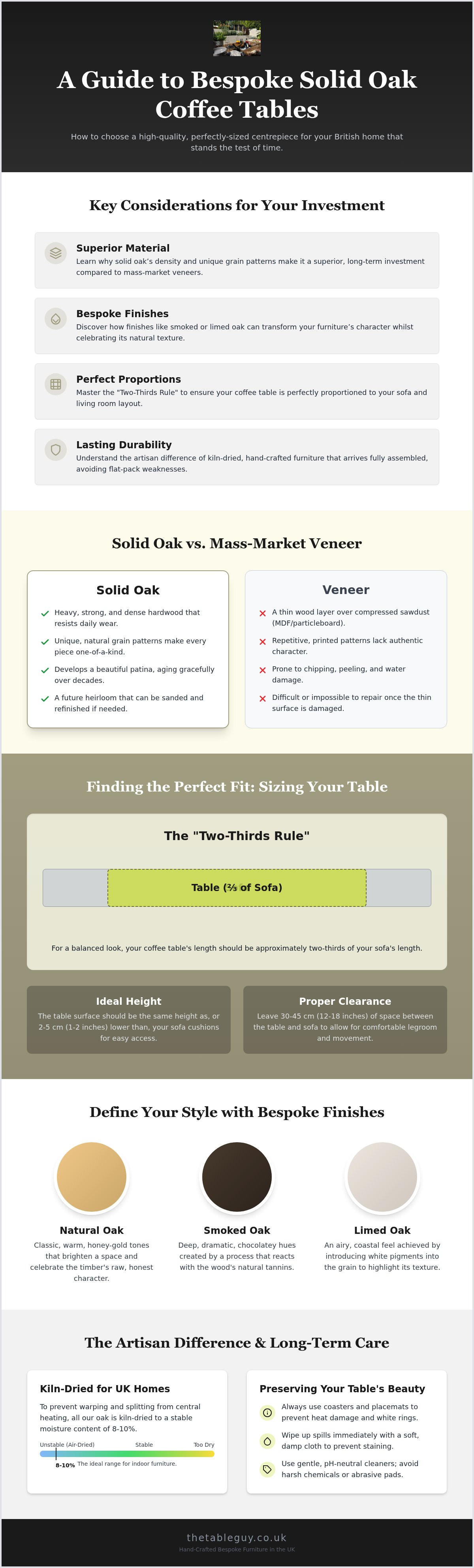
In the UK, our homes experience significant temperature shifts throughout the year. Without proper preparation, solid wood can warp or split as it reacts to central heating. That's why we insist on kiln-dried hardwood. Unlike the cheaper, air-dried timber often found in mass retail, kiln-dried oak has been carefully treated in a controlled environment. Kiln-drying is a precise process that reduces the wood's moisture content to a stable 8-10%. This ensures your table remains perfectly flat and structurally sound regardless of the season. It's a vital step that distinguishes a master-crafted piece from a temporary fix.
Aesthetic Versatility Across Interior Styles
Oak possesses a rare chameleon-like quality. It feels just as at home in a rustic, traditional farmhouse as it does in a sleek, minimalist Scandinavian lounge. The wood's natural mid-tones provide a warmth that brightens a room without overpowering other décor elements. This is why many designers choose oak when specifying a wood cocktail table for high-traffic areas. It handles the hustle and bustle of family life whilst developing a beautiful patina over time. Instead of looking worn out after a few years, a solid oak piece simply looks more established. It reflects the memories made around it, becoming a permanent part of your home's character.
Exploring Textures, Colours, and Bespoke Oak Finishes
The finish you select for your coffee oak table is the final brushstroke on your living room’s canvas. It defines how the light hits the surface and how the piece feels under your hand. Natural oak offers those classic, honey-gold tones that instantly brighten a space. If you prefer something more dramatic, smoked oak uses a process that reacts with the wood’s natural tannins to create deep, chocolatey hues without the need for thick, obscuring paints. For an airy, coastal feel, limed oak introduces white pigments into the grain. This highlights the wood’s unique texture whilst keeping the overall look light and modern.
We prefer using high-quality oils and waxes that penetrate the timber rather than sitting on top like a plastic film. This is a crucial part of preserving the natural beauty of the hardwood over time. It allows the grain to breathe and remain tactile. We only use eco-friendly, non-toxic finishes that are safe for every member of the family. You can feel the difference. A mass-produced table often feels cold and synthetic, but a hand-finished oak surface feels warm and alive. Every choice we offer is about making the table yours.
Natural vs. Stained Oak
A natural oil finish is perfect if you want to celebrate the raw, honest character of the timber. It is the quintessential choice for traditional or farmhouse-style homes. If your lounge requires a more formal or sophisticated aesthetic, bespoke stains can darken the oak to mimic the richness of walnut or ebony. This flexibility is vital if you're trying to match a new piece with existing family heirlooms. We can adjust the intensity of the stain to ensure perfect harmony with your current décor. It's about creating a partnership between your vision and our craft.
Smooth Sanded vs. Live Edge Designs
Texture plays a significant role in the energy of a room. A smooth, sanded straight-edge table offers clean lines for minimalist or industrial interiors. It feels polished and intentional. Conversely, a live edge design retains the natural silhouette of the tree. It brings a rugged, artisan energy into your home that serves as a constant reminder of the material's organic origins. If you have young children, we often recommend a slightly rounded edge profile. This provides extra safety without losing that distinctive, handmade charm. If you're ready to start your journey, you can explore our handmade coffee tables to see these finishes in action.
Sizing and Proportions: Finding the Perfect Fit for Your Space
Achieving visual harmony in your living room depends entirely on scale. A coffee oak table that is too small looks lost, whilst one that is too large disrupts the flow of the room. We recommend following the "Two-Thirds Rule". Your table should measure approximately two-thirds the total length of your sofa. This creates a balanced relationship between the two pieces. Height is equally critical. To ensure comfort, the table surface should sit roughly level with your sofa’s seat cushions. This makes reaching for a drink or a book feel natural rather than a chore.
Don't forget the space around the furniture. You need room to move. We advise leaving a walkway clearance of at least 45cm between the table and the sofa. This provides enough legroom for guests without forcing them to stretch too far to reach the surface. If you have a modular or L-shaped sofa, the sharp angles can sometimes feel overwhelming. In these cases, a round coffee table can soften the room’s profile and improve accessibility from every seat.
Rectangular vs. Square Tables
Rectangular tables are the classic choice for standard three-seater sofas and narrower rooms. They provide a long surface area without encroaching too far into the floor space. However, if you own a large corner sofa, a square table is often the superior option. It fills the central void of an L-shaped seating arrangement much more effectively. Before you commit, try using masking tape to mark out the table’s footprint on your rug. It's a simple way to see if the proportions feel right before the wood is even cut.
The Bespoke Sizing Advantage
Many British living rooms feature quirky layouts, alcoves, or chimney breasts that make standard furniture a difficult fit. Off-the-shelf sizes are designed for "average" rooms, but your home isn't average. Customising the dimensions of your coffee oak table by even 10cm can completely transform the flow of your lounge. We take a personal approach to every build. Because we hand-craft every piece to order in our UK workshop, we can adjust the length, width, and height to match your specific floor plan. This partnership ensures your furniture isn't just a beautiful object, but a functional part of your daily life.
Long-term Care: Preserving the Natural Beauty of Your Hardwood
Your coffee oak table is a living piece of furniture. It isn't a static, plastic object. Because oak is an organic material, it continues to breathe and react to its environment long after it leaves our workshop. Proper care isn't about being precious; it's about respecting the timber. For daily cleaning, avoid those harsh, silicone-based sprays found in supermarkets. They leave a smeary residue that dulls the wood's natural glow over time. A simple, damp microfibre cloth followed by a dry one is all you need. Properly maintaining your coffee oak table ensures it remains the heart of your home for generations.
UK weather is famously temperamental. Your table will notice the difference between a humid summer and a winter where the central heating is cranked up. This seasonal movement is perfectly normal for solid hardwood. To keep the timber hydrated and prevent small cracks, we recommend a light re-oiling every six to twelve months. It's a therapeutic process that brings the grain back to life and reinforces the wood's natural defences.
Protection Against Spills and Stains
Life happens in the living room. Whether it's a knocked-over wine glass or a stray coffee cup, the secret to protection is speed. Blot the spill immediately with a clean cloth. Don't rub it, as this can push the liquid deeper into the grain. Our hand-applied oil finishes provide excellent resistance, but they aren't invincible. Oak is naturally high in tannins, which can react with iron to cause dark spots. This means you should never leave a damp cast-iron pot or a rusty tin sitting directly on the surface. Always use coasters and heat mats. It's a small habit that prevents the white rings caused by scorching or trapped moisture.
Dealing with Scratches and Wear
One of the greatest joys of owning a solid oak piece is its ability to be restored. If your table suffers a deep scratch or a stubborn stain, you aren't stuck with it forever. Unlike cheap veneers that reveal ugly chipboard underneath when damaged, solid oak can be lightly sanded and re-finished. This allows your table to develop a beautiful patina over the decades. Every mark tells a story of a family gathering or a quiet morning. For minor scuffs, a small amount of furniture wax and a bit of elbow grease will usually do the trick. If you're looking for a piece that truly stands the test of time, you can view our full collection of handmade furniture to find your perfect match.
Why a Bespoke Table Guy Creation Beats Mass-Produced Alternatives
Choosing a piece of furniture from a high-street giant often means settling for a compromise. Mass-market retailers prioritise speed and low costs, which frequently results in products held together by cam-locks, glue, and optimism. Our "Anti-Flat-Pack" philosophy stands in direct opposition to this throwaway culture. We only ship fully assembled, solid pieces that are ready to take their place in your home immediately. There are no Allen keys or confusing diagrams here. When you invest in a coffee oak table from our workshop, you're choosing a piece built with artisan joinery techniques that ensure it remains sturdy and silent for generations.
There's a significant environmental benefit to this approach. By choosing to buy once and buy well, you're actively reducing the amount of furniture that ends up in British landfills every year. It's a more sustainable way to live. Beyond the environmental impact, there is the human element. You won't be dealing with a corporate call centre or an automated bot. You have a direct line of communication with the people actually making your table. This transparency builds a partnership based on trust, ensuring the final result is exactly what you envisioned for your space.
Hand-Crafted in Our UK Workshop
Every piece starts with the careful selection of raw timber. We look for the most expressive grains and the most resilient boards, ensuring the foundation of your furniture is flawless. Our family-run business was established in 2014, and we've spent over a decade refining our artisan process. From the initial cut to the final, hand-applied oiling, everything happens right here in our UK workshop. Supporting local British craft isn't just about pride; it's about reducing the carbon footprint associated with international shipping. It's a slower, more deliberate way of working that celebrates quality over quantity.
Your Table, Your Way
We don't believe in the "cookie-cutter" look found in big-box stores. Your home is unique, and your furniture should reflect that. We offer you the freedom to customise every detail of your coffee oak table. You can choose the leg style that matches your aesthetic, the specific thickness of the tabletop, and the exact dimensions that fit your floor plan. This level of individual choice ensures that your table is a true reflection of your personality rather than a mass-produced afterthought. It's about creating a centrepiece that feels like it was always meant to be there. Ready to anchor your living room? Explore our bespoke oak coffee tables today.
Investing in a Centrepiece for Generations
Choosing a coffee oak table is an investment in the long-term character of your home. You now understand the importance of selecting kiln-dried hardwood to prevent warping and the value of bespoke sizing to ensure your room flows perfectly. By avoiding the fragile nature of mass-produced flat-pack items, you're choosing a piece that ages gracefully and resists the rigours of daily life.
Since 2014, our family-run workshop has been dedicated to the art of traditional British craftsmanship. We believe in building furniture that lasts, using solid hardwood and artisan joinery techniques right here in the UK. Every table we create is made to order, giving you the freedom to specify the exact dimensions and finish your space requires. It's a partnership between your vision and our workshop.
We look forward to helping you create a durable, stylish centrepiece that your family will enjoy for decades to come.
Frequently Asked Questions
Is solid oak better than oak veneer for a coffee table?
Solid oak is significantly superior for longevity and durability. Whilst veneer is merely a thin layer of wood glued over compressed board, solid timber allows for repair and restoration. If your coffee oak table suffers a deep scratch, you can sand it back and re-finish it. You simply can't do that with veneer without ruining the piece. It's the difference between a temporary item and a lifetime investment.
How much space should I leave between my sofa and the coffee table?
We recommend leaving a gap of approximately 45cm between your sofa and the table edge. This distance, often called walkway clearance, provides enough room for legs and comfortable movement whilst keeping the surface within easy reach. If you have a smaller room, you might reduce this slightly, but 45cm is the gold standard for ergonomic flow in a British living room. Measure your rug first to ensure the proportions feel right.
Does a coffee oak table require a lot of maintenance?
Not at all, provided you treat the wood with respect. Daily care involves nothing more than a quick wipe with a damp microfibre cloth to remove dust. You don't need expensive sprays or harsh chemicals. To keep the grain looking its best, we suggest a light application of furniture oil every six to twelve months. This simple routine keeps the timber hydrated and maintains its natural, protective barrier against the elements.
Can I order a custom size that isn’t listed on your website?
Yes, bespoke sizing is the heart of what we do in our UK workshop. We understand that every home is unique, and standard dimensions don't always fit. Whether you need a narrower profile for a hallway or an extra-large surface for a corner sofa, we can build it. Just get in touch with your specific requirements. We'll work with you to create a piece that fits your floor plan perfectly and serves your family's needs.
How do I stop my oak table from marking or staining?
Prevention is the best strategy for protecting your hardwood surface. Always use coasters for drinks and heat mats for hot plates to prevent white rings or scorching. If a spill occurs, blot it immediately with a dry cloth rather than rubbing. Our hand-applied finishes provide a strong level of resistance, but being proactive ensures the wood remains flawless. It's about building small habits that preserve the table's beauty for decades to come.
What happens if the wood moves or cracks over time?
Wood is a natural, organic material that reacts to changes in humidity and temperature. Minor seasonal movement is entirely normal as the timber breathes. We use kiln-dried oak to minimise this, ensuring the moisture content is stable before we start building. If a small shake or surface crack does appear, it's often part of the wood's character. Significant issues are rare because of our traditional joinery techniques and careful material selection.
Are your coffee tables delivered flat-pack or fully assembled?
Every coffee oak table we sell is delivered fully assembled and ready for use. We don't believe in the fragile nature of flat-pack furniture. By shipping our pieces whole, we ensure the structural integrity and artisan joinery remain exactly as they were when they left our workshop. You won't need to hunt for an Allen key or struggle with confusing instructions. Simply place it in your room and enjoy the craftsmanship immediately.
How do I choose the right colour of oak to match my other furniture?
Matching different wood tones is about finding a common undertone rather than an exact replica. Natural oak has honey-gold hues, whilst smoked oak offers deeper, cooler browns. If you're unsure, we can provide advice on which of our bespoke finishes will best complement your existing décor. Remember that oak ages beautifully; a new piece will eventually develop a patina that helps it blend seamlessly with your older family heirlooms over time.


Comments