
Bespoke Drinks Sideboard UK: How to Choose a Gin Cabinet That Fits Your Home
Updated: Oct 22
The most impressive gin cabinet isn’t necessarily the one with the most features. It’s the one that makes serving drinks easy, keeps bottles and glassware organised, and fits comfortably in your room. If you’re searching for a bespoke drinks sideboard UK makers can shape around your home, start with how you entertain, not a showroom checklist. A cabinet can look striking on its own but feel oversized or awkward if its proportions and layout don’t suit everyday life.
Made-to-order furniture lets you plan around your space, storage needs and preferred style. In this guide, you’ll find practical ways to list what you want to store, measure for a comfortable fit and choose a design that works with your interior. The Table Guy is a family-run UK furniture maker, established in 2014, creating sideboards and other furniture to order in its workshop. Use these pointers to turn the way you host into a clear starting point for a piece of furniture.
Table of Contents
What makes a bespoke drinks sideboard right for a gin cabinet?
A drinks sideboard is open or enclosed furniture for keeping bottles, glassware and serving items together. It may have the familiar form of a sideboard, with a top surface and storage below, or be arranged more like a cabinet. Its purpose is practical: keep the things you use to pour and serve within reach without giving over a whole room or wall to a home bar.
A gin cabinet can simply be a drinks sideboard planned around the bottles and glasses you own. You don’t need a built-in fridge, specialist cocktail equipment or an elaborate bar set-up to make it useful. If you serve drinks occasionally, a straightforward piece with well-planned storage may suit better than a feature-heavy unit. Start with your habits and available space, then decide which details are worth including.
Drinks sideboard, gin cabinet or home bar: what is the difference?
These names overlap, and their meaning can vary between furniture makers. A general-purpose sideboard is designed for household storage and may hold dining items as well as drinks. A drinks cabinet or gin cabinet signals a more specific purpose, with a layout centred on bottles and glassware. A bar unit usually suggests a dedicated serving area, whilst a drinks dresser may include an upper section for display. For historical context, explore the history of cellarettes and liquor cabinets, which shows how furniture for storing drinks has taken different forms over time.
Choose according to function rather than the label. A few bottles, glasses and a serving tray can fit comfortably in a sideboard without turning it into a complete home bar. Open storage keeps items visible and close to hand; enclosed storage gives the room a more discreet appearance. To decide between them, consider how often you use the items, whether you want them on display and how much dusting you’re happy to do.
Who benefits most from a made-to-order drinks sideboard?
Made-to-order furniture can be useful when a standard size would leave wasted space or sit awkwardly in your room. An alcove, narrow wall or particular interior style may call for different proportions or a more considered design. It can also suit hosts who want bottles, glasses and serving essentials organised together instead of spread across kitchen cupboards and dining furniture.
Before choosing a layout, picture a typical gathering. Do guests serve themselves, or do you bring drinks to the table? Do you want glassware on display, or prefer it tucked away between occasions? These details help define what the furniture needs to do. A bespoke drinks sideboard UK buyers choose can be shaped around practical preferences as well as the character of the room.
Ready-made and flat-pack furniture can work for many homes. A bespoke piece offers a different approach, with its dimensions, storage and style planned around your requirements. The Table Guy creates sideboards and related furniture to order in its workshop. Think of a drinks sideboard as useful everyday storage first, and an inviting place to serve from when friends arrive.
Plan drinks sideboard storage around bottles, glassware and hosting
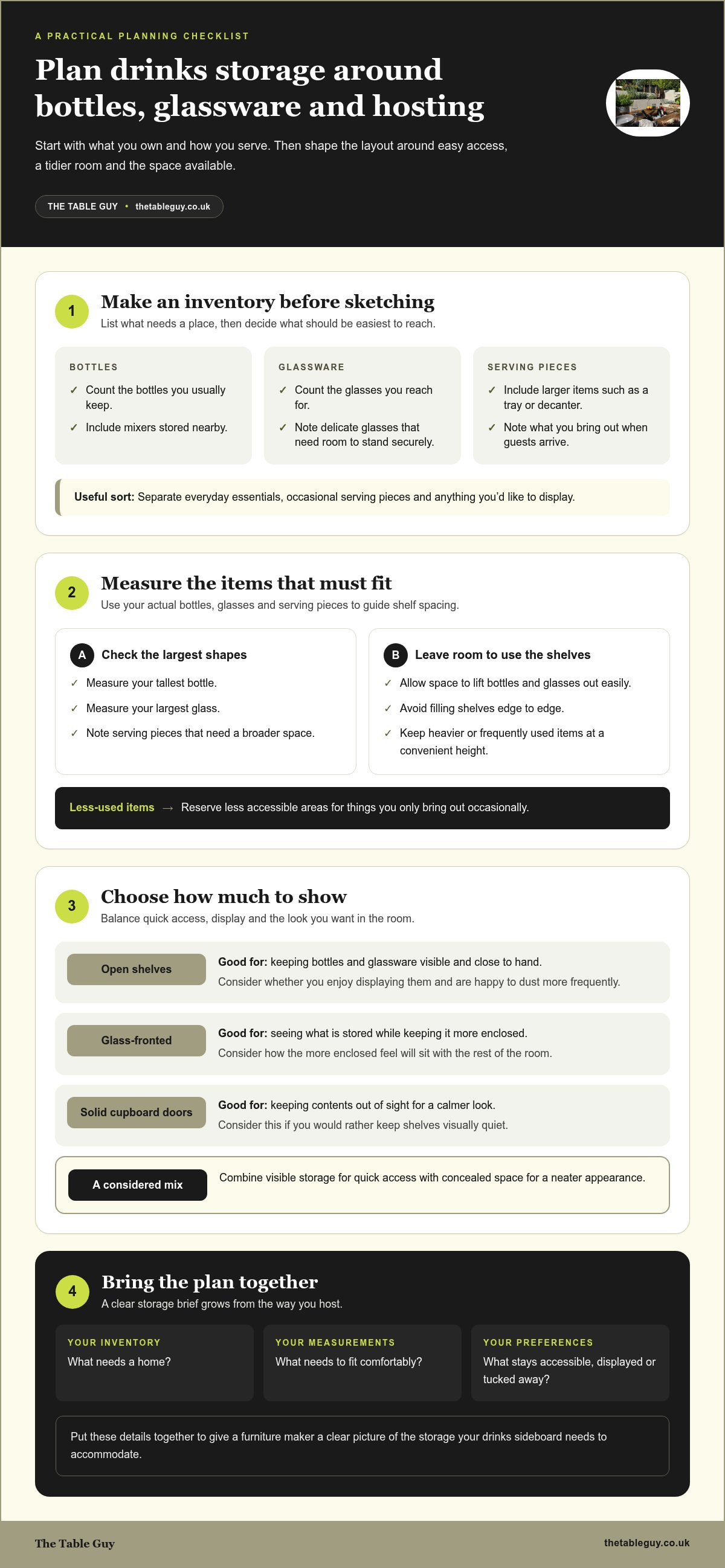
Begin with an inventory, not a sketch. Count the bottles you usually keep, the glasses you reach for, any mixers you store nearby and the serving pieces you use when guests arrive. Include larger items such as a tray or decanter. This list helps you decide what needs easy access and what can be tucked away, rather than ending up with shelves that don’t suit your collection.
Think about how you host, too. If guests help themselves, keep frequently used glasses and bottles within comfortable reach. If you prepare and serve drinks yourself, group the essentials together; you may not need everything on display. Prioritise storage you’ll use regularly, and treat specialist additions as optional rather than the starting point.
How much space do bottles and glassware need?
Check the actual shapes and sizes of your drinks items. Bottles vary in height and width, whilst delicate glassware needs room to stand securely without being crowded. Measure your tallest bottle and largest glass, and note any serving pieces that need a broader space. Use those measurements to guide shelf spacing and layout, leaving enough room to lift items out easily.
A shelf filled edge to edge may seem efficient, but it can make everyday access awkward. Leave working space so you can reach for a bottle or glass without shifting everything beside it. Keep heavier or frequently used items at a convenient height, and reserve less accessible areas for things you only bring out occasionally.
Display or closed storage: which suits your drinks sideboard?
Your cleaning routine matters as well. Items left on open shelves may need more frequent dusting than those kept behind doors. If you enjoy arranging glassware and bottles as part of your interior, display space could be worthwhile. If you’d rather keep shelves visually quiet, favour concealed storage. A mix can balance quick access with a neater appearance. For a coordinated approach to displaying treasured pieces elsewhere, explore this guide to bespoke shelving units.
Before settling on a layout, divide your inventory into everyday essentials, occasional serving pieces and items you’d like to display. This gives a furniture maker a clear picture of what the storage needs to accommodate. If you’re turning those requirements into a made-to-order piece, explore The Table Guy’s sideboards as a starting point for planning furniture around your home.
Compare materials, style and bespoke details before choosing
Material and appearance shape how a drinks sideboard feels in a room, but they should support its purpose. Consider the furniture already around it, the atmosphere you want to create and the upkeep you’re comfortable with. Pine, bamboo, hardwood and metal each bring a different visual character; none is automatically right for every home.
How should the material suit your room and routine?
Natural wood can bring warmth and a familiar, traditional impression, whilst metal may add a more contemporary note. The effect depends on the design and how the material sits alongside your flooring, wall colour and other furniture. Before deciding, consider the finish you prefer and the care it calls for in everyday use. Choose a look you’ll enjoy living with, not simply one that catches your eye on its own.
This broad comparison can help you weigh up the options:
Which design details are worth prioritising?
First decide what the sideboard needs to hold and how it should fit the room. Proportions, useful storage and comfortable access matter more day to day than decorative extras. Then consider how the door style, handles and visible surfaces will shape its character. Simple lines can help the piece blend in; distinctive details can make it a focal point.
A furniture-led design can echo the materials and shapes already in the room without competing for attention. A feature-cabinet approach makes the sideboard more prominent, which may suit a space where entertaining furniture is intended to stand out. Let your home, the way you’ll use the piece and your own taste guide the choice. For a connected living-room scheme, compare its look with bespoke coffee tables and other furniture nearby.
A bespoke drinks sideboard UK homeowners commission can bring these decisions together in a made-to-order piece. The Table Guy creates sideboards and related furniture to order, so your preferred material character and design direction can inform the design. Explore made-to-order sideboards as you refine the style and details that feel right for your home.
Measure and position a bespoke drinks sideboard with confidence
A sideboard can look well proportioned on its own and still feel awkward once it’s in place. Accurate measurements help you plan a piece that fits the wall, works around fixed details and leaves room to move. Record each measurement in one place, and make a simple sketch to help explain the room when planning a made-to-order design.
Which measurements should you take before planning?
Work through the space in order, measuring the intended position and the route the furniture must take to reach it.
Measure the available width. Check the wall space between corners, doorways or other fixed features. If the walls appear uneven, measure at more than one point and note the narrowest usable width.
Check the depth. Measure from the wall to the point where the sideboard would begin to interfere with a walkway or nearby furniture. Include skirting boards, which can affect how closely a piece sits to the wall.
Record the available height. Note the floor-to-ceiling space and any features above the intended position, such as shelves or a sloping ceiling. Mark the height of sockets and switches as well.
Map anything that moves. Record the swing of nearby doors and the space needed to open the sideboard’s planned doors or drawers. Note socket positions so they won’t be hidden or difficult to reach.
Trace the access route. Measure doorways and consider tight turns, hallways and steps between the entrance and the room. The piece needs to fit its final position and the route into your home.
Write down the measurements with clear labels, then draw a quick plan showing walls, skirting, sockets, doors and nearby furniture. Mark uneven walls or floors, too. These details give a furniture maker a more useful starting point than a single width measurement.
How can the cabinet work with the rest of the room?
Plan for movement as well as fit. Leave a comfortable route past the sideboard and picture how guests will approach it when you’re serving drinks. Nearby seating, dining furniture and the main walkway all affect whether the serving surface feels easy to reach or creates a bottleneck.
Check the full opening arc of doors and drawers, not just the cabinet’s footprint. A door that opens into a chair or blocks a passage can make storage frustrating to use. Compare the planned width and height with surrounding pieces, too. A very tall or broad cabinet may dominate a small room, whilst a smaller one could look lost beside substantial furniture.
With a room sketch and measurements in hand, you can give a clear brief for a bespoke drinks sideboard UK homes can make room for. Share your dimensions and placement plan with The Table Guy to plan a made-to-order sideboard around your space.
Choose a bespoke gin cabinet made around your home
You’ve considered the space, storage and style. Bring those decisions together in a short design brief. It doesn’t need technical drawings or specialist language. Clear notes about where the sideboard will sit, what it needs to hold and the look you prefer give a furniture maker a practical starting point for a made-to-order piece.
What should you include in a drinks sideboard design brief?
Keep your notes specific and easy to scan. A useful brief can cover:
Room and position: name the room, describe the intended location and attach a simple sketch or photograph if useful.
Measurements and access: record the available width, depth and height, plus any skirting, sockets, uneven walls, door swings or narrow access routes that may affect the design or placement.
Storage needs: list the bottles, glassware and serving items you want the furniture to hold. Note anything unusually tall, broad or delicate.
Design direction: describe the material character and overall style you have in mind, and whether you prefer visible display, concealed storage or a combination.
Everyday use: explain how you serve drinks, which items need to be easy to reach and what you’d like the top surface to do.
This brief keeps the conversation grounded in real use. If you’re unsure about a design choice, describe the effect you want instead: for example, a quiet piece that blends with the room or a more prominent focal point. That context helps shape a design around both practical needs and your preferred look.
How does a made-to-order piece fit into your wider home?
A drinks sideboard should feel at home beside the furniture you already own. Compare its planned proportions with nearby pieces, and consider whether its material and overall character will complement or deliberately contrast with them. A considered relationship matters more than matching every detail. Aim for a room that feels connected, not a set of identical furniture.
The Table Guy makes bespoke sideboards, consoles and TV units to order, alongside other furniture. A drinks sideboard can be considered in the context of the wider interior, including its dimensions, purpose and visual presence. The Table Guy is a family-run UK furniture maker, established in 2014, with a workshop-based approach to made-to-order furniture.
With your measurements, storage list and preferred look ready, you have a clear starting point. If you’re planning a bespoke drinks sideboard UK home can make its own, explore bespoke furniture from The Table Guy and take the next step towards a piece shaped around your home.
Turn your ideas into a piece that feels at home
The right bespoke drinks sideboard UK choice is one that feels considered long after the first gathering: easy to live with, suited to your room and personal to the way you welcome people in. Use your notes as a starting point, then shape the details around what matters most to you. A thoughtful piece doesn’t need to imitate a traditional bar to make entertaining feel special.
Ready to explore what could work in your home? Explore bespoke furniture from The Table Guy and take the next step towards a drinks sideboard that reflects your taste.
Frequently Asked Questions
Is a drinks sideboard the same as a gin cabinet?
Not always, although the terms are often used interchangeably. “Gin cabinet” suggests furniture intended for storing gin and related glassware, whilst “drinks sideboard” can describe a broader piece for bottles, serving items and other household storage. There’s no single naming convention that determines the layout. Focus on what you want the furniture to hold and how you’ll use it, rather than relying on the label alone.
Can a drinks sideboard store drinks other than gin?
Yes. A drinks sideboard can hold the bottles and serving items that suit your household, such as wine, whisky, soft drinks or mixers. If your collection includes bottles of different shapes, consider how they’ll sit together and which items should be easiest to reach. You can organise the space by occasion or drink type, making it simpler to find what you need when hosting without restricting the furniture to gin.
Should spirits be stored away from sunlight?
Yes, it’s sensible to keep spirits out of direct sunlight. Prolonged exposure can affect the appearance and quality of some drinks, so choose a shaded position rather than a sunny windowsill. A cupboard or a spot away from bright windows can help limit exposure. If you’re storing a particular bottle for a long time, follow the guidance on its label or from its producer, as storage advice can vary between drinks.
Do I need a drinks sideboard with a fridge?
No, a fridge isn’t essential for a drinks sideboard. Many people use the furniture to organise bottles, glasses and serving items, then chill drinks separately as needed. Think about what you usually serve and whether you have suitable fridge space elsewhere. If you mainly serve spirits at room temperature or add ice when pouring, dedicated chilling may not be a priority in your furniture plan.
Can a bespoke drinks sideboard be used as everyday furniture?
Yes. A drinks sideboard can serve a wider purpose between gatherings, provided its storage suits the items you want to keep there. For instance, you might reserve one area for bottles and use other cupboard space for dining linens or tableware. If you’re considering a bespoke drinks sideboard UK homes can use every day, include its regular role in the design brief.
What should I keep on the top of a drinks sideboard?
Use the top for items that are handy during serving, such as a drinks tray, a decanter or a bowl for garnishes. You could also leave part of the surface clear for pouring and arranging glasses. Avoid treating it as permanent overflow storage, as a crowded top can be harder to use when guests arrive. Choose a few objects that suit your routine and the room’s style.
Can a drinks sideboard work in a room that is not used for entertaining?
Yes. Its role doesn’t need to depend on hosting. In a dining room, it can keep table linens and serving pieces close by; in a living room, it can provide general household storage alongside a small drinks selection. Think about what you’ll reach for during an ordinary week. A piece that earns its place every day can still be ready to serve when friends visit.
Comments