
Bespoke Walnut Furniture: The Ultimate Guide to Solid Wood Craftsmanship
Updated: 2 days ago
That stunning walnut table you spotted online might look the part today, but if it's dressed in a thin veneer, it's already on a countdown to peeling edges and heartbreak. Choosing walnut furniture for your home shouldn't feel like a gamble on a "walnut-effect" finish that fails to stand the test of time. You've likely felt the frustration of mass-market pieces that don't quite fit your alcove or the confusion of why one table costs ten times more than another. It's a common struggle when you're searching for quality in a world of flat-pack shortcuts.
We understand that a home deserves more than just a temporary fixture; it needs a centrepiece with a story. With warm, dark woods making a significant comeback as the colour of the year for 2026, there's never been a better time to embrace this inviting material. In this guide, we'll show you why solid walnut remains the pinnacle of British craftsmanship and how its rich tones can transform your living space. You'll learn how to distinguish genuine timber from clever imitations and gain the confidence to commission a bespoke piece that fits your room perfectly. From understanding the durability of this remarkable wood to the joy of the design process, we're here to help you invest in a future heirloom.
Table of Contents
Understanding Solid Walnut vs Walnut Effect
Choosing the right timber for your home is a decision that balances aesthetics with endurance. Solid walnut is a premium hardwood celebrated for its immense strength and those signature, rich chocolate tones that bring immediate warmth to a room. Unlike the uniform look of factory-produced items, every piece of walnut furniture we create in our workshop carries the distinct fingerprint of the tree it came from. This authenticity is something you can feel the moment you run your hand across the surface. It's the tactile nature of the real grain that mass-produced pieces simply can't replicate.
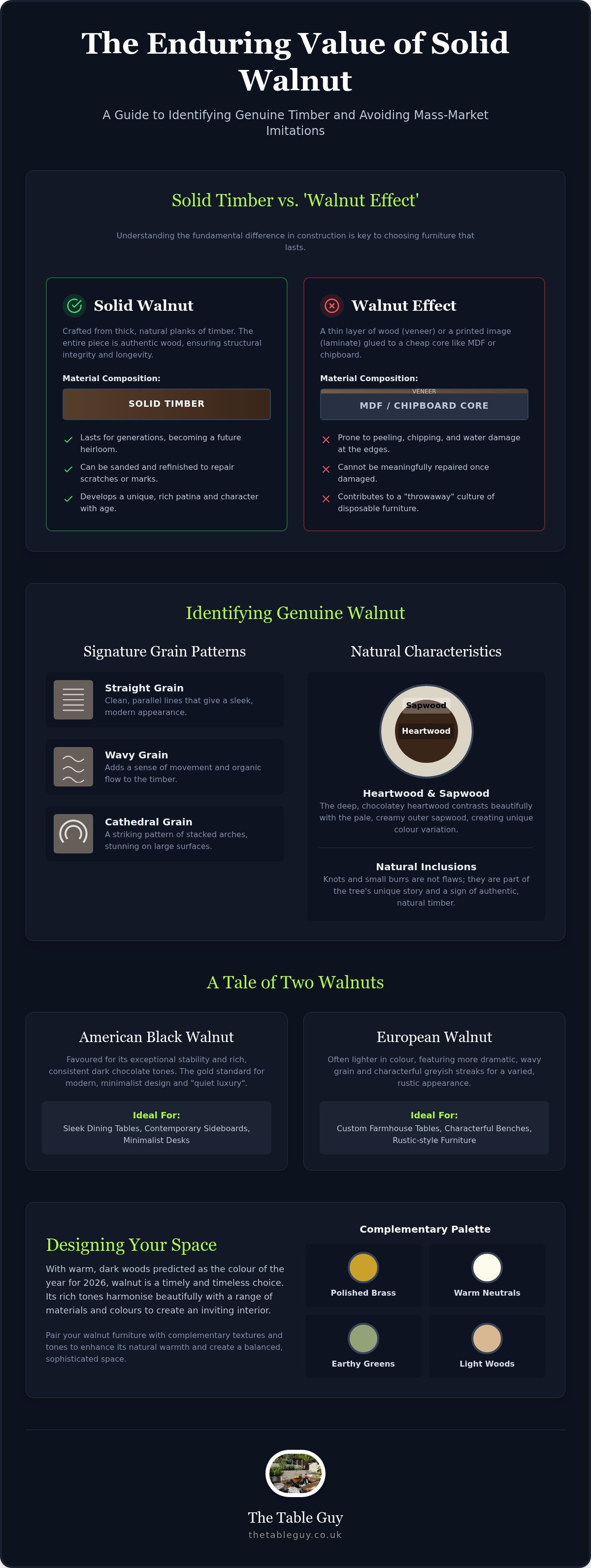
The technical difference between solid timber and "walnut effect" alternatives is vast. Solid wood means the entire piece is cut from thick planks of natural timber. In contrast, many high-street retailers use walnut veneers; these are paper-thin slices of wood glued onto a core of MDF or chipboard. Whilst they might look convincing in a showroom, they lack the structural soul of the real thing. Much of the world's finest stock comes from the Eastern American black walnut tree, a species we favour for its exceptional stability and the way it responds to traditional hand-tools. This reliability is exactly why it remains the preferred choice for bespoke furniture makers across the UK.
The Problem with High-Street Walnut Effect
Mass-market furniture often relies on laminates or veneers to keep costs down, but these shortcuts come with a hidden price. Because veneers are only a fraction of a millimetre thick, they are incredibly prone to peeling or chipping at the corners. Once the glue fails or an edge gets knocked, there's no way to fix it. Laminates are even more restrictive; they are essentially a photograph of wood grain and colour printed onto a plastic surface. These pieces lack the depth and natural variation of real timber. They also prevent us from offering "live edge" designs, where we preserve the natural, organic curve of the tree's outer bark to create a truly one-of-a-kind table.
Why Real Walnut Furniture Lasts Generations
Solid walnut is a slow-growing hardwood that develops a unique patina over time. Its density makes it remarkably resistant to warping and shrinkage, ensuring your dining table or sideboard remains as straight and true as the day it left our workshop. This durability is matched by its repairability. If a busy family home leads to a deep scratch or a water mark, solid wood can be gently sanded down and refinished. You can't do that with a laminate. By choosing authentic walnut furniture, you're investing in a piece that doesn't just survive daily life; it gets better with age.
The Unique Characteristics of Walnut Wood
Walnut is a timber of contrasts. The outer layers of the tree, known as sapwood, offer pale, creamy tones that sit beautifully alongside the deep, chocolatey hues of the heartwood. These characteristics of black walnut are what give the wood its world-renowned depth. Over time, walnut behaves differently to many other hardwoods. Whilst cherry or oak might darken with age, walnut actually mellows and lightens slightly when exposed to natural light. This softening of the tone creates a stunning vintage patina. It only adds to the charm of your walnut furniture as the decades pass.
Black Walnut vs European Walnut
In our workshop, we primarily work with two distinct varieties. Black Walnut is the gold standard for those seeking a rich, consistent dark finish. It's exceptionally stable and works beautifully for modern, minimalist designs. European Walnut, on the other hand, is often lighter with more dramatic, greyish streaks. If you are looking to create a custom farmhouse dining table, the choice often depends on the level of rustic character you desire. Black walnut provides that "quiet luxury" feel. European varieties can feel more traditional and varied.
Grain Patterns and Natural Features
The grain of walnut is where the true artistry of nature shines. You might see "straight" grain for a clean look, or "wavy" grain that adds a sense of movement to the timber. One of the most striking features is "cathedral" grain. This looks like a series of stacked arches running down the length of a plank. It's a breathtaking sight on a large dining surface. We also celebrate natural inclusions like knots and small burrs. These aren't flaws; they're the unique story of the tree. No two pieces of walnut furniture will ever be identical. Your piece is yours alone.
We take our responsibility to the environment seriously. The walnut we source for our UK workshop is selected for its sustainability and quality. Choosing a handmade piece means supporting a slower, more intentional way of making that respects the lifecycle of these slow-growing trees. It's about longevity, not landfill. If you're curious about how these textures feel in person, you can always browse our latest hand-crafted tables and sideboards to see the grain for yourself.
Bespoke Walnut vs Mass-Produced: A Value Comparison
Investing in bespoke walnut furniture is often seen as a significant upfront commitment, but the true value reveals itself over decades, not months. When you examine the technical data on black walnut, its density and Janka hardness score prove it's a material built for heavy, daily use. A mass-produced flat-pack table might seem like a bargain, but if it needs replacing every five years due to sagging or structural failure, the cost per year quickly overtakes that of a solid timber piece. Our workshop focuses on creating functional antiques that hold their value whilst reducing the environmental burden of the "throwaway" furniture cycle.
The "Buy Once, Buy Well" Philosophy
There is a profound emotional connection to a piece built specifically for your family. Unlike high-street items held together by flimsy cam-locks and staples, our handmade pieces utilise traditional mortise and tenon joints. These connections are designed to move naturally with the wood, ensuring the piece remains rock-solid for generations. It's the difference between a temporary fixture and a household legacy. Every time you sit at a table from our workshop, you know the provenance of the timber and the hands that shaped it. That artisan story is something a factory assembly line simply cannot provide.
Customisation: Beyond the Standard Sizes
British homes are famous for their unique layouts, from narrow Victorian alcoves to modern open-plan spaces with awkward corners. Standard high-street sizes often leave wasted space or feel cramped. By commissioning a bespoke piece, you dictate the millimetre-perfect dimensions that fit your life. This level of tailoring extends far beyond just height and width. You might choose the industrial contrast of steel legs, perhaps taking inspiration from the sturdy frames found on a bespoke metal garden table, and adapting that aesthetic for your dining room.
Selecting the right finish is the final step in making the piece your own. Whether you prefer the natural, tactile feel of a matt oil, the traditional sheen of wax, or the robust protection of a modern lacquer, we guide you through the choice based on your lifestyle. A busy family home with young children might require a different level of protection than a quiet home office. This bespoke approach ensures your walnut furniture isn't just beautiful to look at; it's perfectly equipped for the reality of your daily routine.
Designing Your Home Around Walnut Furniture
Integrating dark timber into your living space doesn't have to feel daunting. Whilst some high-street retailers suggest that walnut only belongs in traditional, period properties, we've found it's actually the ultimate anchor for modern homes. The deep, rich tones of walnut furniture provide a grounding effect that lighter woods often lack. To balance this, we recommend pairing your piece with soft, earthy wall colours like sage green, warm neutrals, or even a bold terracotta. These tones pull out the natural highlights in the grain without making the room feel enclosed. Lighting plays a vital role too. Positioning warm-toned lamps near the wood surface will reveal the hidden depths of the heartwood that might otherwise stay in the shadows.
Mixing materials is a brilliant way to modernise the look. Walnut looks exceptional when paired with the cool contrast of brushed steel or the vintage warmth of brass. For a more eco-conscious and textured aesthetic, you can even mix it with lighter sustainable materials like bamboo. This layering of textures prevents the room from feeling flat and highlights the meticulous attention to detail found in handmade craftsmanship. To understand how to further elevate your space with complementary high-end materials, you can visit Cocolea to learn more about luxury curation and longevity.
The Walnut Dining Table as a Social Hub
A dining table is more than just a surface; it's the social heart of your home. Pairing a solid walnut top with minimalist chairs creates a curated, intentional look that lets the timber remain the star. If you're working with an open-plan layout, you can create a cohesive flow by choosing a bespoke coffee table uk in a matching finish. This visual thread pulls the living and dining areas together, making the space feel unified rather than fragmented. Keep styling simple; a single ceramic vase or a set of linen napkins is often all you need.
Walnut in Modern and Industrial Interiors
Walnut is the perfect warmth-bringer for industrial interiors. If your home features raw concrete, exposed brick, or metal beams, the organic texture of walnut softens those cold surfaces. It's a key element of the "Modern Heritage" look that's so popular today. For a sophisticated home office, consider an integrated bespoke shelving units uk system. This provides a professional, high-end backdrop whilst celebrating the mid-century modern appeal of the wood. These pieces bring a sense of permanence and history to even the newest of builds.
Ready to find the perfect centrepiece for your room? Browse our latest collection of bespoke walnut tables and storage units to see how they can transform your home.
Commissioning Your Piece from The Table Guy
Commissioning a bespoke piece is an exciting journey that turns a simple requirement into a household legacy. It isn't just about choosing a product; it's about entering a partnership with our family-run team. We begin every project with an initial consultation where we listen to your specific needs. We'll talk through the exact dimensions required for your space, the specific character of the timber you prefer, and which leg styles will best complement your existing decor. This is the stage where we ensure your walnut furniture is perfectly tailored to your lifestyle and the unique layout of your home.
Once the design is settled, the work moves into our UK workshop. We've been hand-crafting furniture since 2014, and we pride ourselves on a transparent process that invites you into the story of your piece. You aren't just buying from a shop; you're supporting a tradition of master craftsmanship that avoids the shortcuts of mass production. We believe that the best furniture comes from a place of passion and dedication, and that's exactly what we bring to every commission.
From Timber Selection to Final Polish
The process truly begins with the wood itself. We meticulously select individual boards to ensure grain continuity across the surface, creating a seamless visual flow that veneers simply cannot match. Our team uses traditional joinery techniques to ensure your piece remains stable and wobble-free for generations. Every piece is finished by hand to ensure a smooth, durable surface. This final stage is crucial for protecting the timber from the rigours of daily life whilst enhancing the natural, chocolatey depth of the walnut grain.
Start Your Bespoke Journey Today
Before you get in touch, it's helpful to measure your space accurately to see how a new centrepiece will sit amongst your other belongings. Remember to consider walkways and seating room to ensure a comfortable flow. Our designs offer incredible flexibility, including extendable dining table options for those who love to host but need to save space during the week. Our workshop is a place of individual choice, and we're here to help you navigate every decision.
When your commission is complete, we don't just drop it at the door. We provide detailed care guidance to help you maintain the wood's lustre and protect your investment for years to come. We invite you to join our growing community of UK homeowners who value authenticity and the enduring beauty of real British craft. Start your journey with us today and invest in walnut furniture that truly belongs in your home.
Investing in a Lifetime of Quality
Choosing solid timber over high-street imitations is a commitment to quality that you'll appreciate every single day. You've seen how the rich, chocolatey tones and dense grain of authentic walnut furniture offer a level of durability and repairability that thin veneers simply cannot match. By opting for a bespoke commission, you're not just buying a table; you're ensuring a perfect fit for your home whilst supporting traditional British craftsmanship. Every knot and swirl in the grain tells a unique story of a slow-growing tree, now transformed into a functional piece of art for your family to enjoy.
Our family-run workshop has been hand-crafting bespoke designs since 2014. We take immense pride in our transparent process and meticulous attention to detail, ensuring your new centrepiece arrives exactly as you imagined it. With nationwide UK delivery, we make it simple to bring the warmth and character of natural wood into your living space. We're here to guide you through every choice, from the first dimension to the final hand-applied finish. It's time to move away from the throwaway culture of flat-pack items and invest in something truly permanent.
Start your bespoke walnut commission with The Table Guy today. We look forward to partnering with you to create a beautiful, lasting legacy for your home.
Frequently Asked Questions
Is walnut furniture more expensive than oak?
Walnut is generally more expensive than oak because the trees grow significantly slower and yield less usable timber per harvest. This natural scarcity, combined with high demand for premium furniture, drives up the cost of the raw material. Whilst oak is a fantastic, durable choice, walnut furniture is often viewed as the pinnacle of luxury. It's an investment in a unique aesthetic that mass-market materials simply cannot replicate.
Does walnut furniture darken or lighten with age?
Unlike many other hardwoods that darken over time, walnut actually tends to lighten and "mellow" as it ages. This process is accelerated by exposure to natural UV light, which softens the deep chocolate tones into a rich, honeyed patina. We recommend rotating decorative items on your table surface occasionally. This ensures the wood develops an even, consistent colour across the entire piece as the years pass.
How do I maintain and clean a solid walnut table?
Maintaining your table is straightforward if you follow a few simple rules. Use a soft, lint-free cloth for daily dusting and a slightly damp cloth for any spills. Avoid harsh chemical cleaners or silicone-based polishes, as these can damage the hand-applied finish. Because we use high-quality oils and waxes in our workshop, a simple re-application of a maintenance oil every year or two will keep the timber nourished.
Can I commission a walnut table in a custom size?
Every piece we create is entirely made-to-order, so custom sizing is at the heart of what we do. Whether you need a narrow console for a hallway or a grand dining table for an open-plan room, we can tailor the dimensions to your exact millimetre. You aren't restricted by the standard sizes found in high-street shops. This flexibility ensures your furniture fits your space and your lifestyle perfectly.
Is walnut wood sustainable for furniture making in the UK?
We prioritise environmental responsibility by sourcing our timber from managed forests where replanting programmes are strictly enforced. Walnut is a sustainable choice for UK furniture making when it comes from these verified sources. Choosing a bespoke, handmade piece also supports sustainability by reducing the throwaway culture associated with cheap, flat-pack items. Our walnut furniture is built to last for generations, ensuring the timber's lifecycle is respected long-term.
What is the lead time for a bespoke walnut piece?
Lead times for our bespoke commissions vary depending on the complexity of the design and our current workshop schedule. Because we're a small, family-run team, we don't rush the process; every piece deserves our full attention. Generally, you can expect a wait of several weeks from the initial design sign-off to delivery. We'll always provide a clear, honest estimate when you first get in touch to discuss your project.
Does walnut furniture scratch easily?
Walnut is a dense hardwood, meaning it's naturally resistant to the bumps and knocks of a busy home. Whilst it isn't indestructible, it's far more resilient than softwoods like pine. One of the greatest benefits of solid wood is that it's repairable. If a surface scratch does occur over time, the timber can be gently sanded and refinished to its original glory, unlike veneered pieces which would be permanently ruined.
Can I choose the specific grain pattern for my bespoke table?
Whilst we can't control exactly how a tree grows, we involve you in the timber selection process to ensure the grain meets your preferences. During our consultation, we can discuss whether you prefer a cleaner, straighter grain or a piece with more characterful knots and "cathedral" arches. This level of individual choice is what makes the bespoke journey so rewarding. It ensures your finished piece is exactly what you envisioned.


Comments