
Child-friendly dining table finish: choose one for family use
There’s no single drying time for a table finish: water-based polyurethane has 2-4 hours between coats, shellac 30-60 minutes, and tung oil 24-48 hours per coat; beeswax takes 24 hours to cure. For a child-friendly dining table finish, the key is to follow the coating’s directions and let it cure before little hands use the surface.
It’s understandable to want a child-friendly dining table finish that can handle sticky fingers, spilled drinks and the occasional crayon without making every family meal a careful operation. But the finish is only part of the decision: the material and sheen also affect how the table responds to scratches, heat, stains, water rings and everyday cleaning.
This guide compares common finishes and surfaces, explains what to consider when choosing cleaners and allowing a finish to cure, and helps you weigh easy wiping against visible marks and future repairs. You’ll get a clearer picture of what suits your household, from mealtimes to homework and messy play.
Table of Contents
1. How resistant are table finishes to spills, heat, scratches and cleaning products?
Polyurethane, hardwax oil and lacquer can all protect a dining table, but they differ in how they wear and how much care they need. Polyurethane forms a surface coating, while oil-based finishes need ongoing care. Untreated or oil-finished wood may require regular treatment and can stain permanently. Lacquer can be damaged by scratches, heat or unsuitable cleaners, so no finish makes a table immune to family life.
Sintered stone is made by compressing natural minerals and heating them to temperatures exceeding 1200 degrees. That manufacturing process creates a dense surface suited to everyday spills, scratches and warm dishes. Still, follow the maker’s cleaning guidance: a durable material can be marked by abrasive tools or cleaners that don’t suit its surface.
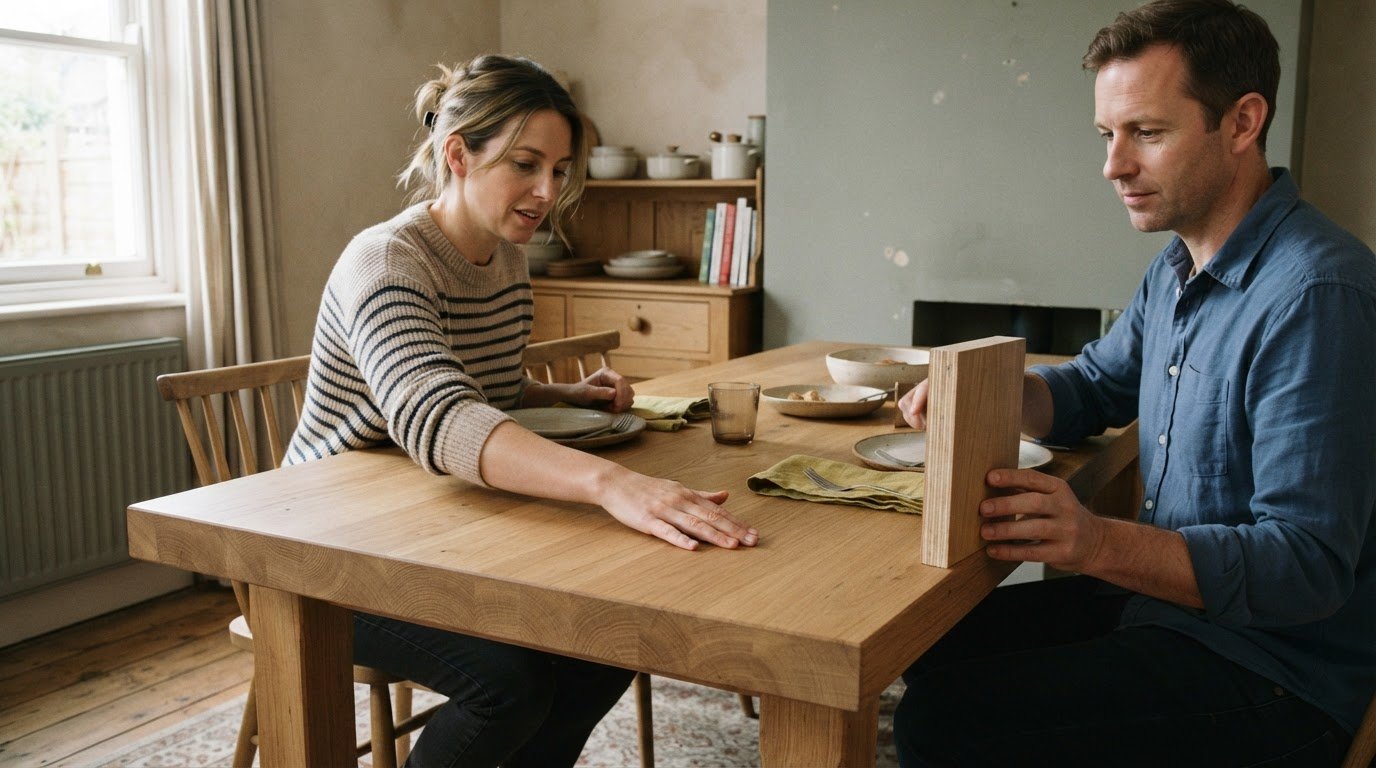
Oak is one example of a durable wood for furniture. It can withstand knocks and scratches better than veneer, and surface damage can often be sanded out and refinished. Sealed wood is also relatively easy to clean with a damp cloth. Pay particular attention to corners and edges, where an impact can break through the coating and expose the material beneath.
Coating schedules also affect when a table is ready for use. Water-based polyurethane has a stated interval of 2-4 hours between coats; shellac’s is 30-60 minutes, whilst tung oil needs 24-48 hours per coat. Beeswax takes 24 hours to cure. These are distinct timings, so follow the product directions and don’t confuse time between coats with full curing.
For UK families comparing finishes for children’s furniture, EN-71 certification for children’s toys can be a useful reference. It doesn’t replace the finish’s own directions; let the coating cure as directed before children use the table.
Can you apply a child-safe finish over an existing finish? Yes, provided the new coating is compatible and the surface is prepared according to its instructions. Remove residue, prepare the old coating as directed, and test the new finish in an inconspicuous spot before treating the whole tabletop.
2. Scratch, spill, heat and stain resistance
Laminate and melamine suit busy kitchens where food and drink spills are common. Their surfaces wipe clean easily and resist food and drink stains, making them practical for weekday meals or homework. The trade-off is repair: damage can be difficult to fix, so a deep scratch may remain visible.
Glass offers another stain-resistant surface. It doesn’t absorb spills, so sauces and drinks stay on top rather than soaking in. A glass top can also shield a painted wooden table beneath it, though the glass still needs care around dropped objects and knocks.
On wood, texture affects how wear looks. Naturally varied grain can disguise small marks and dents, while pen marks may be harder to remove. Marker ink is a useful test: a suitable finish should help stop it and common spills from soaking into the wood.
Sheen also affects everyday use. A high-gloss top is easy to wipe after crafts or messy meals, but it can chip if an object falls on it or knocks against the legs. Matt or satin finishes tend to disguise minor marks, so the table may look less visibly worn between cleans.
Consider heat separately. Warm serving dishes can challenge a tabletop, and a coating’s heat resistance depends on its formulation and care instructions. Scratch resistance doesn’t mean you can cut directly on the surface. Felt pads beneath candle holders, vases and serving dishes can limit friction; a glass topper can add protection over wood or high-gloss furniture.
For messy play, place a wipeable tablecloth or silicone mat over the work area. This gives crayons, glue and craft tools a defined surface without making the whole table take the wear. If you’re weighing appearance against family routines, family dining table designs can help you consider which surface and style suits your home.
3. Water rings and damage from cleaners
A water ring can form when moisture sits on a tabletop, particularly beneath a cold glass or damp mug. Traditional furniture finishes may also show heat damage, scratches, stains or clouding caused by cleaners. The mark may affect the coating rather than the wood, so identify the surface and check its care instructions before attempting to scrub it away.
For sealed wood, glass and laminate, a damp cloth is generally a simple first step for everyday spills. Wipe the area, then dry it with a clean cloth rather than leaving moisture pooled around joints or edges. If a drink leaves a ring, move the glass and wipe the surface promptly. Placemats can help prevent repeated moisture marks beneath cups and plates.
Choose cleaners carefully. A product made for one surface can dull or cloud another, while abrasive pads can scratch a finish as you remove a stain. Follow the finish maker’s cleaning directions and test an unfamiliar cleaner in a hidden area first. Avoid soaking the tabletop, as excess liquid can seep into seams or unsealed edges.
How do you clean and maintain a child-friendly dining table finish? Wipe spills with a soft, damp cloth, dry the surface and use only cleaners suited to its finish. The Scottish Government’s childcare cleaning procedure says tables should be wiped down with antibacterial wipes after eating. At home, follow the table finish’s care directions before using wipes.
Wax needs a different routine from sealed surfaces and may require frequent buffing to maintain its appearance. Keep a soft cloth handy for fingerprints, and use placemats beneath wet dishes or craft materials. If regular cleaning starts to change the colour or sheen, stop using that cleaner and return to the finish’s recommended care method.
4. Choosing a child-friendly dining table
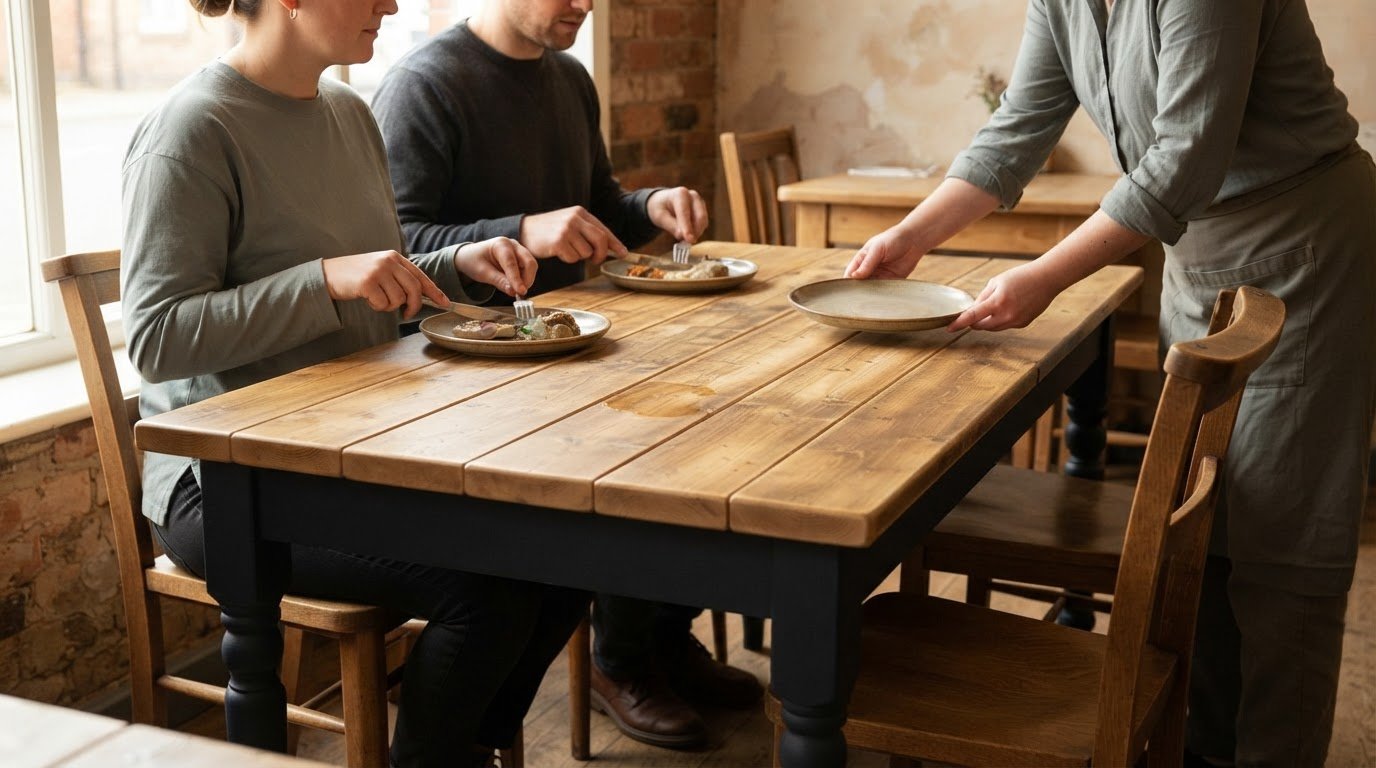
Start with your household’s routine: meals, homework, crafts and working from home may all share the same surface. Choose a finish that can be wiped with a damp cloth, then decide whether you’d rather hide small marks or see messes clearly so you can clean them.
The material matters beyond the finish. Solid wood, including oak, can withstand knocks better than veneer, and surface damage can often be sanded out and refinished. Laminate and melamine wipe clean easily but can be difficult to repair if damaged. Tempered glass is stronger than standard glass and is designed to break into even pieces, though fragments can still pose a risk to young children.
Think about shape and access, too. Round or oval tables have no sharp corners, while a central pedestal or trestle support can leave more room for high chairs and booster seats. Pedestal designs may feel less stable than four-legged tables, so test stability before choosing. A standard-height table can accommodate high chairs.
Measure the room before settling on a size. Allow at least 90 cm between the table edge and counters, walls or radiators for walking space. A UK family of four might choose six seats to make room for visitors or homework; an extending table can offer a compact everyday footprint with extra capacity for gatherings. Benches can slide beneath the table when they’re not in use.
Finally, choose a finish that is safe once cured, and follow its directions before children use the table. Matt or satin finishes tend to disguise minor marks, while high gloss wipes clean readily but can chip after a knock. Weigh these trade-offs alongside your preferences for wood grain, colour and care. Looking at curated collections from specialists like RitzHouzz can also provide inspiration for how modern dining sets balance hard-wearing finishes with practical family styling.
Ready to choose a table around your family’s space and routines? Explore dining table options.
The Table Guy: Prosecco Dining Tables
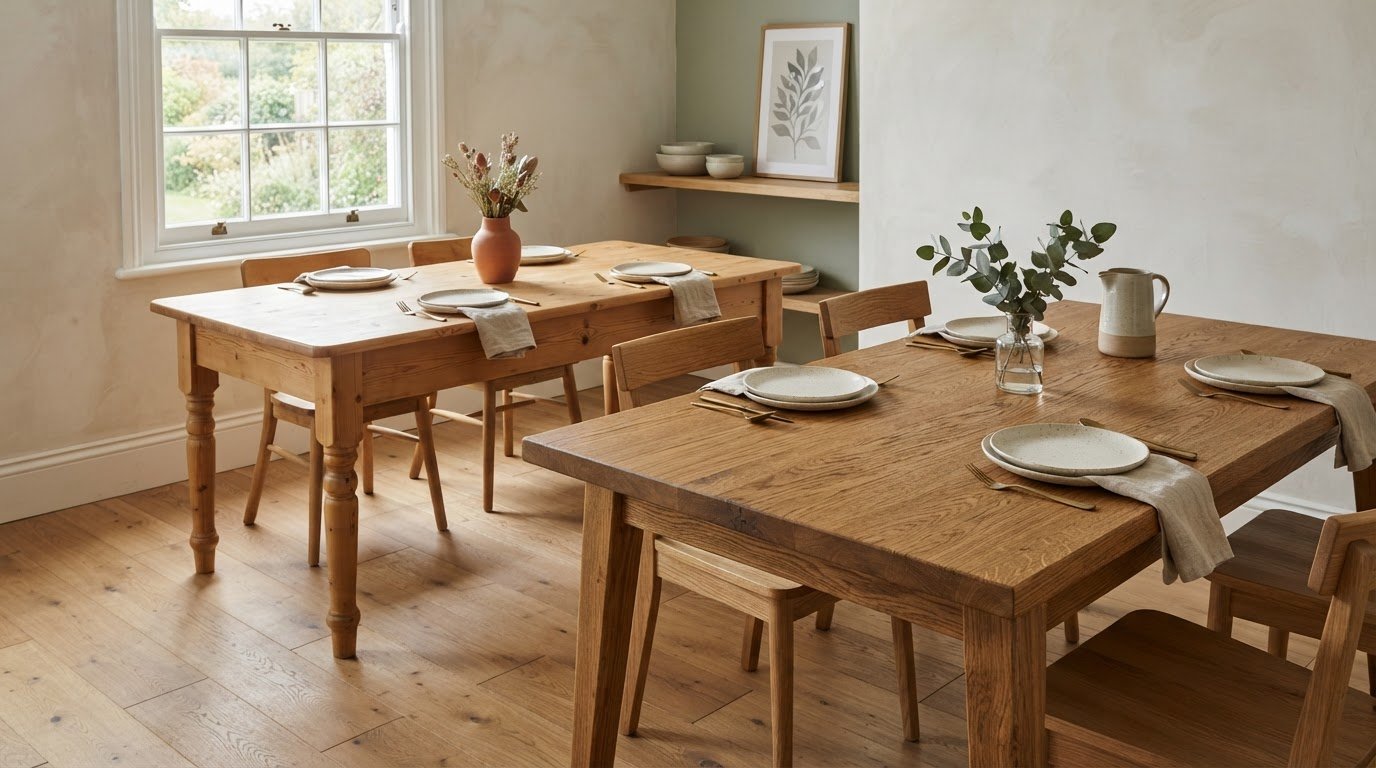
The Table Guy makes Prosecco Dining Tables, Farmhouse Tables, Bamboo & Hardwood Tables, and Scaffold Board & Pine Tables to order. These options give families a choice of materials and styles for a dining table suited to everyday meals, homework and gatherings.
Use the guidance above to decide what matters most at home: easy cleaning, the character of visible wood grain, or how minor marks look over time. Then consider which table style and material best fit your room and routine. A thoughtfully chosen dining table can become part of family life, from shared breakfasts to evening craft projects.
To explore dining table options, visit thetableguy.co.uk.
Choose a table that feels at home in your family’s life
Picture how the table will be used, not just how it looks in a showroom. Think about where children draw, how meals are served, and whether you prefer the natural character of wood or a more polished appearance. These everyday details can help you choose a child-friendly dining table finish and a style you’ll be happy to live with.
The Table Guy makes Prosecco Dining Tables, Farmhouse Tables, and Bamboo & Hardwood Tables to order. Consider which material and design suit your room and family routines, then discuss your preferences with the team. A well-chosen table can become a welcoming centre for meals, projects and time together.
Contact The Table Guy for help choosing a dining table for your home. Take the next step when you’re ready to shape a space your family can enjoy.
Frequently Asked Questions
How long do common kitchen-table finishes take to dry and fully cure?
Coat intervals and full curing are different timings. Water-based polyurethane has a stated 2-4 hours between coats, shellac 30-60 minutes, and tung oil 24-48 hours per coat. Beeswax takes 24 hours to cure. These figures don’t establish full curing times for every finish, so keep children away until the product’s directions say the surface is ready for use.
How resistant are table finishes to spills, heat, scratches and cleaning products?
A surface’s resistance depends on its material and coating, so no finish is indestructible. Sealed wood, glass and laminate are relatively easy to clean with a damp cloth, while textured wood can disguise small dents. For family crafts, use a protective mat, and don’t put hot dishes or harsh cleaners on a surface unless its care instructions allow it.
What are the risks of VOCs and fumes when finishing furniture around children?
Some furniture finishes can release fumes or volatile organic compounds (VOCs), including after furniture enters the home. Keep children away from freshly finished furniture until the coating has cured as directed, and follow the product’s ventilation and handling instructions. EN-71 certification for children’s toys can be a useful reference when comparing coatings, but it doesn’t replace reading the finish’s own directions.
What finish is safest and most durable for a kitchen table used by children?
Choose a finish described as safe once cured, then weigh its resistance to wear against the care it needs. There’s no single best option for every family: a sealed surface may suit frequent wiping, while repairable wood may appeal if you value future refinishing. Let the finish cure according to its instructions before children eat or play at the table.
What wood finish is safe for kids?
Beeswax and carnauba wax are described as food-grade and non-toxic, but offer minimal protection against scratches and wear. They may suit families who prioritise those qualities over a harder-wearing surface. Whichever coating you choose, follow its application and curing directions, and keep children away until the finished table is ready to use.
Which table material is easiest to clean with children?
Laminate and melamine are practical when food and drink spills are frequent because their surfaces wipe clean easily and resist those stains. Glass doesn’t absorb spills, and sealed wood can be wiped with a damp cloth. Consider the drawbacks, too: laminate and melamine can be difficult to repair if damaged, so cleaning convenience isn’t the only factor.
Comments