
Custom-Size Floating Shelves: A Practical Buying Guide
A standard shelf can be a few centimetres too long for an alcove, too shallow for the things you want to display, or simply out of step with the room. If you’ve searched for “floating shelves custom size”, you’re likely looking for a better fit, planned around your wall rather than chosen from a set of standard dimensions.
That fit takes more than measuring the available width. The shelf’s depth and thickness, what it needs to hold, how it will sit on the wall and the finish you’ll see every day all matter. Get those details right and your shelving can feel considered as well as practical.
This guide will help you plan dimensions around your space and belongings, identify the details to settle before ordering, and choose a finish that suits your home. The Table Guy is a family-run furniture maker established in 2014, creating made-to-order furniture in a UK workshop. We’ll take you through the choices behind custom shelving, so you can prepare a clear brief for a bespoke design.
Table of Contents
When Are Custom-Size Floating Shelves the Right Fit?
A shelf should feel as though it belongs on its wall, not like an awkward compromise. Custom-size floating shelves are made to dimensions chosen for a particular space and purpose. If you’re searching for floating shelves custom size, the main benefit is being able to plan around the room, the items the shelf will hold and the way it will be fitted.
Standard dimensions can be difficult to work with in an alcove that’s slightly narrower than a ready-made shelf, on a slim strip of wall beside a door, or where furniture and walkways limit how far a shelf can project. A made-to-order size can use the available space more thoughtfully. Not every room needs bespoke shelving, though. If a standard size fits well and suits its intended use, there may be no need to tailor it.
A floating shelf has no visible brackets beneath it, creating a clean, wall-hung appearance. For a general explanation of what a floating shelf is, see Wikipedia. Whatever the dimensions, the design still needs to suit the room and its installation context, including the wall it will be fixed to.
What makes a floating shelf custom-sized?
Its width and depth are selected for the available wall space rather than chosen from standard options. A tailored shelf is more than a board cut to a requested length: its appearance and intended fit are considered together. A cut-to-size board may give you the right outline, but you’ll still need to consider the finish, how it will look in the room and how it will be supported.
Which rooms benefit from made-to-measure shelving?
Think of an alcove beside a chimney breast, a compact room where projection matters, or a narrow wall beside a doorway. In each case, the useful width and depth depend on the layout. Purpose matters too: a shelf for a few decorative pieces may need different proportions from one intended for books or everyday storage. Measure the space, picture what will sit on the shelf, then decide whether a bespoke size solves a real problem.
Start by asking what the shelf needs to do and how it should sit within the room, rather than simply asking what size you can order. That practical brief helps bring dimensions, design and installation considerations together before you choose a made-to-order shelf.
Which Measurements Should You Specify for Custom-Size Floating Shelves?
A useful shelf brief gives more than a wall’s overall width. Record where the shelf will sit, how much clear space is available and what you expect to put on it. These details turn the idea of floating shelves custom size into dimensions that make sense for your room, rather than measurements chosen in isolation.
How do you measure a wall for a floating shelf?
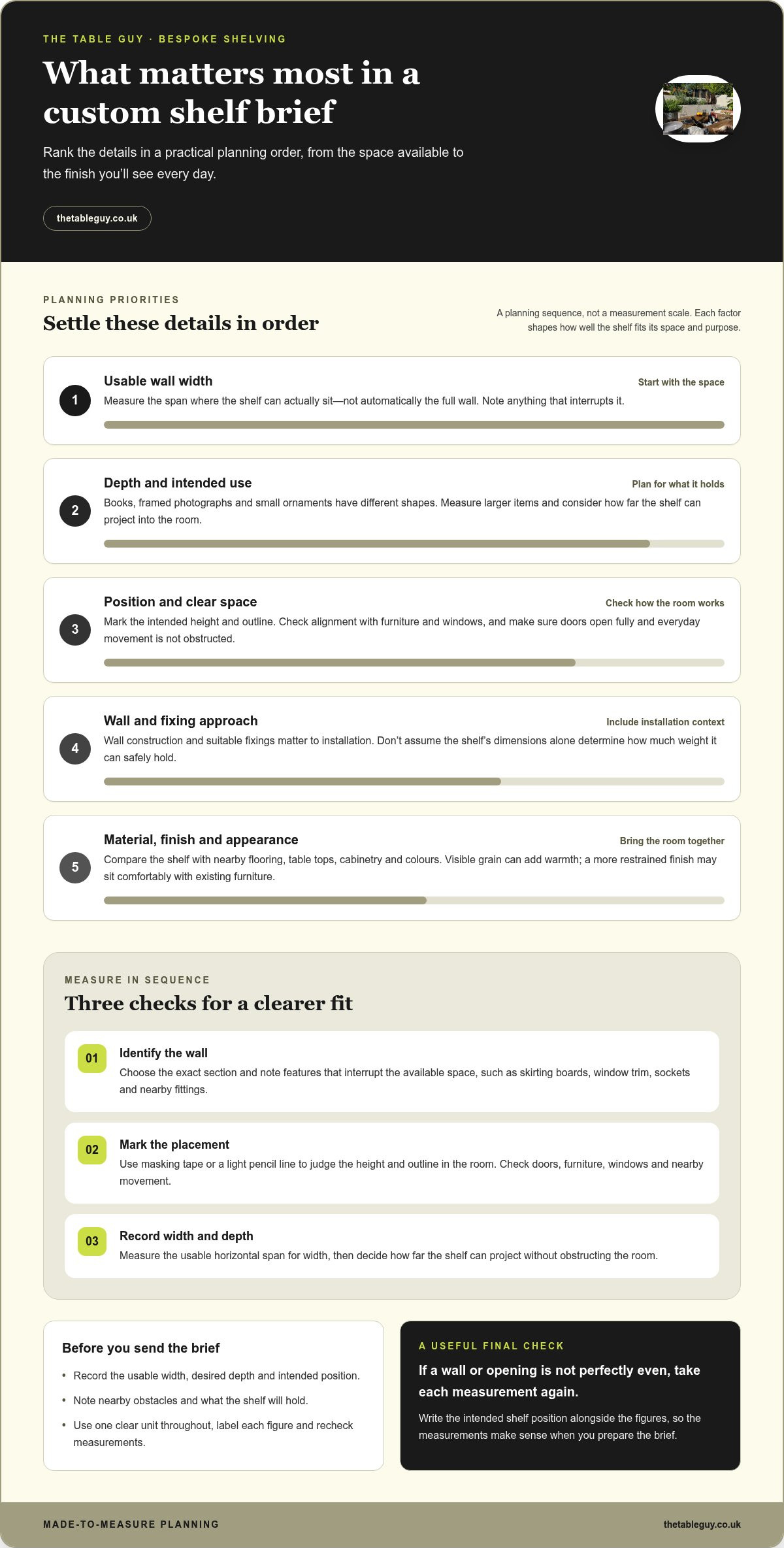
Work through the space in order. Measure the usable span, not automatically the full wall, and check the proposed shelf position against skirting boards, window trim, sockets and nearby fittings. Mark the position with masking tape or a light pencil line to judge the height and outline in the room before recording the dimensions.
1. Identify the wall. Choose the exact section where the shelf will go and note features that interrupt the space.
2. Mark the placement. Consider the shelf’s height and alignment with furniture, windows or other features. Check that doors can open fully and that the shelf won’t intrude into everyday movement.
3. Record width and depth. Measure the available horizontal span for the width, then consider how far the shelf can project without obstructing the room.
Take each measurement again, especially if the wall or opening isn’t perfectly even. Write down the intended position alongside the figures so they make sense when you prepare your brief.
How should shelf depth and intended use shape the brief?
Describe what the shelf is for. Books, framed photographs and small ornaments have different shapes, and a depth that suits one may leave another awkwardly balanced or projecting too far into the room. Measure larger items you already own and consider how much clear space people need to pass or use nearby furniture.
Depth is both a practical and visual choice. A deeper shelf can provide more room for objects, but it also changes the profile on the wall. Intended contents matter to the design and fixing conversation too. Don’t assume dimensions alone determine how much weight a shelf can safely hold: wall construction and the suitable fixing approach are part of the installation context.
Before ordering, note the usable wall width, intended shelf position, desired depth, nearby obstacles and what the shelf will hold. Use one clear unit throughout, such as millimetres or centimetres, label each figure and recheck it before sending your brief. For made-to-order shelving shaped around your space, see The Table Guy’s shelving.
How Do Material, Finish and Design Change the Shelf You Choose?
Once you know where a shelf needs to fit, consider how it should feel in the room. Visible wood grain can add warmth, a quieter finish can blend with the wall, and a profile that echoes existing furniture can help tie the room together. With floating shelves custom size, appearance and purpose work best as a pair: a beautiful finish still needs to suit the objects and setting.
Which shelf material and finish suit your room?
Look at the details already in place. A shelf with visible grain can add warmth beside painted walls, whilst a more restrained finish may sit comfortably with existing furniture. Compare it with nearby flooring, table tops, cabinetry and colours, rather than choosing a finish in isolation.
The Table Guy makes furniture using materials including pine, hardwood and scaffold board. When planning shelving, describe the wood character and overall style you want, and how the finished piece should relate to the room.
Floating shelves or visible brackets: what is the difference?
A floating shelf is designed to appear as though it projects from the wall without visible supports beneath it. Shelving with visible brackets makes those supports part of the look, adding a more defined, structural detail. Neither choice suits every room. Consider whether you want the shelf to blend into the background or contribute a noticeable design feature.
Let the intended use guide the decision too. A display of framed photographs may call for a quiet profile, whilst a shelf that forms part of a more characterful furniture arrangement might suit visible supports. Whichever look you prefer, consider appearance alongside what the shelf will hold and the installation context.
Picture the shelf beside your furniture, flooring and chosen objects before settling on the finish. A considered brief makes it easier to balance a personal, well-made look with everyday practicality.
What Should You Check Before Ordering Made-to-Measure Floating Shelves?
Before placing an order, bring your measurements and design choices together in one clear brief. The more completely it describes the space and purpose, the easier it is to plan a shelf that fits both the wall and the room. A useful specification covers more than width and depth: placement, appearance, intended contents and installation context all belong in the picture.
What information belongs in a shelf brief?
Keep your notes together and include:
Room and location: Name the room and describe where the shelf will sit, including nearby windows, doors, furniture or other features.
Dimensions: Record the required width and depth, state the units clearly and note the intended position. Recheck measurements before sharing them.
Purpose: Describe what the shelf is intended to hold, such as books, framed photographs or ornaments. This makes the design brief more useful than dimensions alone.
Appearance: Describe your preferred wood character, finish and overall look. Mention nearby furniture, flooring and colours that you’d like the shelf to complement.
Keep the brief beside your measuring notes so the figures have context. A width is more meaningful when it’s clear which wall it refers to, where the shelf will sit and what it needs to accommodate. If you’re considering bespoke shelving units, use the same approach: describe the room and purpose alongside the measurements.
How should the wall and installation context affect your plans?
Note the wall construction if you know it, for example plasterboard, masonry or another type. The suitable fixing approach depends on the wall and the finished shelf, so dimensions and appearance aren’t the whole specification. A shelf that fits neatly on paper still needs an installation approach appropriate to its setting.
Keep shelf specification and installation advice distinct. Your brief should describe the finished shelf you want and the wall where it will go. Don’t assume a particular fixing method or capacity. If you’re unsure what the wall is made from, say so in your notes rather than guessing. This keeps the information clear and makes the installation context part of the planning.
Before ordering floating shelves custom size, read back your notes as one joined-up description: room, position, measurements, intended use, look and wall type. For made-to-order shelving shaped around an individual brief, explore The Table Guy’s shelving.
How Can The Table Guy Help Create Shelves for Your Space?
A made-to-order shelf begins with the room it needs to serve. The Table Guy is a family-run furniture maker established in 2014, creating furniture in a UK workshop. Its shelving is made to order, with the brief bringing practical needs and personal preferences together rather than treating the shelf as an isolated object.
This approach is useful when planning custom-size shelving for a particular wall or layout. Dimensions matter, but so do the shelf’s intended use, position and appearance. A thoughtful brief gives these details a shared starting point.
What does a made-to-order shelving experience offer?
Made-to-order furniture allows the brief to guide the design. Bring together the available space, what you’d like the shelf to hold and the look you want to achieve. For example, describe a shelf for a compact area, explain whether it’s for display or storage, then note the wood character and finish you’d like to complement the room.
This joined-up way of thinking reflects The Table Guy’s wider furniture-making approach. Shelving sits alongside bespoke storage and other furniture, with each piece shaped by its purpose and setting. The family-run business and UK workshop provide the hands-on craft context behind that work.
If you’re still gathering ideas, the bespoke shelving units UK buying guide offers another way to think through the choices before settling on a brief. Keep your measurements, placement notes and appearance preferences together so the essential details are easy to refer to.
How do you move from shelf idea to a clear next step?
Start with a short, useful outline: the room and wall, the shelf’s intended position, its width and depth, what it needs to hold, and the finish or overall look you have in mind. Include relevant details about surrounding furniture and wall construction. These notes connect the shelf you picture with the practical realities of its space.
You don’t need every design decision mapped out from the start. A clear sense of the purpose and preferred appearance is a strong foundation for made-to-order shelving. Keep your prepared brief to hand as you explore the options.
Explore The Table Guy’s furniture and start planning a shelf. Your space, your purpose and your ideas are the right place to begin.
Bring Your Shelf Idea to Life
A well-planned shelf starts with the space it needs to fit and the job it needs to do. With floating shelves custom size, bring together accurate measurements, intended use and a finish that feels at home alongside your existing furniture. Remember that wall construction and the right fixing approach are part of planning a safe installation.
A clear brief makes the next step easier: note the shelf’s position, width and depth, what it will hold, and the look you have in mind. These details help turn a rough idea into considered shelving for your room.
The Table Guy is a family-run furniture maker established in 2014, creating made-to-order furniture in a UK workshop, with shelving among its offerings. If you’re ready to plan a piece around your space and preferences, explore The Table Guy’s bespoke furniture.
Start with your measurements and a sense of what matters most. A thoughtful brief is a confident first step towards shelving that feels personal and practical.
Frequently Asked Questions
Can floating shelves be made to a custom size?
Yes, made-to-order floating shelves can be planned around the space and purpose you have in mind. Custom sizing can help with an alcove, a narrow wall or a layout where standard dimensions don’t fit neatly. Share the intended position, required width and depth, what the shelf will hold and the look you prefer. These details shape a considered brief for shelving made to suit your room.
How do I measure for custom-size floating shelves?
Measure the usable wall space, then record the intended shelf position, width and depth. Check for features such as skirting, window trim, sockets and nearby furniture, and consider whether doors or everyday movement could be obstructed. Measure more than once and use one clear unit, such as millimetres or centimetres. Keep the measurements with notes about the room and what the shelf needs to hold, so each figure has context.
What depth should floating shelves be?
Choose a depth that suits the objects you plan to place on the shelf and the space around it. Measure larger items, such as books or framed photographs, then consider how far the shelf would project into the room. A display shelf may have different needs from one intended for everyday storage. There isn’t one depth that works for every room, so balance useful surface area with clearance and the overall look.
Are custom floating shelves suitable for an alcove?
Yes, an alcove can be a good reason to consider a custom-size shelf, especially if standard widths leave gaps or don’t make good use of the available space. Measure the usable span at the intended shelf position, since the alcove may not be perfectly even. Also consider depth, nearby features and what the shelf will hold. Clear dimensions and a defined purpose help shape a better-fitting design brief.
Can floating shelves be fitted to plasterboard walls?
They may be suitable for plasterboard, but safe installation depends on the wall construction, the finished shelf and an appropriate fixing approach. Don’t assume that a fixing suitable for one wall or shelf will work for another. Note that the wall is plasterboard when preparing your brief, and consider what the shelf is intended to hold. Wall context is part of installation planning, not simply a detail of shelf appearance.
What should I decide before ordering bespoke floating shelves?
Settle the shelf’s location, width, depth, intended use and preferred appearance before ordering. Note the room context, nearby furniture and features, along with the wall construction if you know it. Decide whether you want natural wood character or a finish that coordinates with existing pieces. Keep these notes together with checked measurements. A concise, complete brief connects the shelf’s proportions and design with the way you plan to use it.
Are custom-size shelves different from cut-to-size boards?
Yes. A cut-to-size board is material trimmed to requested measurements, while a made-to-order shelf is considered as a finished piece for a particular space and purpose. Its dimensions, appearance and intended use form part of the brief together. Cutting a board to length may solve one measurement, but it doesn’t address the shelf’s overall design or installation context on its own. Think about the complete shelf, not only the cut.

Comments