
Handmade Computer Desks for UK Homes and Workspaces
The right handmade computer desk in the UK is shaped by how you work, not just how it looks. Reclaimed-wood computer desks typically stand 75cm high and are 65cm deep, while a keyboard shelf spanning the legs needs around 95mm of clearance above it. Those measurements offer a useful starting point, but storage, legroom and the room itself matter too.
A handmade computer desk in the UK can bring warmth and character to a home office or workplace, but its layout needs to work hard every day. Allow enough surface space for your screen and equipment, choose storage for the items you keep close, and leave room to sit comfortably without cables getting in the way.
This guide covers how to compare cupboards, shelves and drawers, assess keyboard clearance and legroom, and plan cable management, power sockets and delivery. Use these practical checks to decide which specifications matter most before choosing a desk for your space.
Table of Contents
Storage options including cupboards, shelves and drawers
Start by listing what needs to stay within reach: paperwork, stationery, chargers or computer equipment. Drawers keep smaller items together, while open shelves make frequently used folders easy to access. A cupboard can conceal bulkier belongings and keep the desktop clear. Match the layout to what you store and how often you use it.
Storage built into a desk leg uses space beneath the worktop, but it changes the available legroom. Compare a cupboard, shelves and drawers against your chair position and the space needed to sit comfortably. A keyboard shelf is another option for moving a keyboard below the desktop. Where it spans between the legs, allow for the stated minimum clearance of around 95mm above the shelf.
Leg and frame styles affect both appearance and usable space. Hairpin legs leave the sides visually open, while a metal frame can give the desk an industrial look. Storage fitted between or beside the legs takes up some of that space. Before choosing a configuration, check where your chair, feet and any drawers will sit.
Tabletop thickness also varies between desk designs. Examples include a 32mm Scandinavian pine top on a hairpin-leg desk, a 40mm reclaimed Derbyshire mill timber top, and a 50mm pine top on a solid-wood desk. These are distinct specifications, not a universal standard. Compare the listed thickness alongside the desk’s overall dimensions and the style of its frame.
Finally, relate storage to desk height and your daily routine. Reclaimed-wood computer desks typically stand 75cm high, while other desk examples measure 75-76cm. Decide whether drawers should sit beside your knees or further along the desk, and whether shelves need to hold folders upright. A simple layout plan can clarify which features matter most before you select a design.
Keyboard shelf clearance and legroom
Keyboard shelf clearance affects both typing position and the space available beneath the desktop. For a shelf spanning between the desk legs, allow around 95mm of vertical clearance above it. This gives the keyboard a defined space, but the shelf and its supports also occupy room beneath the worktop. Specifically, consider where your knees, thighs and chair arms sit before settling on this layout. A shelf that suits a compact keyboard may feel restrictive with larger equipment.
Desk height is another part of the fit. Reclaimed-wood computer desks typically stand 75cm high, while other desk examples measure 75-76cm. The right working position depends on how your chair, arms and keyboard meet at the desk. A shelf lowers the keyboard relative to the desktop, so its position matters as much as the overall height. Think about whether you type for long stretches or move between keyboard work and writing across the surface.
Legroom depends on what sits beneath the desktop. A drawer unit, cupboard or central support can limit where your legs and chair fit. If you use a keyboard shelf, account for its underside and brackets too. Open space beneath the worktop allows more freedom to shift position; built-in storage trades some of that openness for convenient access. Timber finish affects appearance, but it cannot make an obstructed layout comfortable.
For a made-to-order design, give the maker clear information about your chair, equipment and preferred sitting position. Include whether you need a keyboard shelf, where you want it positioned, and any storage beside your knees. These details help the maker consider height, shelf clearance and leg placement together, rather than treating each feature separately. If your workspace can use a table instead of a computer desk, explore handcrafted timber furniture as another way to bring natural materials into the room.
Cable management and power sockets
Plan cable routes around the equipment you’ll use at the desk. A monitor, computer, keyboard and lamp each need a practical connection. Decide where the screen and computer tower will go, then check that their leads can reach nearby sockets without crossing your main working area. This also helps you work out where cable openings would be useful.
A hole through the desktop can guide leads down towards a socket or power strip. Position it close to the equipment, but away from writing space and other key work areas. For example, an opening behind the monitor keeps its cable clear of the keyboard, while a side position may suit equipment arranged along one edge.
Plan power sockets separately. Note where the room’s sockets are in relation to the desk, and whether plugs will remain accessible once it is in place. A power strip can gather several connections, but leave a clear route for its lead and make sure drawers, cupboards or a chair will not block access.
For a bespoke cut-out, include the requested details in your order note. A designer can then send a drawing to confirm the specification before work proceeds. This defines the opening’s position and size instead of leaving cable access to guesswork. Describe your equipment layout and the direction the leads need to run.
Plan for changes to your setup as well as the equipment you use now. Replacing a monitor or adding a printer may change cable routes, so an opening placed too close to one device can become awkward. A handmade computer desk in the UK should work with your room’s socket locations, equipment and daily routine. Map these details before finalising the design.
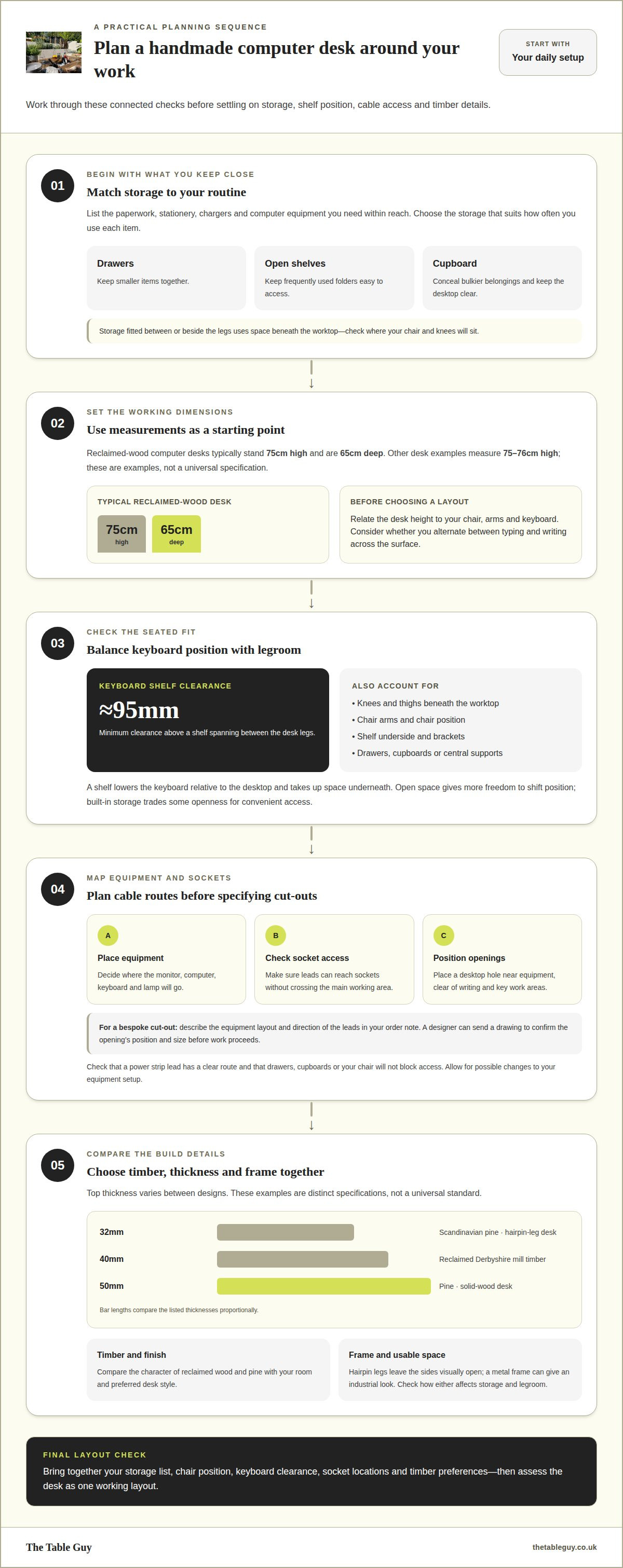
What wood and materials are best for a handmade computer desk?
Choose timber by considering its character, thickness and finish together. A reclaimed-wood desktop can bring visible history into a workspace, while pine offers another solid-wood option. One reclaimed-wood design uses a 40mm top made from Derbyshire mill timber. Compare the surface and its proportions with your room, equipment and preferred desk style before settling on a material.
Top thickness varies between designs, rather than following one universal specification. A hairpin-leg desk has a 32mm Scandinavian pine top, while a solid-wood desk uses a 50mm pine top. The reclaimed-wood example has a 40mm top. These measurements describe different designs, so consider the whole construction, including how the top sits with the frame and legs.
A finish changes the timber’s appearance and how it fits into everyday use. Reclaimed-wood desks are generally finished with Danish oil, which the maker says can cope with coffee cups. Consider how the colour and grain will sit alongside your existing furniture. Natural timber may complement simple metal frames, while a more rustic board can make a stronger focal point.
Material choices shape the desk’s overall look. Scandinavian pine paired with hairpin legs looks different from reclaimed mill timber on a solid frame. Decide whether you want the grain to stand out or the frame to define the design. A considered finish brings these elements together without distracting from the workspace.
Before commissioning a bespoke desk, decide which timber character, top thickness and finish best suit your room. Include these preferences alongside practical requirements, such as equipment placement and desktop dimensions. Clear choices help the maker shape a coherent design around your working setup. Explore handcrafted timber designs for inspiration when considering wood and finish.
The Table Guy
The Table Guy makes bespoke furniture that can help you carry timber character through your home or workspace. Its range includes Farmhouse Tables, Bamboo & Hardwood Tables, and Scaffold Board & Pine Tables, with different materials and finishes to consider alongside your workspace plans.
Decide which qualities you want to carry through the room, such as visible wood grain, a particular timber style or a substantial tabletop. These choices can help create a consistent look across your workspace and home while you compare desk dimensions, storage and cable access.
Explore The Table Guy’s handmade furniture range to compare materials and find a style that suits your interior. To discuss bespoke furniture for your home or workspace, get in touch with The Table Guy.
Make your workspace feel considered
Choosing a handmade computer desk in the UK lets you shape a workspace around your habits and the character of your home. Before deciding on a design, picture how the desk will sit alongside your existing furniture. A cohesive room feels considered, not simply filled with useful pieces.
The Table Guy makes handcrafted furniture for homes and workspaces, including bespoke tables and storage. If your plans extend beyond a desk, discuss how timber furniture could complement the room and your wider requirements. Bring your ideas, preferred materials and the look you want to achieve.
Contact The Table Guy about your furniture plans and take the next step towards a workspace that feels distinctly yours.
Frequently Asked Questions
How much does a handmade computer desk cost in the UK?
The cost of a desk depends on its dimensions, timber, frame and fitted features, rather than one universal specification. A compact reclaimed-wood design and a wider workstation with storage involve different materials and work. Bespoke details, such as a shaped cut-out or different height, also shape the design. Compare complete specifications, including storage and delivery arrangements, to assess desks on a like-for-like basis rather than by timber thickness alone.
What features should a handmade computer desk have for cable management and storage?
Choose cable access and storage to suit the equipment you use. Place openings where monitor and computer leads can descend without crossing your main work area. Drawers or a cupboard keep accessories out of sight, while shelves suit items you reach often. Keep plugs accessible when planning the layout.
What are typical lead times and delivery costs for handmade desks in the UK?
Production follows the maker’s schedule, while delivery arrangements depend on the destination. Bespoke dimensions, storage and cut-outs also affect the work involved. Reclaimed-wood desks are generally shipped unassembled for easier transport and installation. Before ordering, review the production schedule and delivery terms, including whether the desk arrives assembled and how it can be brought into your workspace.
How does a handmade desk compare with a mass-produced desk?
A handmade desk can be made to order around your equipment, storage and preferred dimensions, with timber character and finishes such as reclaimed wood with Danish oil. The article does not provide a direct comparison with mass-produced desks.
How do I measure a room and choose the right desk size?
Measure the space available and compare it with the desk’s depth and length, allowing room for your chair, legs and storage. Reclaimed-wood desks are typically 65cm deep, with customer-chosen widths; desk examples stand 75-76cm high. Check that the layout also works with your equipment and socket locations.
What should I check before buying a handmade computer desk, including returns and warranty?
Check the desk’s dimensions, storage and keyboard-shelf clearance against your chair and equipment, then plan cable openings and socket access. Desk height can be adjusted at no charge if requested at checkout. Reclaimed-wood desks are generally shipped unassembled, and delivery is free to UK mainland addresses.

Comments