
Durable Dining Tables for Family Meals and Entertaining
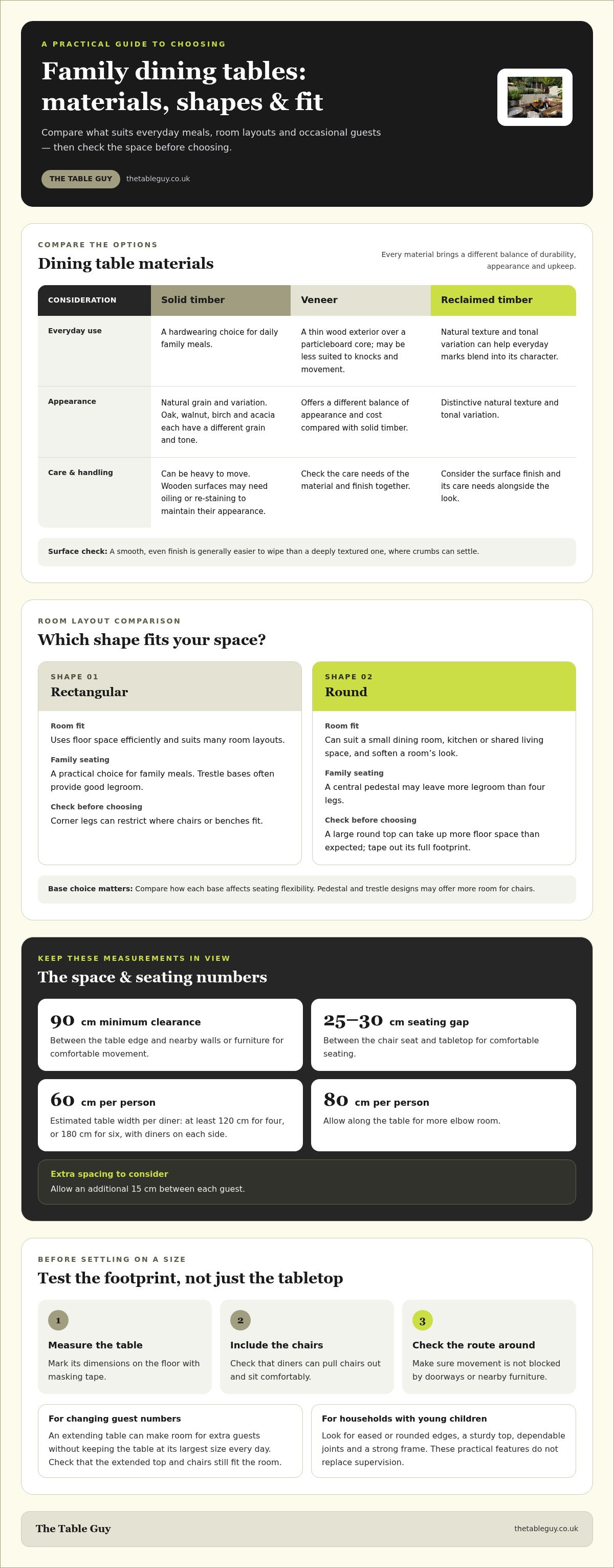
The most family-friendly dining table isn’t always the largest. Solid wood is a hardwearing choice for a durable dining table for family meals, and the right shape or extension can make it work for both everyday dining and entertaining. Leave at least 90 cm between the table edge and nearby walls or furniture for comfortable movement.
Choosing a table that stands up to daily use is only part of the decision. You also need enough room for chairs, space to sit comfortably and a shape that suits how your household gathers.
This guide compares solid wood and other materials, explains which table shapes suit different rooms, and outlines what to consider when choosing a flexible style. You’ll also learn how to measure your dining area, allow for seating and walking space, and decide whether an extending table could make hosting easier.
Table of Contents
What is the best material for a dining room table?
For a durable dining table for family meals, solid timber is a hardwearing option for everyday use. Veneers and lightweight boards may be less suited to knocks and movement. Oak, walnut, birch and acacia are common dining-table woods, each with a different grain and tone.
Material also affects care and handling. Solid wood can be heavy, so consider whether you may need to move the table. Wooden surfaces may need oiling or re-staining to maintain their appearance. Reclaimed timber’s natural texture and tonal variation can help everyday marks blend into its character.
Measure the room before choosing a shape or size. Leave at least 90 cm between the table edge and walls or other furniture, allowing people to walk around comfortably. A rectangular table often suits family dining because it uses floor space efficiently and fits many room layouts.
Test the footprint before choosing. Measure the table and mark its dimensions on the floor with masking tape. Include the chairs, not just the tabletop, and check that diners can pull their chairs out and move around without blocking doorways or nearby furniture.
Allow 25 to 30 cm between a dining chair seat and the tabletop for comfortable seating. For more elbow room, allow 80 cm per person along the table. These measurements help you judge whether a four-seater or larger design suits both daily dinner and family gatherings.
A round dining table can suit a small dining room, kitchen or shared living space. A central pedestal may leave more legroom than four legs. However, a large round top can take up more floor space than expected, so tape out its full footprint before deciding.
Dining table styles, materials and shapes
Oak, walnut, birch and acacia each bring a distinct grain and colour to a dining space. Compare their appearance with the room’s existing finishes before settling on a style.
Comparing Dining Table Materials
Solid wood is hardwearing, while veneer has a thin wood exterior over a particleboard core. Veneer offers a different balance of appearance and cost; solid timber has natural grain and variation. Compare the tones of oak, walnut, birch or acacia with your chairs, flooring and cabinets before choosing.
Consider care as well as appearance. Wooden tables may need oiling or re-staining to maintain their finish, and solid wood can be heavy to move. Reclaimed timber’s tonal variation and texture can help everyday marks blend into the surface.
Choosing Durable, Easy-Clean Surfaces
For family dinners and parties, consider how the surface will handle spills, food and regular use. A smooth, even finish is generally easier to wipe than a deeply textured one, where crumbs can settle. Check the care needs of the material and finish together, as untreated timber and protected wood may need different upkeep.
Solid wood is a hardwearing option, but may need periodic oiling or re-staining. Veneer has a timber exterior and particleboard core, so weigh its appearance and upkeep against the knocks your household expects. Choose a surface for how the table will be used, not just how it looks.
Selecting Table Shapes and Finishes
Rectangular tables suit many layouts and use floor space efficiently, while round tables can soften a room’s look. Trestle bases often provide good legroom, so consider one if chairs need to fit comfortably along the sides. Compare how each base affects seating flexibility.
Choose a finish that suits your room’s colours and your approach to upkeep. Oils and protective finishes can help care for timber while preserving its natural appearance. Compare samples with your flooring and other furniture, and consider whether a lighter or darker tone will suit everyday meals and special gatherings.
For a table tailored to your preferred material and style, explore bespoke dining table options and compare the details that matter in your home.
What makes the best family friendly dining tables?
A family table should fit its regular diners and allow comfortable seating. For young children, look for eased or rounded edges, a sturdy top, dependable joints and a strong frame.
Sizing a Table for Family Diners
Start with the number of people who usually sit down together. Allow an estimated 60 centimetres of table width per person: a table for four, with two diners on each side, should be at least 120 centimetres long. For six diners, with three on each side, allow at least 180 centimetres. Extra elbow room can make meals more comfortable.
Allow an additional 15 cm between each guest, and aim for no more than 30 centimetres between the chair seat and tabletop. Try the chairs with the table before deciding. Their height and shape affect how easily people can sit, rise and tuck them away.
Choosing a Shape for Family Use
A rectangular dining table is a practical choice for family meals and suits many room layouts. A round design can create a more contemporary feel and bring diners together. Consider the base, too: corner legs can restrict where chairs or benches fit, while pedestal and trestle designs may offer more seating flexibility.
If your household hosts a larger Sunday dinner or occasional gathering, an extending table can adapt to changing needs. Count the usual diners, then work out how many extra places you need for guests. Check that the extended top and chairs will still fit the room.
Considering Safety for Young Children
Rounded or eased edges are more comfortable for family use than very sharp profiles. A sturdy top, dependable joints and strong frame help keep the table stable over time. These are practical features to look for, not a substitute for supervising young children around furniture.
Before use, apply gentle pressure at different edges to check the table’s stability. Look for movement in the joints or frame, and make sure chairs sit firmly on the floor. Leave enough clear space for children to move around without bumping into corners or trapped chairs.
Flexible tables for family meals and entertaining
An extending table can serve family meals during the week and make room for friends at gatherings. Match its everyday size to your kitchen or dining area, then check that the extended footprint will also fit.
Imagine a household that seats four most days and eight at weekends. An extending rectangular table can take up less space between gatherings and provide extra seating when guests arrive. Measure it in both configurations, including the space needed for pulled-out chairs.
Rectangular tables suit many layouts and can sit against a wall when not in use, then move out for dinner parties. Round tables can encourage conversation, but measure their full extended footprint carefully. A round ceramic-topped design can extend to seat up to six.
Materials and appearance also shape the choice. A compact table with a marble-patterned ceramic top seats six and offers a polished look for everyday meals and entertaining. Larger extending designs may combine oak and oak veneer; compare the surface’s care needs with your household routine.
Check how the extension works and where separate leaves are stored. Make sure you can operate the mechanism without moving other furniture, and that the opened table leaves clear routes through the room. This helps ensure the table works in daily life, not just for special occasions.
Choose the smallest setting that comfortably suits regular seating, then confirm the extended setting accommodates your usual guest list. Explore made-to-order table extensions for a flexible fit with family meals and entertaining.
The Table Guy: Prosecco Dining Tables
The Table Guy makes bespoke tables to suit your dining-room measurements and everyday needs, whether you’re planning family meals or entertaining. Prosecco Dining Tables are one option; Farmhouse Tables, Bamboo & Hardwood Tables, and Scaffold Board & Pine Tables offer other material and style choices.
Consider a made-to-order table when standard dimensions or finishes don’t suit your room, seating plan or preferred look. Decide how many people usually dine together, whether you host larger gatherings and which timber character feels right at home. These details help shape a table that is personal and practical, not chosen on appearance alone.
For a table shaped around your home and how you gather, visit The Table Guy’s website.
Make space for the moments ahead
A dining table becomes part of home life: weekday suppers, shared projects and long conversations after the meal. Choose with the years ahead in mind, not just the room as it looks today. A durable dining table for family life should suit your routines and welcome everyone who gathers around it.
The Table Guy’s Prosecco Dining Tables, Farmhouse Tables and Bamboo & Hardwood Tables offer distinct starting points for a dining space with its own character. Think about the atmosphere you want, then consider which material and style will suit everyday use as well as special occasions.
Take the next step and discuss the table that suits your home. Contact The Table Guy to explore the possibilities, and look forward to making room for many memorable meals.
Frequently Asked Questions
How do I know it’s going to fit in my home?
Measure the intended space and the route the table must take to reach it. Note narrow hallways, stair turns, doorways and corners that could obstruct delivery. Compare these measurements with the table’s assembled dimensions, including its height. A cardboard template can help you picture the footprint and spot circulation problems before you commit.
How many people can you sit around a large dining table?
Capacity depends on the table’s length, width, base and the chairs used. As a planning example, a 240 cm table gives around four 60 cm places along each long side, or eight diners before adding seats at the ends. End seating can be limited by table legs, so count the actual positions rather than relying only on a general “large table” label.
What to consider when buying a dining table?
Think about how you use the table through a typical week: family meals, homework, working from home or hosting. Choose a surface and finish that suit your cleaning routine, then check the joints, frame and overall stability. An extension can add flexibility if your needs change. Consider, too, whether the table’s weight and shape make it practical to move.
Which dining tables work for any occasion?
An extending rectangular table suits households that want a compact everyday arrangement and extra places for guests. Check how the extension works, where leaves are stored and whether the table remains comfortable in both positions. In a kitchen that doubles as a dining area, choose a shape that leaves clear access to cupboards and walkways.
What materials make a dining table durable for family use?
Solid wood is a hardwearing choice for family use, while the varied tones and texture of reclaimed timber can help everyday marks blend into its appearance. Wood needs suitable care, such as oiling or re-staining when needed. Consider the whole build as well as the surface: a sturdy top, dependable joints and strong frame contribute to lasting stability.
Solid wood vs engineered wood vs ceramic dining tables: which lasts longest?
In this comparison, solid wood is the clearest hardwearing option. Veneer has a thin wood exterior over a particleboard core and may cope less well with everyday knocks than solid timber. Ceramic cannot be judged by its surface alone: the frame and construction matter, too. Compare the top, joints and base, and consider the care each finish needs.
Comments