
Eco-Friendly Dining Tables for Small Homes
A well-made wooden table can be a considered choice: responsibly sourced timber and reclaimed materials can help reduce pressure on forests and manufacturing waste. Eco-friendly dining tables can also suit smaller homes, especially when an extendable design provides room for guests without taking up as much space every day. Weigh the materials and construction against how the table will fit your room.
It’s natural to want furniture that looks inviting, works hard and lasts. This guide explains what FSC and PEFC labels tell you about timber, how sustainable wooden furniture can offer lasting value, and whether an extendable table suits your home. It also covers practical details for compact dining areas, including the space needed when a table is extended.
Table of Contents
Are extendable dining tables a sustainable choice for small homes?
They can be, if the table suits your everyday needs and lasts. One adaptable piece can serve daily meals and open out for guests, reducing the need for separate dining furniture. In a small dining room, measure the table both closed and extended, leaving room to pull out chairs and move around comfortably.
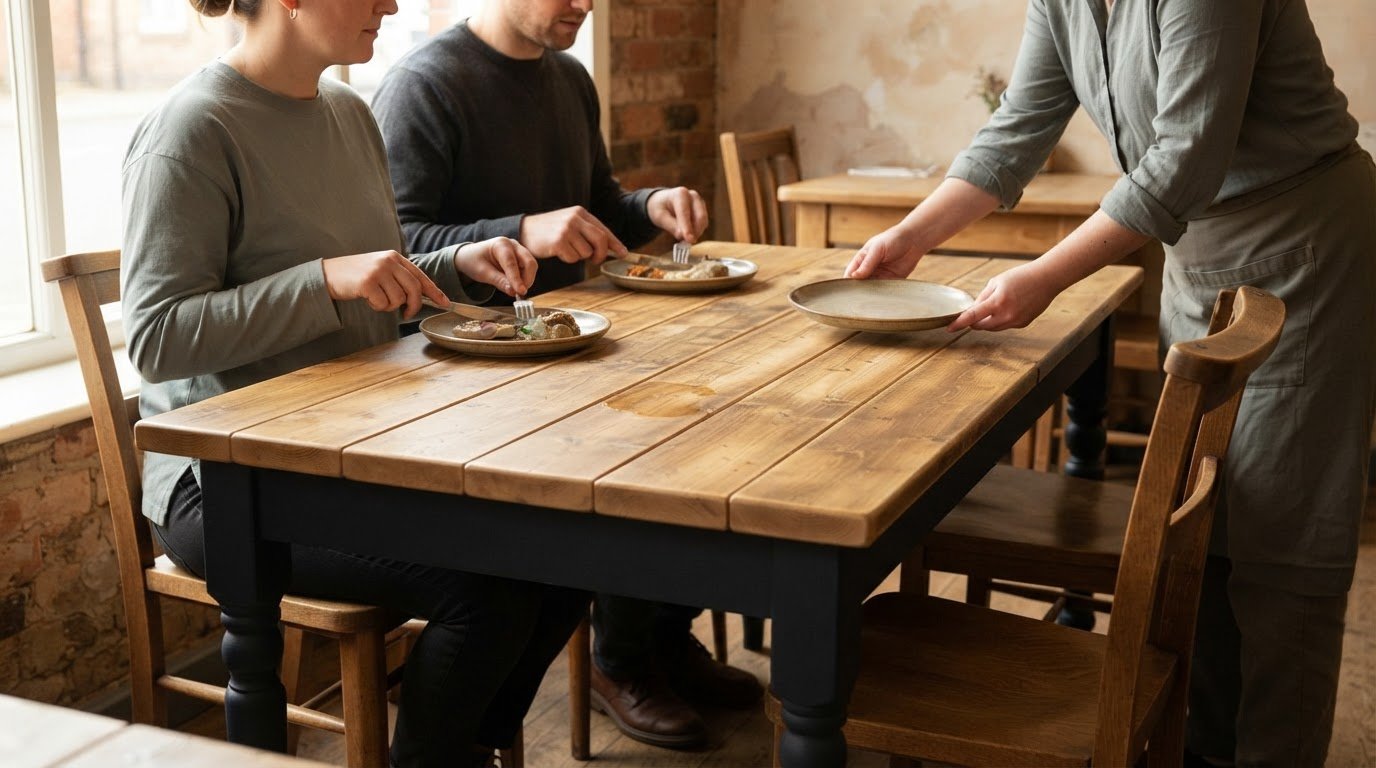
Material matters too. Reclaimed wood gives existing timber another use, helping reduce manufacturing waste and demand for newly sourced material. Reclaimed furniture can retain marks, grain variations and colour changes from its earlier life. These details make each surface distinctive rather than uniform.
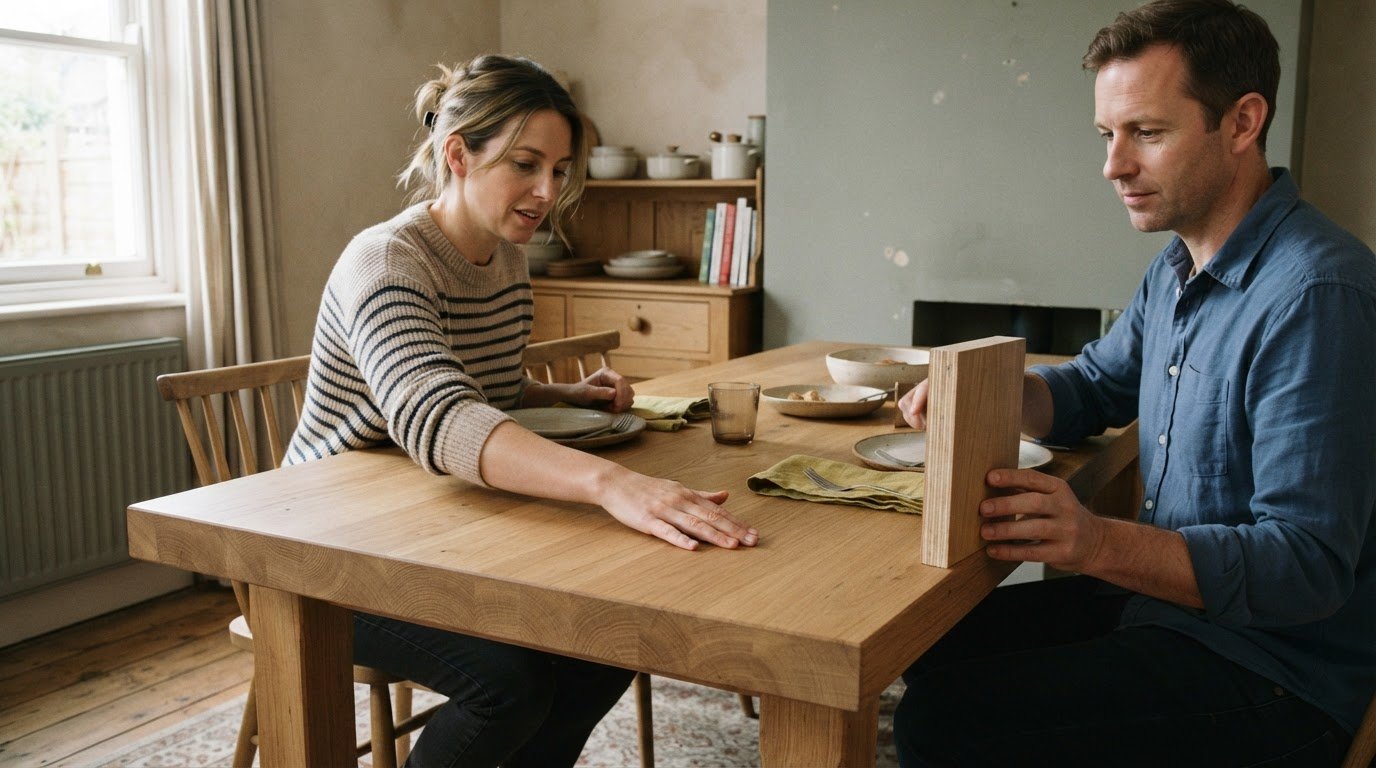
Reclaimed timber may have aged naturally, which can contribute to durability and resistance to warping. Its previous use alone, however, does not show how well a table is built. Check the joints, surface condition and finish, and consider whether the design can be maintained over time.
For newly sourced solid wood tables, FSC and PEFC labels indicate timber associated with responsibly managed forests. They are useful sustainability indicators, while reclaimed wood reuses material already in circulation. Both approaches can support a more considered choice, but construction and useful lifespan matter too.
Natural variations give reclaimed timber rustic character that can suit a timeless interior. Knots, old fixing marks and changes in tone may remain visible beneath a clear finish. Pairing a reclaimed table with simple chairs can make its grain the focus.
Choose an extendable design if you regularly need extra dining space but prefer a smaller everyday footprint. If the table will usually stay extended, a fixed-size design may use your room more practically. Match the material, mechanism and dimensions to how you live, rather than choosing reclaimed or FSC-labelled timber on appearance alone.
Why Choose Sustainable Wood Furniture?
Look beyond appearance: timber sourcing, construction, finishes and useful lifespan all shape a table’s environmental impact.
Sustainable solid wood tables
Solid wood dining tables can last for decades, making durability an important sustainability consideration. Choose a well-made table that suits your space and everyday use, rather than one likely to need early replacement. Hardwood can be repaired, refinished or repurposed, while a timeless design may remain useful as your interior changes. Canadian pine is another option; sustainable sourcing matters more than the species alone.
FSC certification and sustainability indicators
FSC and PEFC labels indicate timber associated with responsibly managed forests. Look for these certifications in the product details and check which material they cover. A label is one useful indicator, not a description of every part of the furniture. Consider the frame, tabletop, adhesives and finishes together when comparing options. Reclaimed timber is a separate approach because it reuses existing material.
Furniture sustainability across its life cycle
A table’s footprint involves more than where it was made. Locally made dining tables aren’t automatically more environmentally friendly than imported tables: transport distance, timber sourcing, manufacturing, durability and reuse all matter. A responsibly sourced imported table may have a longer useful life than a poorly made local one. Extending a consumer product’s lifespan by 50% can cut total emissions by roughly 10-25%, depending on product category.
Low-VOC finishes and non-toxic materials
To assess finishes, check product information for the finish type, VOC details and any relevant emissions evidence. Look for details about adhesives as well as the visible surface. Some eco-conscious buyers prefer natural oil or water-based finishes because they can contain fewer harmful chemicals and show the timber’s character. These details help with comparisons, but “natural” alone does not prove that every component is non-toxic.
The Table Guy: Prosecco Dining Tables
The Table Guy makes bespoke dining furniture for homes where material, character and fit matter. Its Prosecco Dining Tables offer a distinctive option, while Farmhouse Tables, Bamboo & Hardwood Tables, and Scaffold Board & Pine Tables offer other materials and styles to consider.
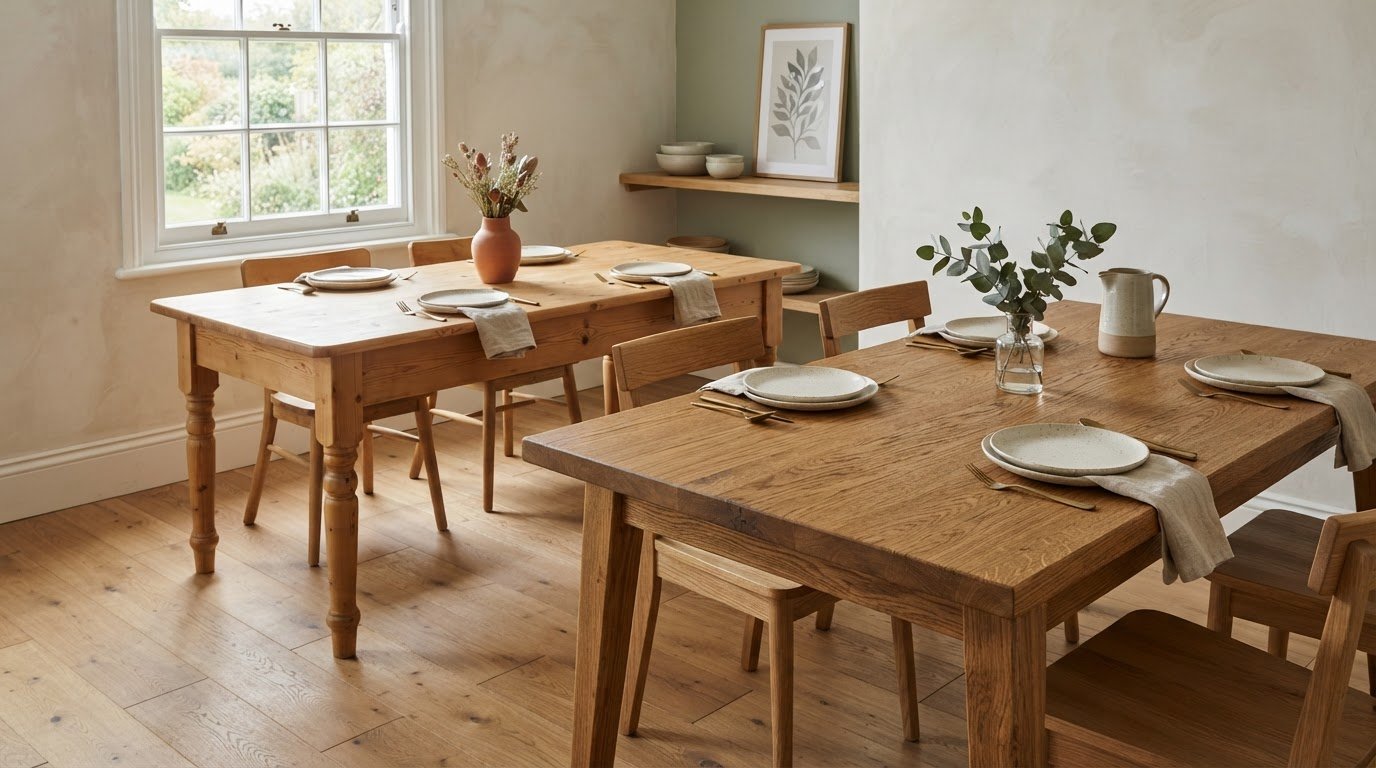
Choose a table based on your room’s dimensions and everyday needs. For a rustic interior, consider the character of a farmhouse or scaffold board and pine design; bamboo and hardwood offer different natural finishes. Think about seating, circulation space and whether an extension would help accommodate occasional guests.
Visit The Table Guy’s dining tables to explore the options.
Choose a table that feels right for your home
Your dining table becomes part of everyday routines, shared meals and the feel of your home. Before choosing, picture how you use the room: where people sit, how you move around the table and which materials suit your interior. These details can help you choose eco-friendly dining tables that fit your life, not just a passing trend.
The Table Guy offers Prosecco Dining Tables, Farmhouse Tables and Bamboo & Hardwood Tables, each with distinct materials and character to consider for your space. Explore the options and find a style that feels at home.
Contact The Table Guy to discuss your dining table ideas. A thoughtful choice can make room for many good moments ahead.
Frequently Asked Questions
Why shop for sustainable wooden furniture?
It lets you choose furniture that reflects your priorities as well as your taste. A reclaimed table, for example, can bring visible timber character to a dining room, while a considered finish can complement your interior. Think about how the piece will work with your chairs, storage and daily routines, so it earns a lasting place in your home.
How do I know which eco certifications to trust on a dining table?
Look for named schemes such as FSC or PEFC, then match the claim to the product details. Check whether certification refers to the tabletop, timber components or the whole item; a general sustainability statement does not specify this. For eco-friendly dining tables, clear material descriptions help you compare certified wood with reclaimed timber without treating them as the same.
Is an eco-friendly dining table always more expensive?
No. The final cost depends on the timber, dimensions, construction, finish and design, not simply whether a table is described as sustainable. A straightforward design in one material may cost less than a larger, more intricate table with a complex finish. Compare tables with similar sizes and specifications, then consider the build and fit for your home alongside the initial price.
Which UK brands and retailers sell sustainable dining tables?
The Table Guy makes bespoke dining furniture, including Prosecco, Farmhouse, Bamboo & Hardwood, and Scaffold Board & Pine tables.
Comments