
Herringbone Table: How to Choose the Right Pattern, Material and Finish
A herringbone table can be a striking centrepiece, but the detail that gives it character may also leave you wondering whether it will suit your room. The pattern brings movement to a tabletop, yet its effect depends on more than appearance. The arrangement of the wood, the table’s proportions and the finish all shape how it looks and works in everyday life.
It helps to know what makes a tabletop genuinely herringbone and how the pattern differs from other parquet designs. Once you understand the layout, it’s easier to compare tables and judge whether the pattern will complement your space.
This guide explains how herringbone is formed and what to look for in its construction. You’ll also find practical points to consider when choosing material, shape, size and finish, from the direction of the grain to the demands of daily dining. If you’re planning a made-to-order table, these details can help you shape a design that feels at home. A well-chosen herringbone table brings pattern, practicality and craftsmanship together.
Table of Contents
What is a herringbone table, and what makes its pattern distinctive?
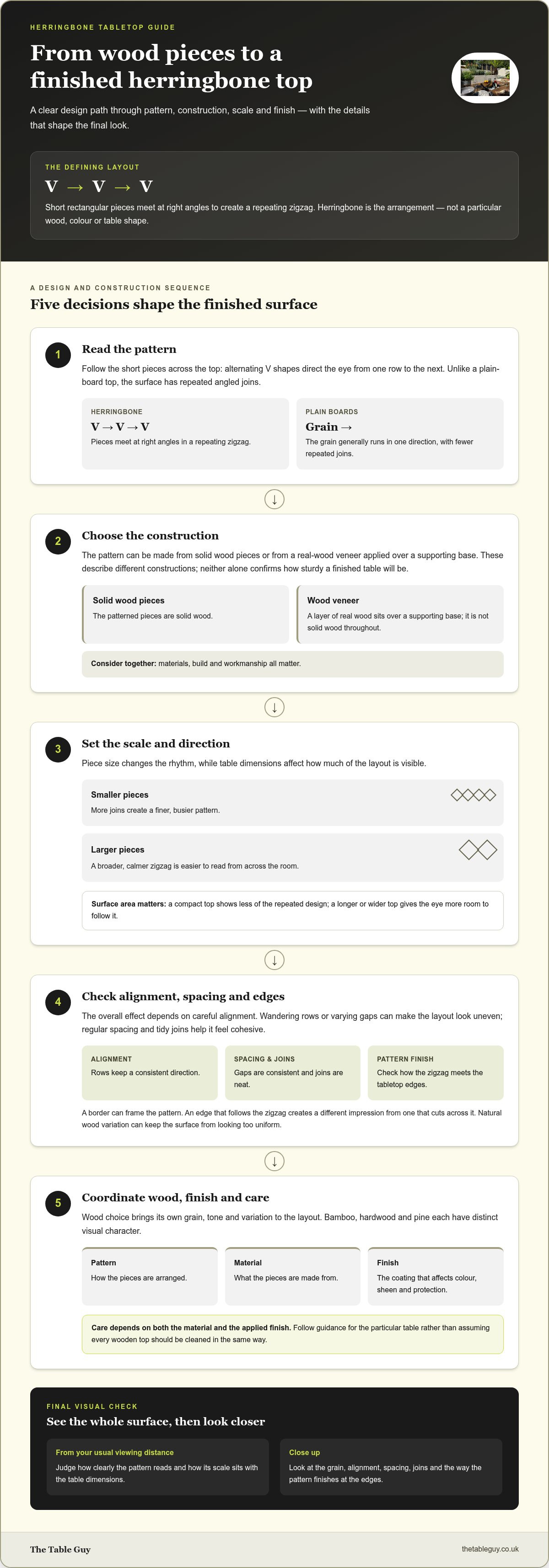
A herringbone table has a top made from short rectangular pieces arranged in a repeating zigzag. Each piece meets its neighbour at a right angle, creating a sequence of angled joins instead of long, uninterrupted boards. Those joins give the surface movement and visible detail.
The Herringbone pattern appears in different materials and settings, but a tabletop lets you see its geometry up close. Repeated V-shaped lines guide the eye across the surface, while the joins give the wood a lively, crafted character. This texture can make the table a focal point, so consider how it will sit alongside flooring, cabinetry and other patterns in the room.
How does a herringbone pattern look on a tabletop?
Follow the short pieces across the top and you’ll see alternating V shapes, with each row directing the eye towards the next. A simple labelled layout shows the rhythm: V → V → V, with each V formed by pieces meeting at right angles. By comparison, on a plain-board top the grain generally runs in one direction, with fewer repeated joins.
Scale changes the effect. Smaller pieces create more joins and a finer, busier pattern; larger pieces make the zigzag bolder and easier to read from across the room. The table’s dimensions matter too. A compact top shows less of the repeated design, while a longer or wider surface gives the eye more room to follow its direction. When comparing designs, look at the pattern both close up and from the distance you’d normally view the table.
Is herringbone a material, a finish or a pattern?
A herringbone table is defined by the arrangement of its tabletop pieces in a repeating, right-angled zigzag, not by a particular wood, colour or table shape. The pattern describes the layout; the material is the wood used, such as hardwood, bamboo or pine. Colour describes the appearance of the surface, while the finish is the coating applied over it.
Keeping these choices separate makes it easier to compare designs. Two tables can share the same herringbone layout yet look quite different because their wood grain, colour and finish vary. The pattern can also work with different table shapes, so it isn’t limited to one silhouette. Think of the zigzag as the starting point, then consider how the material and surface treatment will look in your room.
How herringbone table tops are constructed and finished
A herringbone surface is made by arranging repeated pieces in a consistent direction, with each piece meeting its neighbour to form the zigzag. The overall effect relies on careful alignment. If rows wander or gaps vary, the pattern can look uneven rather than intentional. Regular spacing and tidy joins help the surface feel cohesive, while natural variation in the wood keeps it from looking too uniform.
Construction can vary. A patterned top may use solid wood pieces or a wood veneer over another material. Veneer is a layer of real wood applied to a supporting base. It can show the grain and pattern, but it isn’t the same construction as a top made from solid wood throughout. Neither description alone tells you how sturdy a finished table will be. The materials, build and workmanship all matter. For a closer look at one maker’s process, explore how herringbone table tops are constructed.
What details shape the finished herringbone tabletop?
Piece scale, pattern direction and edge treatment all influence the design. Smaller pieces create more joins across the surface, while larger pieces give the pattern a broader, calmer rhythm. A border can frame the zigzag. An edge that follows the pattern creates a different impression from one that cuts across it.
Table dimensions also affect how much of the layout you see. A larger top gives the repeated pattern room to unfold, while a compact one may show fewer complete zigzags. When assessing a design, look at where the pieces meet, whether the spacing is consistent and how the pattern finishes at the edges. These details show how carefully the layout has been brought together.
How do wood choice and finish affect the look?
Wood brings its own grain, tone and variation to the repeated layout. Bamboo, hardwood and pine each have distinct visual character, so the same pattern can look quite different depending on the material. Changes in grain and natural colour can add warmth and individuality rather than making every piece look identical.
Keep the choices distinct: the pattern is the arrangement, the material is what the pieces are made from, and the finish affects the surface’s colour, sheen and protection. Look at the joins, edges and grain together to judge how these choices work as a whole. Care depends on both the material and the applied finish, so follow the guidance for the particular table instead of assuming every wooden top should be cleaned in the same way.
For a dining table made to suit your home, consider how its proportions and material can work together. Explore made-to-order dining tables as a starting point for thinking through the design.
Herringbone vs parquet: which patterned table design suits your taste?
Herringbone and parquet aren’t opposing styles. Parquet is a broad term for surfaces made from pieces of wood arranged in a pattern, and herringbone is one recognisable layout within that family. Other parquet designs use different geometric arrangements, so the distinction is about the specific pattern, not whether a design is parquet or herringbone.
What is the difference between herringbone and parquet?
Picture short rectangles arranged in alternating directions: V V V. That’s the characteristic herringbone rhythm, with the end of each piece meeting the side of the next. A basketweave layout, by contrast, groups pieces into blocks that appear to pass over and under one another. A chevron pattern also forms a repeated zigzag, but its pieces meet at angled, pointed ends. These visual cues make it easier to compare pattern names with what you see on a tabletop.
The right choice depends on the effect you want and how the tabletop will sit among the room’s other lines, textures and furnishings. Use this comparison as a starting point:
Design
Pattern and visual rhythm
Room impression and design considerations
Herringbone
Rectangular pieces meet at right angles in a repeating zigzag.
Directional and detailed. Consider the scale of the pieces and how the zigzag sits with nearby patterns.
Other parquet layouts
Geometric arrangements vary, such as basketweave blocks or pointed chevrons.
The effect may feel more ordered, graphic or woven, depending on the layout and its proportions.
Plain boards
A simpler surface with the grain generally following the board direction.
Quieter and less patterned, which can balance a room with expressive furnishings or flooring.
A herringbone table can bring structure and movement to a dining area, while another parquet layout may suit a more geometric interior. There’s no universal winner. Table proportions, surrounding furniture and your own taste matter more than the pattern’s name.
When might a simpler tabletop be a better fit?
If patterned flooring, bold upholstery or detailed cabinetry already draws the eye, a plain tabletop can give the room a place to rest. That’s a question of visual balance, not a claim that patterned tops are more difficult to maintain. For a more traditional direction, see this custom farmhouse dining table guide. Compare the shapes and textures already in your room before choosing a surface that feels at home.
How to choose a herringbone table for your room and routine
A patterned top should work in the space as well as catch the eye. Start with room measurements, then consider movement and seating, and leave design details until you know what the table needs to do. This order helps you choose a table that suits everyday life, with a pattern that complements the room.
Measure the room. Note the space available for the table, chairs and nearby furniture. Mark the intended footprint on the floor with masking tape or newspaper to see how much room it occupies.
Map circulation. Trace the usual routes through the room, including where people pull out chairs and carry dishes. Check that the table won’t obstruct doorways or make it awkward to reach other furniture.
Assess the design. Once you understand the footprint and routine, compare the table’s shape, proportions, pattern and finish with the room around it.
Which table size and shape work with a herringbone top?
Let the room guide the proportions. A long, narrow dining area may suit an elongated table, while a squarer space may feel better balanced with a different shape. Length and width affect practical use, but they also change how much of the pattern is visible. A smaller top may show fewer repeats; a broader one gives the layout more room to unfold. Settle on the shape and footprint before fine-tuning the pattern details.
There’s no single ideal size for every home. A made-to-order table can be planned around the dimensions and layout that matter in your space, rather than asking the room to work around a fixed choice.
How can a patterned table work with existing furniture?
Look at the room as a whole. If your flooring, chairs or cabinetry already have strong patterns or textures, calmer colours and simpler surfaces nearby can help the tabletop feel considered rather than crowded. Leg style, edge profile and finish also affect the overall impression. A simpler base can let the top take focus, while coordinated details can bring the table into harmony with existing furniture.
If guest numbers change how you use the room, an extendable design may be worth considering. This extendable dining table guide explores that choice. For a table tailored to your room and routine, plan your made-to-order dining table.
Plan a made-to-order herringbone table around your home
A considered design brings pattern, material, dimensions, table shape and finish together. Treat them as parts of the same picture. A bold zigzag may catch your eye, but its scale, wood tone and proportions should feel right in the room and suit the way you use the table.
What should you include in a table design brief?
Start with the practical details, then add the inspiration. A clear brief helps turn a look you like into a design that makes sense for your home.
Room and footprint: Note where the table will sit, the available space and how people move around it.
Shape and use: Describe the shape you prefer and how the table serves you day to day, from family meals to entertaining.
Visual references: Gather images that show the pattern scale, wood tone, finish or edge details you’re drawn to.
Priorities: Separate firm requirements, such as fitting a particular area, from preferences you’re open to adapting.
This distinction gives a design room to develop without losing sight of what matters most. Reference images can communicate the look you like, while your measurements and routine provide essential context.
Why choose a bespoke tablemaking approach?
With a made-to-order approach, material and proportions can be considered together for the home the table is intended for. Shape, dimensions and finish aren’t isolated decisions: each affects how the piece works in the room and how its surface looks. A thoughtful brief is a useful starting point for bringing those details together, rather than choosing solely from standard retail options.
The Table Guy is a family-run UK furniture maker established in 2014, creating made-to-order furniture in its workshop. Its range includes bespoke dining tables in materials such as bamboo, hardwood and pine. This maker-led approach centres the design on individual choices and everyday use. When planning a distinctive table, bring the pattern you like together with practical choices such as material, shape and proportions.
Bring your room measurements, preferred materials and visual references together, then explore bespoke furniture from The Table Guy as you shape a table around your home.
Bring your herringbone table idea to life
A herringbone table is defined by more than its distinctive zigzag. The right choice brings pattern, material, proportions and finish together while fitting the room and the way you use it. Compare herringbone with other parquet layouts, then consider your space, seating needs and surrounding furniture before settling on a design.
A made-to-order approach gives you room to shape a table around your home. The Table Guy is a family-run furniture maker established in 2014, crafting made-to-order furniture in a UK workshop. Your measurements, preferred materials and reference images can help guide a design that feels considered and personal.
Ready to explore the possibilities? Explore bespoke furniture from The Table Guy and take the next step towards a table that feels at home in your space.
Frequently Asked Questions
What is a herringbone table?
A herringbone table has a tabletop made from short rectangular pieces arranged in a repeating zigzag, with each piece meeting the next at a right angle. This creates a directional pattern with more visible joins and surface detail than plain boards. The term describes the layout, not a particular wood species or table shape, so the overall look also depends on the material, proportions and finish.
Is herringbone the same as parquet?
No. Parquet is a broad term for wood pieces arranged in decorative patterns, while herringbone is one recognised layout within that wider category. In herringbone, rectangular pieces meet at right angles to create repeated V shapes. Other parquet designs use different geometric arrangements, such as blocks or pointed zigzags. The terms overlap, rather than describing two mutually exclusive styles.
Is a herringbone table suitable for everyday dining?
Yes, a herringbone table can suit everyday dining if its materials, construction and finish are appropriate for how you’ll use it. Consider the table’s intended routine, from family meals to regular entertaining, as well as the care guidance for its particular surface. Herringbone describes the pattern, not the table’s durability, so construction and finish matter alongside design.
Can you have a herringbone pattern on a made-to-order dining table?
A herringbone layout is one design idea to consider when planning a made-to-order table. The design brief can bring together pattern, material, dimensions, shape and finish, helping the table relate to your room and routine. Reference images can clarify the scale and direction you like, while measurements help establish practical proportions. The Table Guy makes bespoke dining tables to order in its UK workshop.
How do you style a herringbone table in a dining room?
Let the tabletop provide a focal point, then balance its visual movement with calmer colours and simpler surfaces nearby. If the room already has patterned flooring or detailed furnishings, avoid making every element compete for attention. Consider how the table’s legs, edge profile and finish relate to your chairs, cabinetry and flooring. The aim is a coordinated room, not an exact match between every piece.
Is a herringbone table more expensive than a plain table?
Not automatically. The final cost depends on factors such as materials, dimensions, construction and workmanship, so the pattern alone doesn’t determine the price. A design made from repeated pieces may involve additional planning and careful assembly compared with a plain-board surface, but tables vary. Compare the full specification and construction details rather than judging by the pattern name alone.
How do you care for a herringbone wooden table?
Care depends on the wood and finish applied to the surface, so follow the maker’s guidance for your specific table. In general, wipe spills promptly with a soft cloth and avoid harsh cleaners unless the care instructions say they’re suitable. Don’t assume every wooden tabletop needs the same treatment. For a made-to-order design, request care advice tailored to its material and finish.


Comments