
How to Clean Scaffold Board Furniture Before Treatment
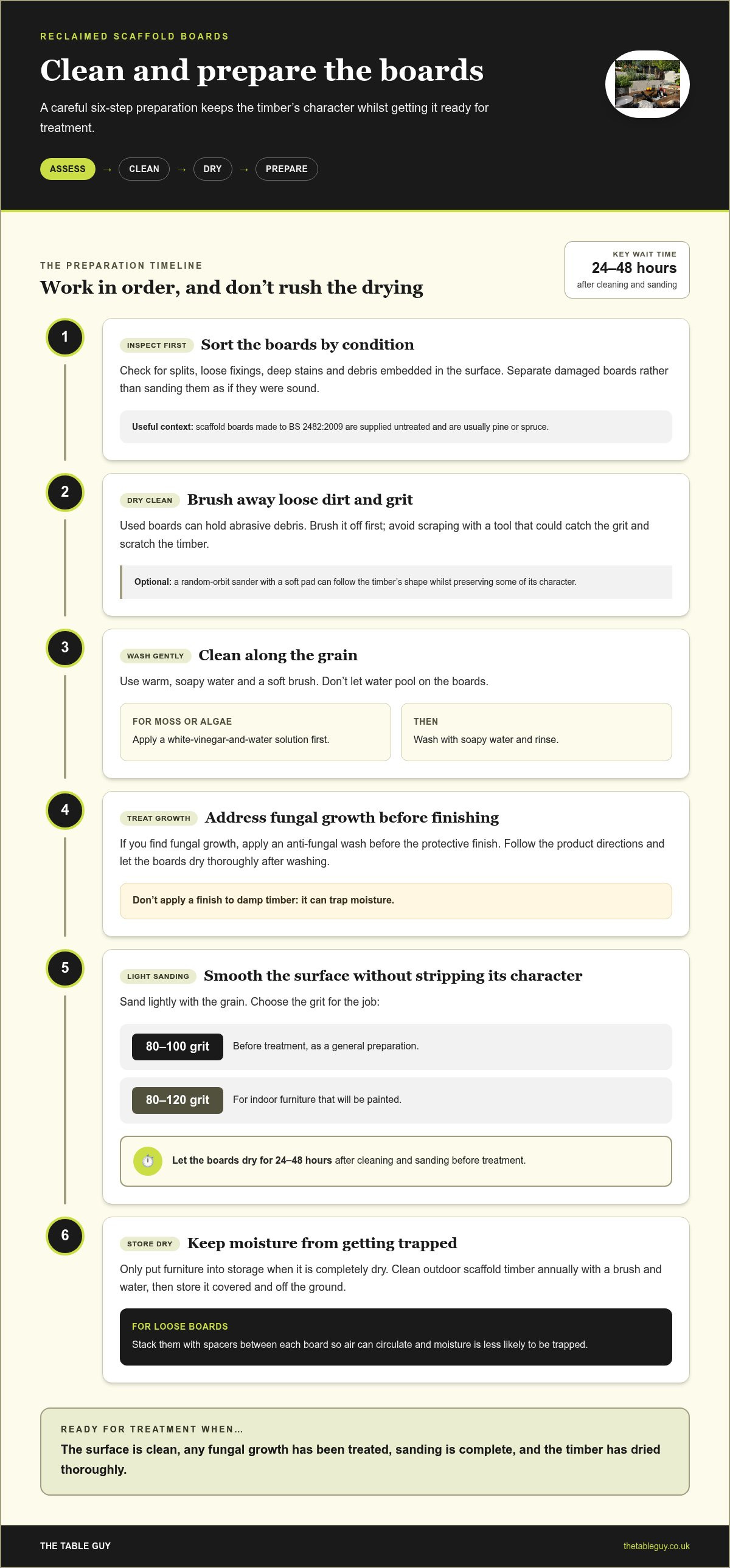
Reclaimed scaffold boards need more than a quick wipe before a protective finish. For cleaning scaffold board furniture, brush away loose dirt, wash with warm soapy water, apply an anti-fungal wash to address existing infestations, then lightly sand with 80-100 grit along the grain. Let the boards dry for 24-48 hours after cleaning and sanding before treatment.
That preparation matters with reclaimed timber: its marks and worn edges give it character, but grit, grime or damp can affect the surface before finishing. A careful clean preserves the wood’s lived-in look and leaves it ready for the next step.
This guide sets out how to clean and prepare scaffold boards, deal with moss or algae, sand without stripping away too much character, and tell when the timber is ready for treatment. Work step by step, and let the boards dry fully before continuing.
Table of Contents
Cleaning and preparing boards before treatment
To maintain scaffold board furniture and prevent stains, remove dirt promptly, avoid letting moisture sit on the wood, and apply a suitable protective finish. Clean gently so reclaimed boards retain their marks and texture.
Sort the boards by condition before cleaning. Scaffold boards made to BS 2482:2009 are supplied untreated and are usually pine or spruce. With reclaimed timber, look for splits, loose fixings, deep stains and debris embedded in the surface; separate damaged boards rather than sanding them as though they were sound.
Brush away dry dirt and grit first. Used boards may hold abrasive debris, so avoid scraping with a tool that could catch it and scratch the surface. A random-orbit sander with a soft pad can follow the timber’s shape while preserving some of its character.
Wash with warm, soapy water and a soft brush, moving along the grain. For moss or algae, apply a white-vinegar-and-water solution first, then wash with soapy water and rinse. Don’t let water pool on the boards.
If you find fungal growth, apply an anti-fungal wash before the protective finish. Follow the product directions and let the boards dry thoroughly after washing. Applying a finish to damp timber can trap moisture.
Lightly sand before treatment with 80-100 grit, following the grain. For indoor furniture that will be painted, use 80-120 grit before painting. After cleaning and sanding, allow 24-48 hours of drying time before treatment.
Put furniture into storage only when it is completely dry. Clean outdoor scaffold timber annually with a brush and water, then store it covered and off the ground. Stack loose boards with spacers between them to allow airflow and reduce trapped moisture.
Reclaimed scaffold-board furniture
Find out how the reclaimed boards were used and stored. Exposure to the weather can leave uneven colour, raised grain and water marks, while indoor storage may leave the surface drier. Treat each board as individual timber, not a uniform new plank.
Remove old screws, nails and staples before shaping or assembling the boards. Check both faces and edges, including around knots and splits, where fixings can be hidden. Metal left in the wood can damage tools and make sanding, cutting or assembly more difficult.
Decide which marks you want to keep. Faded patches, old fixing holes and shallow dents can add reclaimed character. Deep grime, loose splinters and raised fibres need different treatment: remove them carefully, taking away only what’s needed for a clean, usable surface.
Match the preparation to the furniture’s intended setting. A dining table used indoors won’t face the same weather as garden furniture, so plan its finish around that exposure. Untreated scaffold timber lasts 3-7 years outdoors, depending on exposure and timber type.
Arrange boards with contrasting grain or colour before joining them. Scaffold boards come in 7 standard lengths, giving projects different options for layout and cutting. Keep the most distinctive grain visible on prominent surfaces, and use less marked sections where joins or supports will conceal them.
For outdoor projects, plan how the finished furniture will shed water and dry after wet weather. Avoid designs that trap moisture between adjoining boards. Store spare reclaimed timber covered, raised off the ground and separated with spacers so air can circulate.
How do you treat scaffold board furniture after cleaning for indoor or outdoor use?
Choose a finish to suit the furniture’s setting and the look you want. On indoor scaffold-board furniture, oil penetrates the timber, varnish forms a hard coating, and wax leaves a soft, reflective sheen while absorbing moisture. A water-based sealer may be a suitable choice if you want to preserve the timber’s appearance.
Use a finish intended for the job, then follow its label for application and drying. Oil-based sealer can take 24 hours or more to cure; water-based sealer takes 4 hours or less. These are cure times, not a reason to skip the product’s instructions.
For outdoor timber, apply sealant or stain only in suitable conditions. Don’t apply it in rain or direct sunlight, as wet or hot surfaces can interfere with application. An outdoor wood preservative should soak in for 30-60 minutes before the next step.
Brush stain onto the boards, then wipe away the excess with a lint-free cloth. Wipe in the direction of the grain to help prevent visible streaks. Work along each board, including edges that will remain visible after assembly.
When applying oil, allow it to absorb for 15-30 minutes, then wipe away excess. Leave oiled timber to dry for 24 hours before adding a second coat. A thin, even application helps the finish follow the grain without leaving pooled oil on the surface.
Build maintenance into your outdoor care routine. Reapply scaffold-board sealant or stain roughly once a year; a second coat of outdoor oil or preservative is recommended every 1-2 years. Thorough sanding and retreatment is recommended every 5-7 years.
For scaffold boards used as decking, choose sealant rather than oil. Sealant is better suited to standing water and foot traffic, which are different conditions from those around an indoor table or sheltered garden furniture.
How much does it cost to clean and refinish scaffold board furniture in the UK?
Estimate the work by looking at the furniture’s condition, not just the table’s size. A light clean and fresh coat take less preparation than removing a failed finish, tackling deep stains or sanding rough reclaimed boards. The timber’s condition is the main factor.
Inspect the whole piece before buying materials. Check the tabletop, underside, legs, joints and edges for grime, damaged finish, loose fixings and embedded debris. A sound surface may need only cleaning and recoating; worn or uneven boards need more preparation.
List what your chosen process requires. A DIY job may need cleaning supplies, abrasives, cloths, brushes and a finish suitable for indoor or outdoor use. The type of finish and number of coats determine how much material you’ll need.
Allow for preparation time as well as the cleaning itself. Removing old coating or sanding several boards takes longer than wiping a clean surface. Weathering, old marks and embedded grit can also make reclaimed scaffold furniture more time-consuming to prepare.
If you’re comparing DIY with paid labour, compare the same tasks. Check whether each estimate includes cleaning, sanding, repairs, materials and applying the finish. An estimate for one coat is not directly comparable with one that includes several preparation stages.
Set aside time for drying between stages. After cleaning and sanding, scaffold boards need 24-48 hours to dry before treatment. Oil-based sealer takes 24 hours or more to cure, while water-based sealer takes 4 hours or less. These timings can affect how long the project occupies your space.
Decide whether refinishing suits your budget and time. If you’d rather choose a completed piece, explore finished table designs as an alternative to preparing and treating reclaimed boards yourself.
The Table Guy: Prosecco Dining Tables
The Table Guy makes bespoke tables for those who would rather choose finished furniture than take on a scaffold-board project themselves. If you like the character of scaffold timber but not the cleaning and refinishing, explore Scaffold Board & Pine Tables. Other choices include Farmhouse Tables and Bamboo & Hardwood Tables, each with a distinct material and look for your home.
Use these steps if you already own scaffold-board furniture and want to prepare it carefully before treatment. If you’re choosing a table, consider which material and style suit your room and how you’ll use it.
Visit thetableguy.co.uk to explore the table options or get in touch with The Table Guy.
Choose the next step for your timber
Before you begin, decide how you want the finished piece to look. Keeping the weathered marks gives reclaimed timber a distinct, lived-in character; aiming for a smoother, more even surface creates a different effect. Let that choice guide how much material you remove and which finish suits the furniture’s setting.
Make a simple project plan: note what needs attention, the look you want and how you’ll maintain the result. Cleaning scaffold board furniture is not just about removing dirt; it’s also a chance to preserve the details that make each board individual. Work patiently and let the timber’s character guide your choices.
If you’d rather discuss your furniture plans and explore table options, contact The Table Guy about your project. Take the next step with confidence, whether you’re preparing reclaimed timber or choosing a piece for your home.
Frequently Asked Questions
How do you clean scaffold board furniture before finishing?
Clean the surface and joints first, so dust and grit don’t cause scratches during sanding. Wipe corners, undersides and areas around fixings with a lightly damp cloth, then remove any soap residue. Let the piece dry fully before applying a finish. On a table, check beneath the top as well as the visible surface, since hidden dirt can transfer when you handle it.
What cleaning products are safe for scaffold board furniture?
For routine washing, use warm water with a little mild soap and a soft brush. A diluted white-vinegar solution can help with moss or algae; rinse afterwards with clean water. Avoid abrasive pads, which can mark the grain, and never combine cleaning products. If a board has an existing coating, test the cleaner on a discreet patch first to see whether it changes the colour or surface.
How do you remove cement, paint, oil and stains from scaffold boards?
Treat each mark separately rather than using one strong cleaner across the whole board. Carefully lift loose cement or dried paint with a plastic scraper, taking care not to gouge the grain. Blot fresh oil rather than spreading it. For persistent paint or oil, test a suitable timber remover on a hidden patch and follow its label. Sanding can also remove shallow marks, but may change the board’s patina.
How do you clean reclaimed scaffold boards without damaging the wood?
Preserve the original wear by cleaning only the areas that need attention. Start with a dry brush or cloth to lift loose grit, then use gentle pressure and a small amount of soapy water. Pay particular attention to old nail holes and rough edges, where debris can gather. Don’t try to make every board look identical: differences in colour and wear are part of reclaimed timber’s character.
Should scaffold board furniture be sanded after cleaning?
Yes, if cleaning leaves raised fibres or rough patches, or if the finish requires a keyed surface. Wait until the timber is fully dry, then sand by hand along the grain where possible. A light touch helps retain old saw marks and rounded edges. If the board is already smooth and the finish instructions don’t call for sanding, avoid removing sound timber unnecessarily.
How do you remove mould and mildew from scaffold board furniture safely?
Clean visible growth with a suitable anti-fungal wash, following its label, then rinse and dry the timber thoroughly before finishing. Check the underside, joints and nearby storage area for dampness, as recurring patches may indicate moisture remains. Don’t seal damp boards under a coating. If the wood feels soft or crumbles during gentle cleaning, surface washing alone won’t address the damage.
Comments