
Nesting Coffee Tables in Solid Wood: A Practical Buying Guide
A nest can save floor space, but only if its proportions work with your room and your routine. If you’re searching for “nesting coffee tables solid wood”, look beyond appearance: consider the timber, how the tables fit together and whether each piece will be useful day to day.
Solid wood, veneer and engineered board have different characteristics, and a nested set can look bulky if its proportions are wrong. This guide explains how to compare materials, check dimensions and assess the details that matter before choosing a set for your home.
You’ll find practical ways to compare hardwood and pine, plan the nested and separated arrangements, and prepare a useful brief for a made-to-order coffee table. The Table Guy makes bespoke coffee tables in a UK workshop, with hardwood and pine among the material options.
Table of Contents
What makes solid-wood nesting coffee tables a useful living-room choice?
A nest of coffee tables is a group of separate tables designed to overlap, with smaller pieces tucking beneath a larger one to reduce the floor space they occupy when gathered together. Unlike a single coffee table, a nest gives you several surfaces to arrange around the room. The number of tables and the way they fit together vary by design, so check the configuration rather than assuming every nest is the same.
This flexibility can be useful on an ordinary evening as well as when guests arrive. Keep the largest table beside the sofa for a book or cup, then bring out a smaller one for snacks or another seat. When you no longer need the extra surface, slide it back beneath the larger table. Each piece can serve a different purpose, but the set also works as one group.
A nest may suit a compact living room because the tables can be gathered together. It is not automatically a space-saving solution, though. You still need room for the full nested footprint, and enough space to move the smaller pieces into position. Measure the area and plan how you’ll use the tables before deciding that a nest will fit.
How does a nest of coffee tables work?
The tables are made in graduated sizes so that one or more can slide beneath the largest. Depending on the design, you might bring one out beside a chair or separate several pieces to serve different seats. Check the table count and arrangement, then picture the set both gathered together and spread around the room. The nested footprint tells only part of the story.
For example, on a film night the tables can stay tucked together until people settle in, then provide separate places for drinks or books. During the day, a smaller piece might sit nearer a reading chair. That’s the practical appeal of nesting coffee tables solid wood: the set combines the character of timber with surfaces you can reposition as plans change. For a basic explanation of the material, see What is solid wood?
Where can nesting tables be used around the home?
In a living room, place the set near the main seating area or use a smaller table in a reading corner. When guests visit, separate the pieces to give more people a nearby surface. An individual table could also work in a hallway or beside a bed, provided its size and height suit the spot. Choose a use that fits your home rather than treating these as fixed rules.
Be realistic about your routine. If you’ll bring the tables out often, consider whether each piece is comfortable to move and whether there’s room to place it without blocking a walkway. If the set will usually stay nested, focus on how it looks and fits beside your seating. Mark the footprints on the floor with tape or sketch a quick plan to test the arrangement before choosing.
Solid wood, hardwood and pine: what should you understand before buying?
Material descriptions can sound similar, but they tell you different things about a table’s construction. Solid timber means the relevant component is wood through its thickness, rather than a thin wood surface applied over a different core. Veneer is a thin layer of wood attached to another material. Engineered board is made from joined or processed wood fibres, particles or layers. Appearance alone cannot show what lies beneath a finish, so read the material description carefully.
Knowing what a table is made from helps you compare its construction, not just the surface you see. When weighing up nesting coffee tables solid wood, look for clear information about the material used in each part rather than relying on a wood-like colour or grain pattern.
How does solid timber differ from veneer?
Solid timber runs through the relevant component, such as a tabletop; veneer is a thin layer of wood attached to another material. Veneered furniture can show genuine wood grain, so it is not automatically a poor choice. The key question is which construction suits your priorities. Check whether a description refers to a solid-wood surface or says that the piece is solid wood throughout.
What should you expect from hardwood and pine?
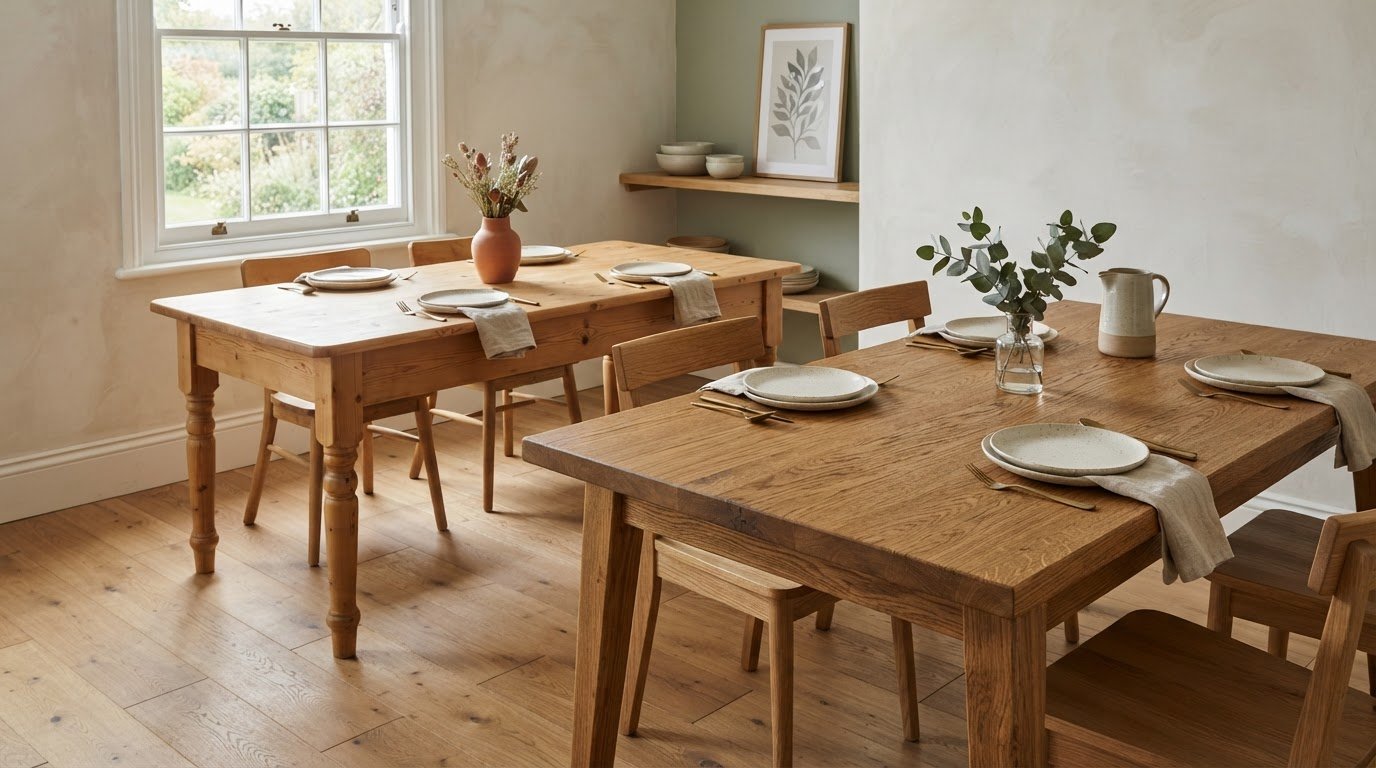
Hardwood and pine are different timber categories, not guarantees of a particular colour, grain or level of hardness. Pine often has a lighter, more relaxed look, while hardwood can have a more pronounced visual presence. Appearance varies with the timber and finish. Both can show knots, changes in tone and individual grain patterns. Natural wood is not a printed pattern, so pieces will not necessarily look identical.
Use the room as your guide. Look at the colours and textures in your flooring, seating and other furniture, then decide whether you want the tables to blend in or stand out. Pale timber may sit comfortably among light finishes, while a deeper or more varied grain can become a focal point. These are visual cues, not strict rules. Consider the effect you want and how the surface will look in changing daylight.
Think about what you value in everyday furniture: visible grain, a more uniform appearance or a balance between the two. The finish affects how the timber reads, so compare examples in a similar tone where possible. Natural variation is part of the material, not a flaw to be edited out.
The Table Guy makes bespoke, made-to-order coffee tables, with hardwood and pine among its furniture materials. If you’re considering a coffee table for your room, note your timber preference and the look you want as part of the design brief. Explore bespoke coffee tables as you decide which timber character feels right for your home.
How to compare solid-wood nesting coffee tables before choosing
Material is only one part of a useful comparison. A set can be made from solid timber but still feel wrong if the tables are awkward to position, too small for their intended use or difficult to tuck away. Compare the material, arrangement and practical details separately, then consider how they work together.
Use the table as a starting point, not a verdict. Veneer and painted furniture are not automatically unsuitable, and solid timber is not automatically the best choice for every room. Focus on what matters to you: visible grain, a consistent colour or clarity about the material used throughout the set.
Which design details affect everyday use?
Start with the largest table. Is its surface useful for the things you regularly keep close, such as a book, a cup or a serving dish? Then consider what the smaller tables will do. They might hold a drink beside a chair or provide an extra surface when company visits. Check that their size and height suit those uses.
Shape and leg placement affect how each piece sits beside seating and how the tables nest. Read the dimensions and look at images from more than one angle. Check whether the legs appear to leave enough room for the smaller tables to slide underneath, and whether the arrangement looks straightforward to use. Consider the finish and grain alongside your existing furniture, too. A strongly marked surface may become a focal point, while a quieter finish may blend in.
How can you assess quality without relying on appearance alone?
Photographs can show a table’s character, but useful details matter too. Look for dimensions and material descriptions for every table in the set, not only the largest one. An image may make a set look balanced; measurements help you judge whether it will suit its intended place.
Assess each piece as a working table. Do its proportions look appropriate for its intended use? Does the arrangement appear stable, with legs positioned to support the surface without obstructing neighbouring tables? Solid wood alone cannot answer those questions. Dimensions, construction and how the pieces fit together matter as well.
For nesting coffee tables solid wood, compare the nested and separated arrangements before settling on a favourite. If you’re planning a coffee table around your room, explore made-to-order coffee tables and use your preferred proportions and timber as the starting points for a design brief.
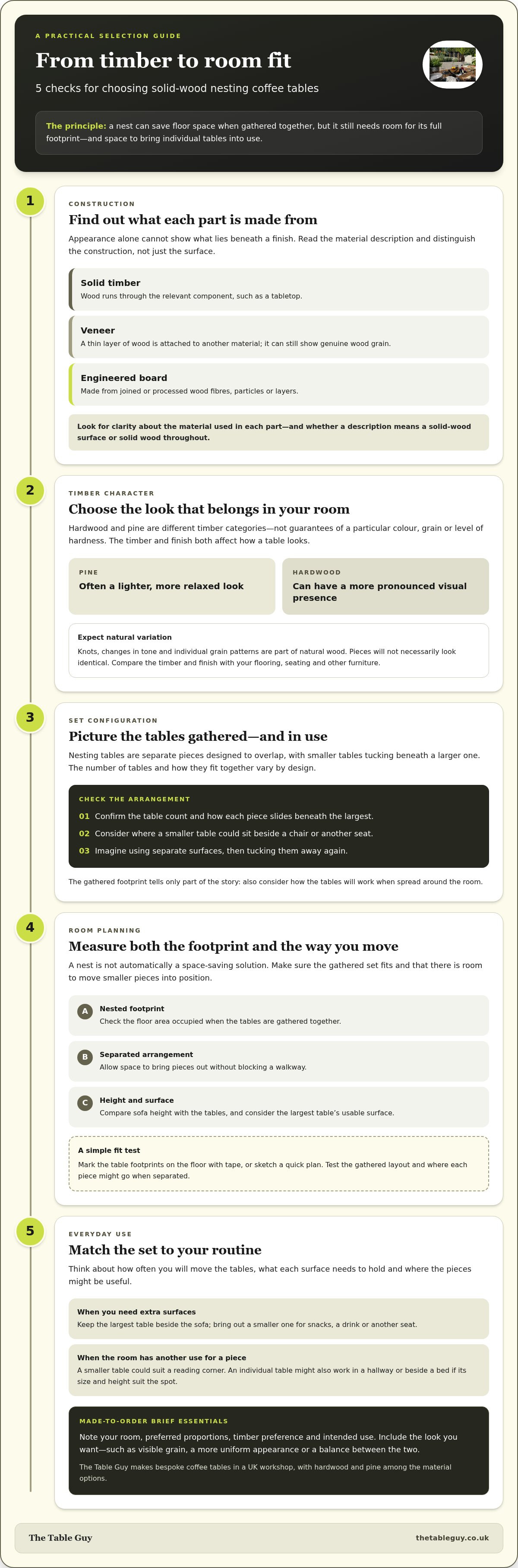
Measure your room and choose a nesting table set that fits
A set needs to work in two arrangements: gathered together and spread out for use. Measure both before choosing. There is no single clearance that suits every living room, so plan around your furniture, doors and everyday routes through the space.
Which measurements should you take first?
Follow this sequence and write down the measurements as you go. Use a tape measure and base the plan on your room.
Mark the intended floor area. Measure the length and width available for the tables when nested. Use masking tape on the floor to outline the footprint and see how it sits alongside existing furniture.
Measure the seating relationship. Record the sofa’s height and seat position, then note the space between the seating and the proposed table area. This helps you judge whether the largest table will be comfortable to reach from where people sit.
Trace the usual walkways. Measure the routes people take through the room, including the space between the sofa, other furniture and doorways. Plan for movement according to how your household uses those paths.
Check access into the room. Measure the doorways and the route from the entrance to the intended position. The tables need to fit in the room and pass along the access route.
Record two details from the set’s dimensions: the full nested footprint and the largest table’s usable surface. The first shows how much floor area the group occupies when tucked together. The second helps you judge whether the main table has enough room for the things you plan to place on it.
How will the tables work when separated?
Plan where each smaller piece could go. Mark those positions on a floor plan or with tape, then check that they do not obstruct a door, regular walkway or another piece of furniture. A set may fit neatly beside the sofa when nested but feel awkward once the tables are in use elsewhere.
Simple room plan, not to scale: Sketch your sofa, doors, walkways and table positions. Label the nested footprint as “your measured length × width”, then mark the largest table’s usable surface and each likely separated position. Replace the labels with measurements from your own room.
Sofa → table area → clear route to doorwaySmaller table → reading chairDoorway → access route to table area
Compare your notes with the dimensions of every table in the set, not just the largest. If you’re planning a coffee table around a measured space, a clear made-to-order brief can bring the proportions and intended use together. Start planning a made-to-order coffee table around your room measurements.
Make a bespoke solid-wood nesting coffee table brief with The Table Guy
A made-to-order coffee table brief can start with the room you’ve measured and the way you plan to use the surface. Note how much floor space is available, what you need the table to hold and how it should sit with the rest of the room. These practical details help you think through the design alongside its appearance.
The Table Guy is a family-run furniture maker established in 2014, creating bespoke furniture in a UK workshop. Its coffee tables are made to order, with hardwood and pine among the material choices. Bring your room measurements and preferences into the design brief to guide the choices that matter to you.
What should you include in a bespoke coffee table brief?
Write down the information that will influence the size, arrangement and character of your coffee table. You do not need technical drawings; careful notes and measurements are a useful starting point.
Room and seating: Include the available floor area, sofa position, seat height and nearby walkways. Note any doors or furniture that affect where the table can sit.
Surface use: Describe what you want the table to hold in everyday use, and whether you need additional surfaces elsewhere in the room.
Proportions: Note the dimensions that would suit the space and the height that feels comfortable beside your seating.
Timber and appearance: Say whether you’re drawn to hardwood or pine, and describe the grain, colour and overall look that would work with your existing furniture.
How you’ll use the table: Explain what your usual routine looks like, including whether you often need to move a table to another spot.
What is the next step towards a made-to-order design?
Bring your notes together into a short list of priorities. Separate essentials, such as the available space and the table’s intended use, from preferences, such as the timber’s character or how the design should look beside the sofa. This keeps practical needs in view while leaving room for a personal design.
For nesting coffee tables solid wood, dimensions and material choices need to work together: the nested footprint should suit the room, separate pieces should have useful roles, and the timber should feel at home among your furniture. When planning a bespoke coffee table, use your measurements and hardwood or pine preference to shape a design brief around your space.
Ready to shape your brief? Gather your room measurements and note how you’ll use the table, then explore a bespoke coffee table design with The Table Guy.
Shape a coffee table set around the way you live
A considered choice is more than a finishing touch. It can make the room more useful and help the furniture feel suited to your everyday routines. Let your priorities lead: perhaps you want a surface for quiet evenings, somewhere to set things down when friends visit or timber character that adds warmth to the room.
If your search for nesting coffee tables solid wood has brought you this far, turn your ideas into a clear brief. Think about what matters most, then consider how those details could guide a made-to-order coffee table design. A little planning can help you choose proportions and materials that feel at home in your space.
Ready to take the next step?Explore bespoke coffee tables from The Table Guy and start shaping a design around your room and everyday life.
Frequently Asked Questions
What is the difference between a nest of tables and a quartetto?
A quartetto commonly describes a nest of four tables, while “nest” can refer to sets with different numbers of pieces. Furniture listings may use the terms loosely, so check the table count and dimensions of each piece. A four-piece set may provide more separate surfaces than you need or take up more room when spread out. Let your intended use, rather than the label, guide your choice.
Can nesting coffee tables be used separately?
Yes. Move an individual table to another spot when you need an extra surface, then return it to the group afterwards. For example, you might place a smaller piece beside an armchair while keeping the larger table near the sofa. Before choosing a set, picture where every table would go during a typical evening. This helps you avoid pieces that are awkward to position or unlikely to be useful.
Do solid-wood nesting tables scratch when stacked?
Surfaces can pick up marks if they rub together, particularly if grit or crumbs are caught between them. Wipe the tops before nesting the tables and move them carefully rather than dragging one across another. With nesting coffee tables solid wood, the way the pieces fit together can also affect contact between surfaces. Follow the maker’s care guidance for the finish, as suitable cleaning methods can differ.
Are solid-wood nesting tables difficult to move?
It depends on each table’s size, timber and construction, so the weight can vary between sets. Consider who will reposition the pieces and whether that will happen daily or occasionally. Check the weight and measurements of individual tables where those details are provided, rather than looking only at the largest piece. Think about lifting them through doorways and around furniture, especially if you plan to move them between rooms.
Can nesting tables work as bedside tables?
Yes, if a table’s height and surface suit the bed and the items you want close at hand. A smaller piece might hold a book or lamp while the other tables stay together elsewhere. Measure the gap beside the bed and consider whether drawers, cupboard doors or the route around the room need to remain clear. Check each table’s dimensions individually; the largest may not be the best fit beside the bed.
How much do solid-wood nesting coffee tables cost?
There is no single price for every set. Cost depends on factors such as the timber, dimensions, number of tables and design details, particularly for made-to-order furniture. To compare value, look at sets with similar materials and measurements, and check which pieces are included. If you’re planning a bespoke coffee table, a clear brief about your room and intended use helps define what you’re looking for.
Comments