
Scaffold Board Shelves: The Ultimate Guide to Industrial Style and Artisan Quality
Scaffold board shelves can bring the character of rugged timber into your home without looking unfinished. The key is choosing a board and finish that suit your room, then planning supports that match the wall and what you intend to store.
This guide covers reclaimed and new timber, finishes, sizing, brackets and installation. You’ll also find practical tips for measuring alcoves and other awkward spaces. The Table Guy is a family-run business established in 2014, hand-crafting bespoke furniture in a UK workshop. Its shelving can be made to order with custom lengths and finishes. Use the guidance below to compare your options and decide what to ask before ordering.
Table of Contents
Why Scaffold Board Shelves are the Perfect Choice for Modern British Interiors
Understanding Material Quality: Reclaimed vs New Scaffold Boards
Tailoring the Aesthetic: Finishes, Colours, and Custom Lengths
Practical Planning: Weight Limits, Brackets, and Secure Installation
Investing in Artisan Quality: The Bespoke Difference with The Table Guy
Why Scaffold Board Shelves are the Perfect Choice for Modern British Interiors
Good shelving should make useful space work harder while feeling at home in the room. Scaffold board shelves add the warmth and texture of solid timber, with a substantial surface for books, ceramics or kitchen essentials. The safe load depends on more than the board: the wall, brackets and fixings all play a part.
Their appeal lies in the combination of practical storage and natural character. Timber can soften a clean-lined interior, complement exposed brick or bring a considered finish to an alcove. For a broader overview of the materials and influences behind industrial interior design, see Wikipedia’s guide to the style.
The Aesthetic Versatility of Industrial Timber
Every board has its own details. Grain, knots and marks give reclaimed timber a sense of history, while new boards tend to look more consistent. Against a painted wall, timber adds warmth; paired with metal fittings, it strengthens an industrial look. A made-to-order length can also fit an alcove or run neatly along a wall, instead of leaving an awkward gap.
In a busy room, solid timber can make storage feel like part of the furniture rather than a temporary fixture. Veneered or MDF shelves may suit some spaces too, but their appearance and durability depend on their construction and finish. Compare materials based on how you’ll use the shelf, the look you want and the care it requires.
A Sustainable Choice for the Eco-Conscious Home
Reusing suitable timber gives it another purpose and can reduce demand for newly produced boards. The environmental benefit depends on factors such as sourcing, processing and transport, so reclaimed wood isn’t automatically the right choice in every case. If you prefer a cleaner finish, consider new timber from a responsible source and ask about its origin.
Buying a shelf sized for your space can also help avoid replacing it simply because a standard length or finish doesn’t work. The Table Guy hand-crafts bespoke furniture in a UK workshop, with custom lengths and finishes available. The business makes made-to-order furniture rather than mass-produced flat-pack or plastic furniture. Choose shelving that suits your home and intended use.
Understanding Material Quality: Reclaimed vs New Scaffold Boards
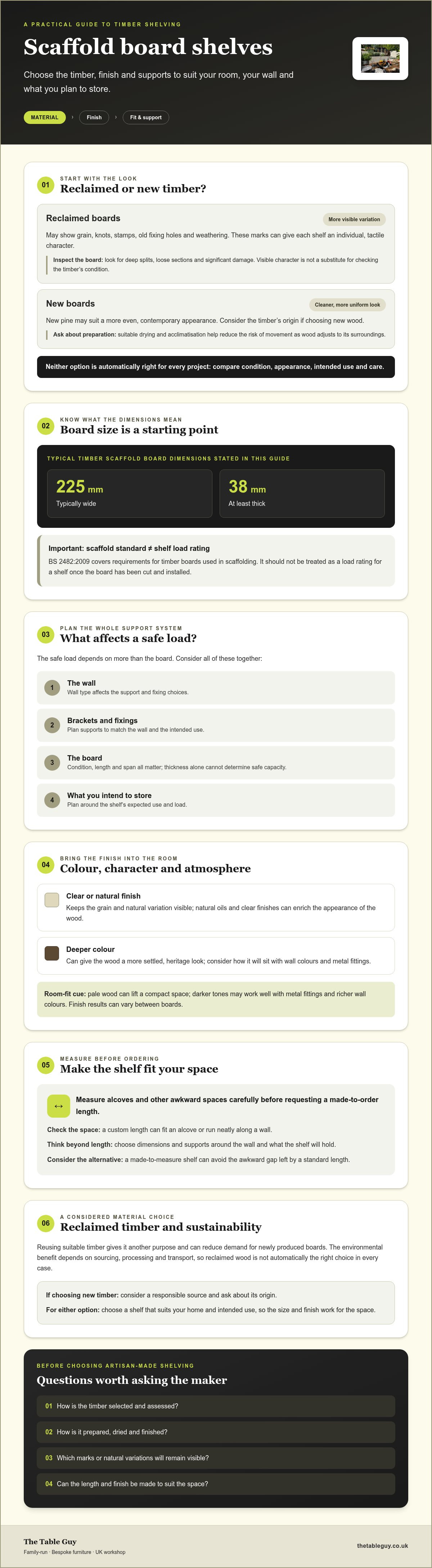
A finished shelf’s quality depends on more than whether the timber is reclaimed or new. Look for sound boards without serious splits, excessive movement or significant damage, and ask how the timber has been assessed and prepared. Genuine timber scaffold boards are made to a recognised specification: BS 2482:2009 covers requirements for timber boards used in scaffolding. That standard relates to their use in scaffolding, however, and should not be treated as a load rating for a shelf once cut and installed.
Board dimensions are a useful starting point, not a guarantee of performance. Timber scaffold boards are typically 225mm wide and at least 38mm thick, but shelf capacity also depends on condition, length, brackets, fixings and the wall. Consider these factors together and check that the board suits its intended use.
The Character of Reclaimed Timber
Reclaimed boards may retain stamps, old fixing holes, knots and weathering. These features give a shelf an individual, tactile quality, but visible character is no substitute for inspecting the timber. Check for deep splits, loose sections or signs of significant damage. Ask the maker how the surface is prepared, whether marks will remain visible and what finish the shelf will have.
Selecting the Right Wood for Your Project
New pine may suit a room where you want a more even, contemporary appearance; reclaimed timber usually brings greater variation. Choose the board that meets your visual preference and practical needs. Thickness alone can’t tell you how much a shelf will safely carry: the span, board condition and supports matter too.
Moisture content is another consideration. Wood can shrink or swell as it adjusts to its surroundings, so suitable drying and acclimatisation help reduce the risk of movement. Workshop preparation gives the maker an opportunity to assess and finish the timber as part of the complete piece. The Table Guy hand-crafts bespoke furniture in a UK workshop, using scaffold boards and pine, with custom lengths and finishes. Explore bespoke shelving options to consider which material and finish may suit your space.
Tailoring the Aesthetic: Finishes, Colours, and Custom Lengths
A finish can change the character of a timber shelf. A clear treatment keeps the grain and natural variation visible, while a deeper colour can give the wood a more settled, heritage look. Consider the room as well as the timber: pale wood can lift a compact space, while darker tones may work well with metal fittings and richer wall colours.
Choosing Your Perfect Colour and Finish
Natural oils and clear finishes can enrich the appearance of wood without concealing its grain. Dark stains or waxes may bring out contrasts between knots and growth rings. The result varies with the timber, so don’t assume a finish will look identical on every board.
Finishing products also work differently. A water-based dye adds colour, while wax polish can add sheen and affect the surface feel. Neither is a universal solution for protection: performance depends on the specific product and how the shelf will be used. Ask what care the finish needs and, where possible, view a sample on similar timber before choosing.
Careful preparation and even application help create a smooth, consistent surface while respecting the wood’s individual character. The aim is not to erase every mark, but to make the finish feel considered and suited to your home.
The Importance of Bespoke Sizing
Standard lengths can leave awkward gaps in alcoves, beside chimney breasts or along walls that aren’t quite square. Measure the space at more than one point, and check how brackets, doors and windows affect the fit. A made-to-order shelf can be planned around these details, rather than choosing a size simply because it is readily available.
The Table Guy specialises in custom lengths and bespoke finishes, with shelving hand-crafted in its UK workshop. Share accurate measurements and describe the look you want so the timber, finish and proportions can be considered together. For more guidance on planning tailored storage, read the guide to bespoke shelving units in the UK.
With scaffold board shelves, a suitable finish and a well-planned length make a difference. Together, they help industrial timber feel like a considered part of the room.
Practical Planning: Weight Limits, Brackets, and Secure Installation
A substantial timber shelf needs supports suited to its load and the wall behind it. There is no single safe weight limit for every installation: board length, bracket spacing, fixings and wall construction all affect the result. For a 225mm-deep shelf, load-bearing capacity means the maximum combined weight the shelf, brackets, fixings and wall can safely support in their installed configuration.
Selecting Brackets for Style and Support
Visible steel brackets, including traditional forged-look and simple modern designs, can make the supports part of the display. Choose a finish that works with nearby fittings: black creates contrast, silver gives a cooler look and raw steel feels more utilitarian. A lip or cradle may help hold the board in place, but suitability depends on the bracket’s design and fixing method.
Hidden supports create a floating appearance, with rods or a concealed frame fitted into the shelf. They need a compatible board and secure fixing into a suitable wall. The leverage from a deep shelf can put extra strain on the support, so check the manufacturer’s guidance rather than assuming a hidden bracket can carry the same load as a visible one.
Bracket position matters. Spreading supports along the shelf helps distribute weight, while a long unsupported span can increase bending and strain. For shelves longer than 120cm, three or more brackets are often recommended, but this is a general guide, not a load rating. Follow the bracket maker’s instructions and consider the shelf’s intended use.
Check the Wall Before You Fit
Identify the wall: masonry, timber studs behind plasterboard and plasterboard alone need different fixing approaches.
Plan the load: include the shelf’s own weight as well as books, crockery or display objects, and distribute items evenly.
Choose compatible fixings: use fixings designed for the wall material and bracket. Don’t rely on ordinary plasterboard alone for a heavily loaded shelf.
Mark and check: measure bracket positions, use a level and check for concealed pipes or cables before drilling.
A tape measure, pencil, spirit level, suitable drill and driver are commonly needed, but the drill bit and fixings must match the wall and hardware. If you can’t confirm the wall construction or fixing method, get advice from a competent installer before loading the shelf.
Planning an alcove or a long wall? Explore bespoke scaffold board shelving made to suit your space, then confirm the appropriate support and installation requirements for your home.
Investing in Artisan Quality: The Bespoke Difference with The Table Guy
A shelf made for a particular home can be sized and finished to suit the space, rather than requiring the room to accommodate a standard kit. The Table Guy is a family-run business established in 2014, hand-crafting bespoke furniture in a UK workshop. Its made-to-order approach brings together natural timber, individual character and dimensions selected for your space.
Hand-Crafted in a UK Workshop
A finished shelf is more than a board and a set of brackets. The timber, cut, surface preparation and finish all affect how it looks and feels. Careful sanding can smooth the surface while retaining the grain and marks that make timber distinctive. When choosing bespoke shelving, ask how the board is prepared and finished, and what care it may need over time.
Made-to-order work also allows the intended space to guide the design, from an alcove’s width to the tone of the surrounding furniture. The same focus on custom furniture can be seen in the guide to bespoke coffee tables in the UK, where proportion and finish contribute to a piece’s place in the room.
Your Vision, Our Craft
Start with how you’ll use the shelf. Books need a different arrangement from a display of smaller objects, and an alcove may need a particular length. Share your measurements, intended use and preferred look. Custom lengths and bespoke finishes help shape shelving around your home, rather than relying on a one-size-fits-all solution.
Solid timber can develop a richer appearance as it becomes part of a lived-in home. A carefully made shelf combines everyday use with the character of natural wood. The Table Guy’s family-run workshop makes bespoke furniture to order.
To consider a shelf for your space, view bespoke shelving options and note the measurements, finish and everyday use that matter most to you.
Make Your Shelving a Lasting Part of Home
The right shelving should feel at home in your space, not like a compromise. Bring together timber character and a finish that suits your interior, then plan the shelf and its supports around the wall and what you intend to store. These choices can make scaffold board shelves both practical and distinctive.
The Table Guy hand-crafts bespoke furniture in a UK workshop, with custom lengths and finishes available for shelving. Its family-run, made-to-order approach gives you the opportunity to consider the material and dimensions for your room.
Explore The Table Guy’s bespoke scaffold board shelving and get in touch to discuss the measurements, finish and use you have in mind.
Frequently Asked Questions
How much weight can scaffold board shelves actually hold?
There isn’t one weight limit that applies to every shelf. Capacity depends on the board’s condition and length, bracket spacing, fixings and wall construction. Include the shelf’s own weight, then distribute books or other items evenly. Check the bracket manufacturer’s load guidance and make sure the wall fixings suit your wall. If you’re unsure, ask a competent installer before loading it.
Are scaffold board shelves suitable for use in a bathroom or kitchen?
They can be used in kitchens or bathrooms if the timber and finish are suitable for the room’s moisture and everyday use. Check that the finish is appropriate, wipe up splashes promptly and avoid leaving water on the surface. Good ventilation can help limit moisture build-up. For a bathroom, ask the shelving maker about the finish and care requirements before ordering, especially if the shelf will sit near a sink or shower.
Do I need to treat or sand my shelves after they arrive?
Not necessarily. Whether further sanding or treatment is needed depends on how the shelf has been prepared and finished. Bespoke shelves may be supplied with a chosen finish, so check the product details or ask the maker before making changes. Sanding can alter the surface, while an incompatible oil, wax or sealant may affect the finish. Follow the care guidance for the specific timber and treatment.
What is the standard depth and thickness of a scaffold board shelf?
A standard timber scaffold board is 225mm wide and has a minimum thickness of 38mm, though a finished shelf’s dimensions may vary. The actual depth and thickness depend on the board selected and how it has been prepared. Bespoke shelving can be made to suit a particular space, so check the finished measurements before planning bracket positions or deciding what the shelf will hold.
Can I install scaffold board shelves on a plasterboard wall?
Yes, but the fixing method must suit the wall and expected load. Where possible, fix brackets into timber studs behind the plasterboard; plasterboard alone may not safely support a heavy timber shelf and its contents. Suitable fixings vary with the wall construction and bracket design, so don’t rely on a generic screw or anchor. If you can’t locate studs or confirm the wall type, seek advice from a competent installer.
How do I clean and maintain my bespoke wooden shelves?
Dust the shelf regularly with a soft, dry cloth. For marks, use a lightly damp cloth and dry the timber promptly. Avoid soaking it or using abrasive pads and harsh cleaners, which may damage the surface or finish. Care needs vary between oils, waxes and other treatments, so follow the maker’s instructions. Keep standing water away from the shelf and check the finish periodically, particularly in a busy kitchen.
What is the difference between reclaimed and new scaffold boards for shelving?
Reclaimed boards often show signs of previous use, such as weathering, knots, marks or fixing holes, giving each shelf a more rustic, individual appearance. New boards tend to look cleaner and more consistent, which can suit a contemporary interior. Neither choice alone determines shelf strength: condition, preparation, dimensions, brackets and wall fixings all matter. Choose based on the character you want, and ask how the timber has been checked and prepared.
Can you cut scaffold board shelves to my exact alcove measurements?
The Table Guy specialises in shelving with custom lengths, so you can request a size suited to your alcove. Measure the opening at several points, as walls may not be perfectly square, and allow for brackets and nearby trim. Share your measurements and intended use when enquiring, then confirm the finished dimensions before ordering. This helps you plan a closer fit than relying on a standard shelf length.


Comments