
The Ultimate Guide to Herringbone Tables: Bespoke British Craftsmanship for 2026
Most dining tables are merely functional surfaces, but a truly exceptional piece of furniture should be the soul of your home. You've likely felt the frustration of mass-produced, flat-pack alternatives that lack character and eventually succumb to the dreaded wobble. It's natural to feel overwhelmed by choices between oak, pine, or reclaimed timber, especially when you're worried about how natural wood movement might affect a complex pattern over time. We understand that you want more than just furniture; you want a legacy piece that fits your space perfectly.
This guide will show you how to navigate these choices to commission a bespoke parquet dining table that serves as a durable, beautiful centrepiece for years of hosting. We will explore the nuances of British timber, the secrets to structural stability, and how our family workshop brings your specific dimensions to life with meticulous care. By the end, you'll feel confident in choosing a design that reflects your pride in supporting local craftsmanship whilst securing a table that lasts a lifetime.
Table of Contents
What is a Herringbone Table and Why is it the Centrepiece of Modern British Homes?
The Art of the Inlay: How Bespoke Herringbone Tables are Crafted
Customising Your Design: Wood Types, Legs, and Finish Options
Practical Considerations: Size, Seating, and Long-Term Maintenance
Investing in Quality: Why a Handmade Herringbone Table Outlasts Mass-Produced Alternatives
What is a Herringbone Table and Why is it the Centrepiece of Modern British Homes?
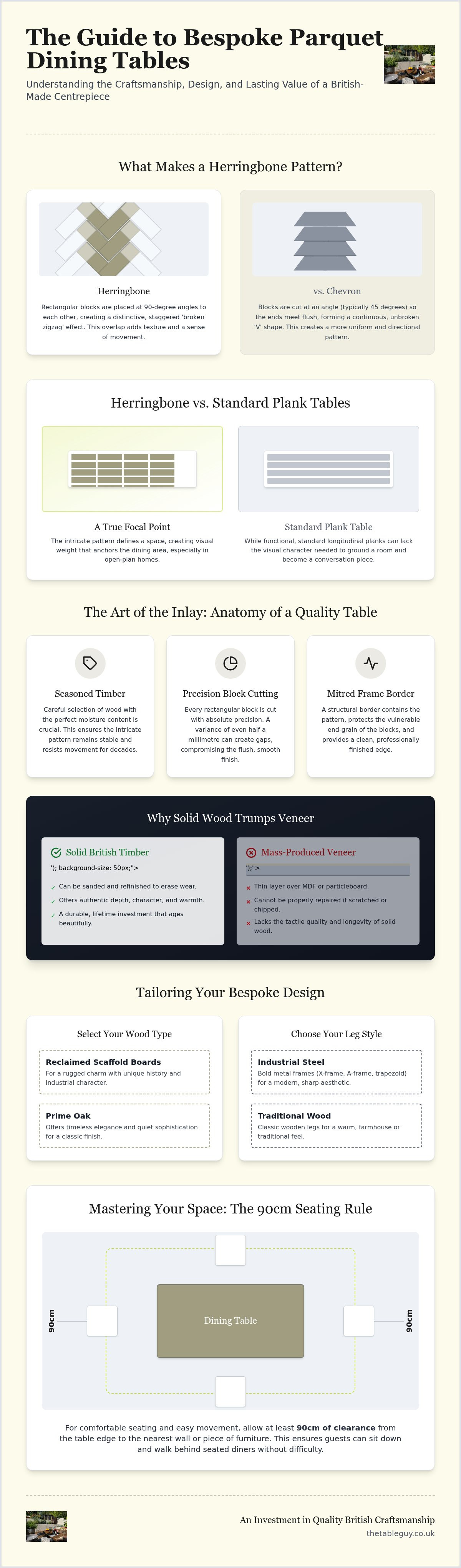
A herringbone table is far more than a simple piece of furniture; it is a structural masterpiece that commands attention. The pattern is defined by a series of rectangular blocks arranged in a staggered V-shape. Unlike the chevron pattern, where blocks are cut at an angle to meet at a sharp point, herringbone blocks retain their 90-degree corners and overlap to create a broken zigzag. This geometric intricacy draws the eye across the surface, providing a sense of constant movement and rich texture. It is this visual energy that makes a bespoke parquet dining table such a compelling choice for the modern home.
While many recognise the aesthetic, the history of the herringbone pattern reveals its deep roots in architectural design, dating back to Roman roads and Egyptian textiles. In a contemporary setting, it has evolved into a social anchor for the British dining room. It’s the place where families gather to share stories and where the table itself becomes a conversation starter. The pattern creates a psychological sense of order and sophistication, making the dining area feel intentional and curated rather than merely functional.
The Timeless Appeal of Parquet Styling
Parquet styling once belonged exclusively to the grand estates and manor houses of the British aristocracy. For centuries, these intricate wood inlays adorned the floors of ballrooms and libraries, symbolising wealth and meticulous attention to detail. This heritage aesthetic has transitioned from the ground up, finding a new home in high-end furniture. There is a undeniable "wow factor" when guests see a hand-inlaid pattern. It signals a level of dedication that mass-produced items simply cannot replicate. Each block is a testament to the artisan's patience and skill.
Herringbone vs. Standard Plank Tables
Standard plank tables have their place, but they often lack the visual weight required to ground a large room. A herringbone design defines a space with its complex geometry. This is particularly effective in open-plan living areas where the dining zone needs a clear identity. The pattern acts almost like a rug, anchoring the furniture within the room's layout and creating a focal point that standard longitudinal planks cannot achieve.
Versatility is another key strength. Whether your home leans towards a rustic farmhouse aesthetic or a sharp, modern decor, the pattern adapts. A bespoke parquet dining table crafted from scaffold boards brings a rugged charm, whilst one made from prime oak exudes quiet sophistication. It’s about finding that perfect balance between traditional skill and contemporary living.
The Art of the Inlay: How Bespoke Herringbone Tables are Crafted
Creating a bespoke parquet dining table is a slow, deliberate process that starts long before the first saw cut. It begins with the careful selection of seasoned timber. We look for wood with the perfect moisture content to ensure the intricate pattern remains stable for decades. Unlike standard tables, every rectangular block in a herringbone design must be cut with absolute precision. A variance of even half a millimetre can accumulate across the surface, resulting in unsightly gaps or a finish that isn't flush. It’s a task that requires a steady hand and an artisan's eye.
A defining feature of our craftsmanship is the mitred frame. This border acts as a structural container, holding the internal pattern in place whilst providing a clean, professional edge. It’s the difference between a table that looks finished and one that looks like a collection of loose blocks. This frame is essential for protecting the end grain of the herringbone blocks, ensuring the table remains smooth to the touch and resistant to wear along the edges.
Why Solid Wood Trumps Veneer
Mass-market retailers often use thin veneers glued over MDF to mimic the look of parquet. Whilst this might look acceptable in a showroom, it fails the test of time. Solid timber offers a depth of character and a tactile warmth that synthetic alternatives can't match. More importantly, solid wood is an investment in longevity. If your table suffers a scratch or a stain after years of family use, it can be sanded back and refinished. This durability is why we encourage clients to view their choice as a lifetime purchase rather than a temporary fix. For those looking to understand the technical side of preservation, this guide to wood finishing provides excellent insight into how quality oils and waxes protect these natural surfaces.
Managing Wood Movement
Wood is a living material that breathes, expanding and contracting with changes in household humidity. In a complex herringbone layout, this movement can be a recipe for disaster if not managed by expert joiners. We use specific joinery techniques that allow the timber to float slightly within its frame, preventing the pattern from buckling or gapping during the winter months. Kiln-dried timber is non-negotiable for herringbone designs to ensure stability. This process removes excess moisture in a controlled environment, significantly reducing the risk of the wood warping once it enters your home. If you are ready to move away from wobbly flat-pack and invest in a piece built for your specific home, explore our range of handmade dining tables to see the difference that artisan joinery makes.
Customising Your Design: Wood Types, Legs, and Finish Options
Designing your bespoke parquet dining table is where the partnership between customer and artisan truly begins. It's an opportunity to move beyond the limitations of high-street retail and create something that mirrors your personal style. Every choice, from the grain of the wood to the angle of the legs, influences how the table anchors your room. Many of the principles found in custom farmhouse dining tables apply here, as we aim to balance traditional warmth with modern durability.
The final finish is the protective layer that brings the timber to life. Natural oils soak deep into the grain, enhancing the wood's organic texture whilst providing a matte, tactile feel. Waxes offer a softer, more traditional sheen that is easy to maintain. For those requiring maximum protection against spills and heat, a clear lacquer creates a durable barrier without masking the wood's inherent beauty. Each finish alters the final colour slightly, so we work closely with you to ensure the tone matches your existing interior.
Choosing Your Timber: Oak, Pine, or Scaffold Board?
Selecting the right material is the most critical decision in the design process. Oak is the premium choice for those who value intricate grain detail and immense hardness. It provides a sophisticated backdrop for the herringbone pattern and stands up to the rigours of a busy household. For a more rugged, industrial aesthetic, reclaimed scaffold boards are unmatched. They carry a history of knots and marks that add instant character to a room. Pine remains a versatile and lighter alternative. It takes stains and oils beautifully, making it an excellent choice if you want to match the table to specific furniture colours.
Metal vs. Wooden Legs: Setting the Tone
The base of the table dictates its overall "vibe". Steel U-frames or X-frames create a sharp, modern centrepiece. This combination of wood and metal often shares the same aesthetic DNA as a bespoke metal garden table uk, bridging the gap between industrial strength and domestic comfort. Metal legs are particularly effective in open-plan spaces where you want to maintain a sense of light and airiness.
Wooden legs offer a softer, more cohesive look. They are ideal for traditional country kitchens where you want the furniture to feel like an extension of the architecture. Consider how leg placement affects your daily life. Sturdy central frames allow for more seating capacity at the head of the table, whilst corner legs provide a more classic silhouette. Every detail is tailored to how you plan to host.
Practical Considerations: Size, Seating, and Long-Term Maintenance
A bespoke parquet dining table should harmonise with your room's architecture, not fight against it. Before you fall in love with a specific timber or finish, it's vital to measure your space with precision. We recommend leaving at least 90cm of clearance between the table edge and the nearest wall or piece of furniture. This ensures your guests can pull out their chairs and move around the room without feeling restricted. If you're working with a tighter breakfast nook, consider a more compact 4-seater design that still maintains the visual impact of the herringbone pattern.
The scale of the pattern is just as important as the table's footprint. On larger surfaces, we often use wider blocks to ensure the design feels balanced. Tiny blocks on a massive table can look overly busy and distracting. For those who love to host, we can even integrate specific features like recessed ice buckets. This "Prosecco factor" transforms a standard meal into an event, making your table the ultimate social hub. Whether you need a daily family surface or one of our 12 seater dining tables for grand gatherings, the geometry of the inlay remains the star of the show.
Sizing for Success
Finding the right dimensions depends on your typical guest list and room layout. A standard 6-seater table usually measures around 180cm, whilst an 8-seater requires roughly 210cm to 240cm for comfortable elbow room. If your hosting needs fluctuate, an extendable dining table provides the perfect solution. We craft these with matching patterns so the extension leaves look like a natural part of the design. Always check the leg clearance as well; you want to ensure the tallest members of the family have plenty of room for their knees without bumping into the frame.
Caring for Your Herringbone Masterpiece
Maintaining the beauty of your table is simpler than you might expect. For daily cleaning, a soft, damp cloth is usually all you need to remove crumbs and light spills. Avoid harsh chemical cleaners that can strip away the natural protective oils. Every six to twelve months, a light reapplication of oil or wax will keep the timber hydrated and resilient. This seasonal ritual preserves the depth of the grain and protects the intricate inlay from drying out. Use coasters for hot mugs and placemats for plates to prevent heat marks, ensuring your bespoke parquet dining table remains a pristine centrepiece for decades to come.
If you're ready to design a piece that fits your home perfectly, view our full range of handmade tables and start your commission today.
Investing in Quality: Why a Handmade Herringbone Table Outlasts Mass-Produced Alternatives
Choosing a bespoke parquet dining table is an investment in your home's future. When you opt for a handmade piece, you aren't just buying a surface; you're supporting the dedication of a passionate artisan. Machines in mass-production factories prioritise speed over stability, often hiding structural flaws under thick, plastic-feeling veneers. In our workshop, we listen to the wood. We understand that every piece of oak or pine has its own personality and tension. This human-centric approach ensures that the final product isn't just a commodity, but a structural work of art built to endure the chaos of family life.
Sustainability is at the heart of the bespoke movement. Buying once and buying well is the most eco-friendly choice you can make for your interior. Whilst flat-pack alternatives might seem cost-effective initially, they often end up in landfill within a few years because they cannot be repaired. A solid wood table grows more beautiful with age. It develops a unique patina that tells the story of every Christmas dinner and homework session. It's a legacy piece, not a temporary fix.
Delivering a heavy, solid wood table requires more than just a standard courier. Because our pieces are substantial and built from genuine timber, we manage the assembly process with meticulous care. We ensure your table is perfectly levelled and positioned exactly where you want it. This isn't a simple transaction; it's the final stage of a partnership that began with a single piece of seasoned timber and a shared vision.
The Family-Run Difference
Since 2014, our family-run workshop has prioritised transparency and local heritage. You aren't dealing with a faceless corporate entity when you commission a bespoke parquet dining table from us. You have a direct line to the makers who selected your timber and applied the final coat of oil. This level of personal service is rare in the modern retail world. We invite you into the process, from the initial timber selection to the final oiling, ensuring the result is exactly what you envisioned for your home.
Beyond the Dining Room
The beauty of the herringbone pattern doesn't have to stop at the dining room door. Many of our clients choose to create a cohesive aesthetic throughout their living spaces by carrying the pattern into other rooms. The same intricate inlay can be applied to bespoke coffee tables uk, or even custom shelving and consoles. This allows you to unify your decor with the warmth and texture of British craftsmanship. Whether you are looking for a grand dining centrepiece or a matching side table, we are here to help you design a home that feels personal, durable, and truly unique.
Ready to start your journey? Browse our collection of handmade furniture or contact our workshop to request a custom quote today.
Bring Your Vision to Life with British Craftsmanship
Investing in a bespoke parquet dining table is about more than just filling a room; it's about creating a structural heart for your home that will witness decades of family stories. You now understand how the precision of hand-inlaid timber and the careful selection of seasoned hardwoods prevent the common pitfalls of mass-market furniture. By choosing a made-to-order design, you ensure that every dimension and finish perfectly complements your living space whilst supporting traditional workshop skills that are becoming increasingly rare.
Our family-run business has been dedicated to hand-crafting solid timber furniture in our UK workshop since 2014. We avoid the flimsy veneers and wobbly flat-packs of the high street, focusing instead on durability, touch, and material authenticity. Whether you're drawn to the rugged history of scaffold boards or the refined grain of premium oak, we're here to guide you through every step of this creative partnership. We invite you to Design Your Dream Herringbone Table with The Table Guy and experience the difference that true artisan dedication makes to your daily life. We look forward to building a lasting centrepiece for your home.
Frequently Asked Questions
Are herringbone tables harder to keep clean than standard tables?
Maintaining a herringbone surface is straightforward when the table is built with precision. Because our blocks are cut to be perfectly flush, you won't find the gaps that plague lower-quality alternatives. A soft, damp cloth is usually sufficient for daily spills. We recommend avoiding silicone-based polishes; instead, use a natural cleaner designed for oiled wood. This simple routine keeps the pattern looking sharp whilst protecting the timber's organic texture for years.
Can I have an extendable herringbone dining table?
You can easily add matching extensions to a bespoke parquet dining table. We sell specific table extensions that are crafted to slide into the ends of the main frame. We ensure the pattern on the leaves aligns with the main table, so the transition looks intentional and seamless. It's the perfect way to transform a standard family surface into a grand hosting space for larger gatherings or festive celebrations.
What is the best wood for a herringbone table?
Solid oak is often the first choice for these designs because its density provides a very stable base for the inlay. It offers a premium look with a grain that highlights the pattern's movement. However, scaffold boards are perfect if you want a more rugged, industrial feel. Pine is also a great contender if you're looking for a lighter-weight table that can be stained to match your existing furniture perfectly.
Do herringbone tables go out of fashion?
The herringbone pattern is one of the most enduring designs in British architecture, often found in historic manor houses. Its geometric appeal is truly timeless, meaning it won't feel dated as trends shift. Whilst it's a popular choice for 2026 interiors, its classic roots ensure it remains a sophisticated centrepiece for decades. Investing in a handmade piece means you're choosing a style that has already stood the test of time for centuries.
How do you prevent the wood from moving in a herringbone pattern?
The secret to stability lies in the preparation of the material. We only use kiln-dried timber, which has had its moisture content reduced to a specific level before we begin work. This is a vital step for any bespoke parquet dining table. In the workshop, we also use specific joinery that allows for subtle, natural breathing. These techniques ensure that your table remains flat and the pattern stays tight regardless of seasonal changes.
Can a herringbone table be used outdoors?
We generally recommend keeping our wooden herringbone tables indoors to protect the intricate joinery from the British weather. Constant exposure to rain can cause the small blocks to move excessively. However, if you're looking for an outdoor table with a built in ice bucket, our metal Prosecco tables are a much more durable choice. They offer the same artisan quality whilst being specifically engineered to withstand the elements year-round.
How long does a bespoke herringbone table take to make?
As every piece is hand-crafted to order, the timeline depends on the complexity of your design. We don't rush the process; the precision required for a herringbone inlay takes time to get right. Generally, you can expect a lead time of several weeks from the moment we finalise your specifications. This allows us to source the best timber and dedicate the necessary hours to ensuring your table meets our master craftsmen's high standards.
Is a herringbone table suitable for a small dining room?
A herringbone pattern is actually very effective in smaller spaces because the geometric lines draw the eye, creating an illusion of more floor area. We can customise the block size to ensure the pattern doesn't feel cramped on a compact 4-seater frame. Choosing a pedestal or slim metal base can also help keep the room feeling open. It's a fantastic way to add a high-end, bespoke feel to a cosy dining nook.


Comments