
A-frame dining table design with benches and frame options
An A-frame dining table design can be a practical choice for heavy-use dining when its frame is well made and suits the tabletop. Steel-frame examples use 75 mm x 25 mm box-section legs, described as heavy duty and handmade in the UK. The shape alone doesn’t guarantee steadiness, so the frame’s construction and position matter too.
It’s natural to want a table that feels secure through everyday meals, family gatherings and years of use. Angled legs create a distinctive look, but choosing between an A-frame and a V-frame, or deciding whether either suits your room, involves more than appearance.
This guide explains how A-frame and V-frame bases differ, what to consider when choosing a table shape and size, and how to plan bench seating. You’ll also learn how leg placement affects seating space, helping you picture a table that feels comfortable and suits the way you dine.
Table of Contents
A-frame and V-frame design differences
An A-frame base has legs that angle outwards from the tabletop, forming a broad, recognisable support shape. A V-frame brings its supports together towards the top or bottom, creating a different outline and changing how the legs fit around chairs. Either can suit a dining room, but appearance alone does not determine stability. Consider the frame’s construction, how firmly it sits on the floor and where its supports meet the tabletop.
For a practical comparison, steel A-frame legs are made from 75 mm x 25 mm box section in the examples described. They’re also described as heavy duty and handmade in the UK. These details provide more useful context than the letter-shaped silhouette alone. A well-built base needs to support the top without unwanted movement, while its leg position should leave guests space to sit comfortably. Check how the frame is arranged before deciding whether chairs can tuck in as you’d like.
The tabletop matters too. A-frame tables made from 100% reclaimed wood pair a substantial-looking surface with an industrial-style metal base. Reclaimed boards can have varied grain and markings, so the finished appearance won’t be perfectly uniform. A V-frame can create a more open or sculptural impression, depending on the way its supports meet. Compare both shapes against the room’s other furniture and the visual weight of the tabletop.
For a busy dining area: assess frame construction and leg position, rather than relying on the A or V label.
For seating: picture chairs pulled out, then consider whether angled supports interrupt access.
For a shared table: Furniture Village recommends 80 cm per person for elbow room, plus another 15 cm between each guest.
Spacing recommendations can help you judge usable table length, but your room layout should guide the final choice. An A-frame dining table design may suit a robust, workshop-inspired interior, while a V-frame can create a lighter visual effect. Compare the specific base, tabletop and seating arrangement together to assess both comfort and how the table will look in your room.
Dining table styles and designs
Start with the tabletop shape, which influences how people gather and move around it. A rectangular table suits a long dining room and gives guests clear places along each side. A round table encourages conversation across the centre, while an oval top softens the outline while retaining a rectangle’s length. In a compact square room, a square table can give the dining area a deliberate centre.
Next, choose a material and finish that suit the room and how you use it. Hardwood has visible grain and a natural character; pine offers a lighter look that can suit relaxed farmhouse interiors. Scaffold board surfaces have a more rustic, textured appearance, while metal tables can create an industrial style. Balance the look you want with the care you’re prepared to give the surface. A table for everyday meals should feel right for daily use, not just special occasions.
Consider how the tabletop and base work together. An A-shaped steel frame gives a timber top an industrial edge, while a traditional farmhouse design creates a warmer, familiar impression. For example, simple metal legs can let richly grained hardwood take centre stage. A farmhouse style may be a better fit if you want the table to anchor a traditional dining room.
For regular family meals: choose a surface and finish that suit frequent use and straightforward care.
For entertaining: consider whether a rectangular or oval top better fits your seating pattern.
For a smaller room: assess how the table shape affects circulation and the space around chairs.
Keep the whole setting in view. A timber top, frame style, chairs and surrounding furniture should feel like parts of the same room, rather than separate choices. If a made-to-order farmhouse look suits your space, explore farmhouse table designs as one way to bring that character together.
Pairing an A-frame table with benches
A bench can give an A-frame table a relaxed, shared feel, but the fit needs planning. Measure the table length and check where the angled legs meet the floor. The supports may limit how far the bench slides beneath the top, particularly if they are close to the ends. Leave enough space for people to sit down and stand up comfortably.
A useful sizing detail is the standard length relationship: the bench is 30 cm shorter than the selected table, allowing it to slide underneath when it’s not in use. That gap helps keep the bench within the table’s footprint, but the frame position still matters. For example, a table with legs near its ends may offer less usable bench length than a design with supports set further in. Check both measurements together.
Bench proportions affect comfort as well as appearance. Dining benches measure 44 cm high by 36 cm wide in the described design. Compare those dimensions with the table height and the space available beneath its top. A broad bench may feel substantial beside a thick timber surface, while a narrower seat can keep a compact dining area visually open. The bench should sit at a practical distance from the tabletop, leaving enough room to settle in comfortably.
Measure the table: note its full length and the distance between the frame supports.
Match the bench: use the 30 cm shorter length as a starting point for tucking it away.
Test the arrangement: picture the bench in use and pushed in, then consider access from both ends.
Benches work well when you want flexible seating along one side, with chairs at the ends or opposite side. A family, for instance, might choose a bench for children and chairs for guests who prefer individual seats. Keep the A-frame supports in mind: their angle can affect seating positions, how easily the bench moves and whether the arrangement feels balanced.
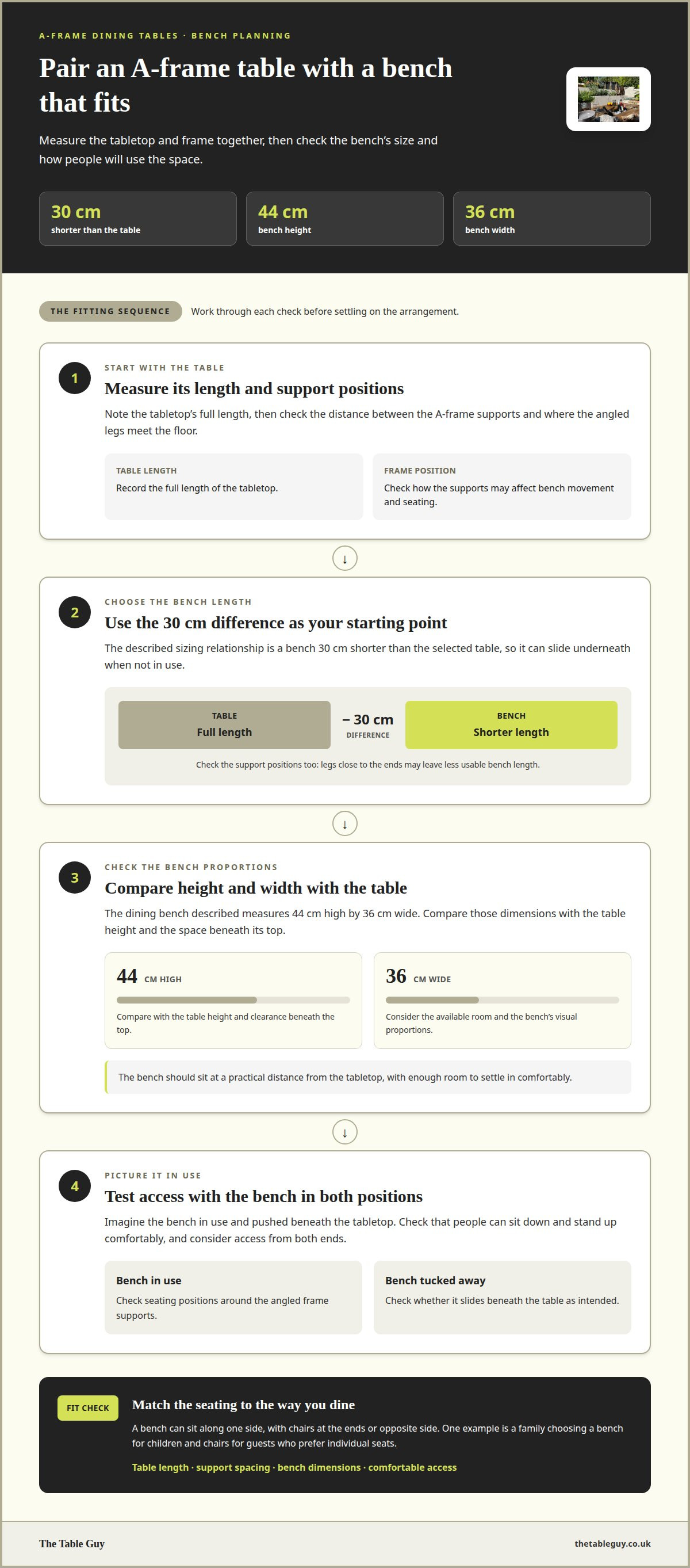
Table leg placement and legroom
Leg position affects where chairs can sit and how easily guests move around the table. An A-frame support angles outwards, so its feet may take up more floor space than the section directly beneath the tabletop. Before choosing a layout, picture each chair pulled out and check whether the frame interrupts access at the ends. This matters particularly in narrow dining rooms.
Allow around 90 cm between the table edge and a wall or other obstacle, adjusting that clearance to suit the room and its traffic. A walkway used frequently needs to feel clear when someone is seated. For example, if a chair stands between the table and a doorway, consider both its occupied position and the space needed to pull it back.
Height also influences comfortable seating. In the described table dimensions, the legs are 71 cm high and the total table height is 74 cm. These measurements help you consider the clearance beneath the top, especially if chairs have arms or a bench needs to slide underneath. Compare the available space with the seat height and shape, rather than judging the table by its overall height alone.
Map the room: note doorways, walkways and nearby furniture before deciding where the table will sit.
Position the frame: consider whether angled feet affect end seats or access from either side.
Allow for chairs: account for the space they occupy when pulled out, not only when tucked in.
For a real-room test, mark the tabletop edges and frame feet on the floor, then arrange chairs around that outline. Walk past the setup and sit in each intended place. This simple step reveals whether the 90 cm clearance works for your household’s traffic and whether a chair conflicts with a frame support. Plan a dining table for your room with leg position and seating space in mind.
The Table Guy: Prosecco Dining Tables
The Table Guy makes bespoke tables to order, including Prosecco Dining Tables with built-in ice buckets. If you’re choosing a frame, tabletop and seating together, a made-to-order design can bring those decisions into one considered piece. The range also includes Farmhouse Tables, Bamboo & Hardwood Tables, and Scaffold Board & Pine Tables, offering different materials and styles to consider.
Think about the details that matter in your room: the table’s shape, the timber finish and how benches or chairs will fit around it. These choices define the finished piece’s appearance and everyday use. The Table Guy designs and makes bespoke furniture to order, tailoring each piece to individual requirements.
Share your room measurements and design ideas with The Table Guy to discuss a bespoke dining table.
Make your dining space your own
The right table should feel at home in your room and fit the rhythm of daily life. Before settling on a design, picture the moments you want it to hold: a quiet breakfast, a family meal or a long evening with friends. That vision can guide the balance between a distinctive frame, a welcoming surface and comfortable seating.
Use your room measurements and preferred style to define a clear starting point. An A-frame dining table design becomes more than a visual choice when its proportions and materials reflect how you live. Decide which details matter most, then bring them together in a piece that feels personal rather than generic.
The Table Guy can help you explore a dining table direction that suits your space and taste. Discuss your dining table ideas and take the next step towards a centrepiece made for your home.
Frequently Asked Questions
Is an A-frame dining table stable for heavy use?
An A-frame table can feel stable when its frame is well constructed and securely joined to the tabletop. Stability also depends on an even floor, sound joints and balanced support. A table may rock on an uneven floor, even with a substantial frame. Check how the base is joined and whether the feet sit firmly before choosing it for regular family meals.
Can I tuck chairs in fully with an A-frame table?
Not always. Outward-angled legs can meet chair legs or limit how far a chair moves beneath the tabletop, especially near the ends. An armchair, for example, may need more clearance than a compact, armless chair. Consider the chair legs as well as the A-frame feet, and leave enough room to pull seats out without scraping or catching.
What is the best wood for a modern A-frame table?
There isn’t one best timber for every modern dining room. Hardwood has pronounced grain and a substantial appearance, while bamboo offers a cleaner, contemporary look. Pine can suit a lighter, more relaxed setting. Think about the character you want and how the grain will look alongside the metal base. A richly marked top, for example, can reinforce an industrial style.
What are the standard dimensions for an A-frame dining table in the UK?
There isn’t one set of dimensions that suits every UK dining room or seating arrangement. Table length and width depend on how many people you want to seat, your choice of chairs or bench, and the room layout. Measure the intended position and allow space for seats to move. Compare the table height with your seating to help diners sit comfortably.
What materials and timber are best for an A-frame dining table?
A timber top paired with a steel frame contrasts natural grain with an industrial-style base. Hardwood, reclaimed wood, pine and bamboo each have a distinct appearance, so consider your existing furniture and preferred finish. The frame and timber should also work together visually. A simple steel base, for instance, can let distinctive wood grain take centre stage.
What are the advantages and disadvantages of A-frame table legs compared with other designs?
A-frame legs give a dining table a distinctive angled profile and can add industrial character. Their outward reach can also make the base more prominent and affect where chairs fit, particularly at the ends. Straighter legs leave a different arrangement beneath the top, while V-frame supports create another silhouette. Compare the base shape with your seating and preferred room style.