
Choose between a dining bench and chairs for your table
The seat that saves space isn’t automatically the best fit. A bench can make good use of a rectangular table’s seating area and slide underneath when it’s not in use; chairs give each diner an individual seat and are easier to move. For the bench vs chairs decision at your dining table, think about the room, who’ll be sitting there and how long meals usually last. Allow about 60 cm of table edge per person.
It’s easy to see why a bench appeals: it feels relaxed and lets people sit close together. But a chair’s back support and personal space may matter more during longer meals, or for anyone who finds it difficult to get in and out of a bench seat. The right choice depends on more than appearance.
This guide compares comfort, space and flexibility, including how to combine a bench with chairs. You’ll learn what to consider when matching seating to your table and room, so you can choose an arrangement that works for everyday meals and feels welcoming when guests gather.
Table of Contents
Are Benches Comfortable Enough for Meals?
A solid dining bench can suit everyday meals lasting 20 to 40 minutes. For a longer dinner, a backrest can make a noticeable difference by supporting the upper body. Dining chairs usually offer more individual support, especially when their backs are shaped to follow the sitter’s posture. Armrests can add another place to rest, but they also need room around the table and may stop a chair sliding fully underneath.
Are dining benches easy to get in and out of around a dining table? Not always. People sitting in the middle may need others to move first, and a bench without a backrest can be harder for older adults or people with mobility difficulties to use. Leave about 75 cm of clearance around the table where possible, so diners have room to move.
Upholstery can make a bench more comfortable for longer sitting, while a firm wooden seat offers a simple surface for everyday use. Loose cushions add padding, but can slip during dinner and need repositioning. If the bench sits against a wall, back cushions can provide support. A padded bench with a backrest may feel more like a chair, depending on its design and construction.
Use the table below to compare how each option works for a meal. Think about who uses the dining space most, rather than choosing by appearance alone.
Choose a bench for casual meals and shared seating; choose chairs when back support, armrests or easier access matter more.
Is a Dining Bench or Chairs Best for a Dining Table?
To choose, match seating to your table shape, available floor space and daily routine. A rectangular table can pair well with a bench, while chairs usually follow a round table’s curve more easily. The bench vs chairs for dining table comparison also depends on who needs access and how often you change the arrangement.
Bench seating for households
A bench shares its length between diners, so allow about 60 cm per person. A 120 cm bench suits two people, while a 150 cm bench can seat two or three. A 200 cm bench may fit three or four, depending on how closely they sit.
For family meals, shared seating can bring children and adults together. A bench can also tuck under a rectangular table, helping a compact dining room feel less crowded between meals. If guests come regularly, a 180 cm table with benches can seat six to eight people, though the room layout still matters.
Chair seating for households
Chairs provide a defined place for each diner, which can help family members settle into a regular mealtime routine. They’re easy to move between the table and another spot, offering flexibility when guests arrive or children need extra room.
For the bench vs chairs for dining table decision in a small room, measure the space needed to pull seats out, not just the table footprint. Individual chairs can suit awkward layouts and round tables, where a straight bench may not follow the edge. Choose a finish that complements the table without making the room feel crowded.
Consider how often you host guests and whether children share everyday meals. A bench accommodates different group sizes along one side; chairs make it simpler to add or move individual seats. Allow about 60 cm of bench length per diner, then consider access. A bench against a wall can make entry difficult, while chairs move independently. The best fit balances seating capacity with clear movement around the dining room.
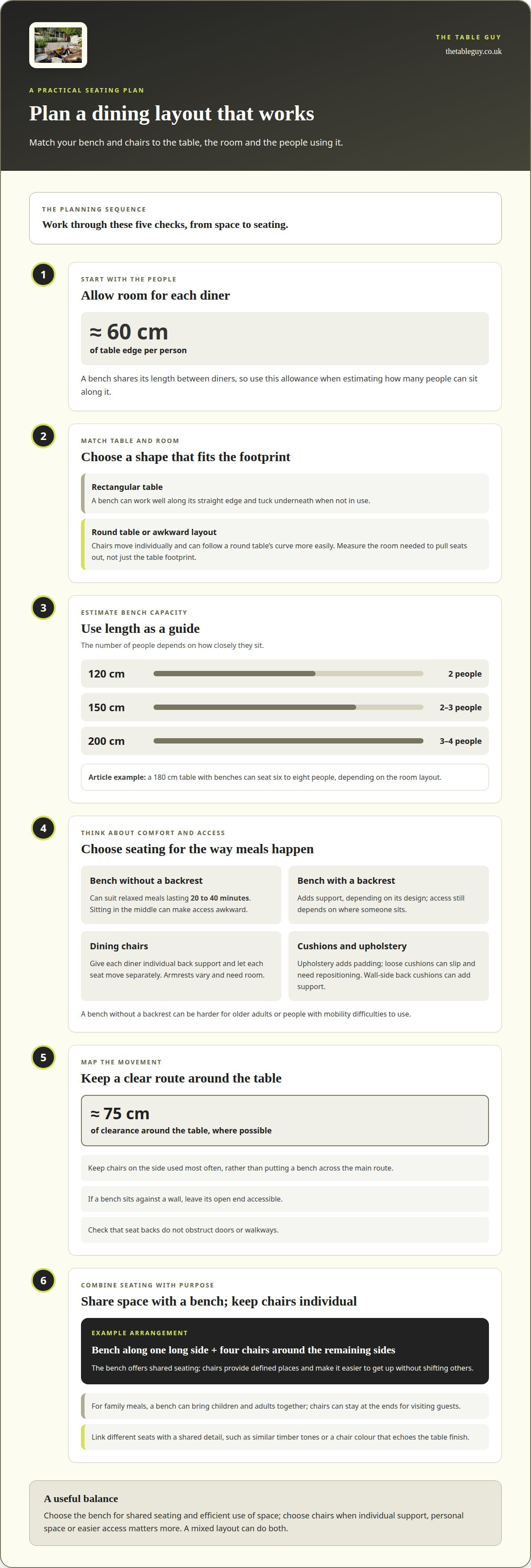
Mixing benches and chairs
Combining a bench with chairs gives a dining area two kinds of seating. It can suit a smaller interior where a full set of chairs feels crowded, while still providing individual seats. For example, place a bench along one long side of a rectangular table and chairs opposite.
One practical arrangement uses a bench on one side and four chairs around the remaining sides. The chairs give diners defined seats and make it easier to get up without shifting others. The bench provides shared seating for children or relatives who want to sit together. This balance can work well for families whose daily mealtimes differ from occasional gatherings with guests.
Plan the layout around how people enter and leave the table. Keep chairs on the side used most often, rather than placing the bench across the main route through the room. In a smaller dining area, a bench can sit along a wall, but leave its open end accessible so diners aren’t blocked in.
For a cohesive interior, connect different seats through a shared detail. A wooden bench beside chairs in similar timber tones creates a clear link, even when their shapes differ. Alternatively, choose chairs in a colour that echoes the table’s finish. Keep the contrast deliberate, so the mixed seating feels considered rather than assembled by chance.
Think about how many people usually sit at the table before settling on a layout. A family might use the bench for everyday meals, then keep chairs at the ends for visiting guests. If the table sits in an open-plan room, align the bench with its long edge to define the dining area. Check that chair backs and the bench don’t obstruct nearby doors or walkways.
Mixed seating works best when each piece has a purpose: the bench shares space, while chairs offer separate places to sit. Sketch the table and surrounding routes, then plan where each seat belongs. A wooden bench with chairs at the ends can create an inviting, flexible arrangement without making every side look the same.
Differences between dining benches and chairs
The bench vs chairs for dining table decision affects how your room works after dinner. A bench provides one continuous seat, while chairs create separate places to sit. In a kitchen used for more than meals, consider whether you need seats that can move elsewhere or prefer shared seating beside the table.
Chairs move individually for cleaning or can serve as extra seating in another room. A bench is less convenient to shift, but one shorter than the gap between the table legs can slide underneath. Measure that gap before choosing, especially if your dining room has little spare floor space.
The two options also create different moods. A bench tends to give a dining room a relaxed, informal feel; chairs can create a more tailored look. For example, contrasting chair colours can add character around a plain wooden table. Your bench vs chairs for dining table choice can reflect both the room’s style and how you use it.
Upkeep depends on materials and use. A bench may cost less than buying several chairs, while individual chairs may need maintenance or replacement over time. Rather than assuming one option always costs less in the long run, consider how each seat is made and how often it will be used.
Fit matters too. Standard dining benches are roughly 45 cm high, similar to dining chairs. Compare the seat height with the table, then check whether the bench clears its supports when pushed underneath. A bench that catches on the legs may remain in the way, particularly in a compact kitchen.
Choose a bench for continuous shared seating and a more informal atmosphere. Choose chairs for moveable, individual places and a look that’s easy to vary. If you’re still choosing the table itself, explore dining table options and consider which shape and finish will work with your seating and room.
The Table Guy: Prosecco Dining Tables
The Table Guy can help when your seating choice points to a table that suits your room and everyday routine. Its Prosecco Dining Tables offer one option to consider alongside Farmhouse Tables, Bamboo & Hardwood Tables, and Scaffold Board & Pine Tables.
Think about the shape and finish that will work with your chosen bench, chairs or mixed arrangement. A rectangular table can pair naturally with a bench, while the room’s layout and your preferred seating help guide the overall choice. The Table Guy crafts tables to order, so you can consider a design that fits your dining space.
If you’re ready to discuss a dining table, contact The Table Guy.
Make your dining space feel considered
Your bench-versus-chairs decision can shape more than seating: it helps set the character and rhythm of your dining space. Before choosing a table, picture how the room works on an ordinary day. Where do people enter? Which side needs to stay clear? What materials will complement your chosen seats?
Those details can guide a more considered choice, from the table’s proportions to its finish. A well-matched table gives your seating arrangement a natural centre, whether your room calls for a welcoming farmhouse feel or a cleaner, contemporary look. Think about the atmosphere you want to create as well as the practical needs of the space.
For a table that suits your dining area and seating plans, discuss your dining table with The Table Guy. A thoughtful choice can make the room feel ready for everyday meals and the people you’re glad to gather around it.
Frequently Asked Questions
Can a dining bench save you space?
Yes, a bench can save floor space when it fits beneath the table after meals. This works best if its length is shorter than the gap between the table legs; otherwise, it may catch on the supports. In a narrow kitchen, also consider the space people need to sit down and stand up, not just the bench’s stored position.
What size bench do you need?
Choose a bench length that fits the table’s usable side and leaves access around its legs. As a planning guide, allow about 60 cm of bench length per person. Before choosing, measure between the table legs as well as the room available. That helps you judge whether the bench will fit at mealtimes and tuck away afterwards.
Which is better for a small kitchen or dining area?
A bench often suits a small room with a rectangular table, particularly if it can slide underneath when unused. Chairs may work better around a round table or in an awkward layout, since each seat can move independently. In either case, map the route between the kitchen, table and doorway so pulled-out seating doesn’t block everyday movement.
What are the pros and cons of a dining bench versus dining chairs?
A bench gives shared, flexible seating and can be tucked away, but diners may need to move along it to let someone out. Chairs give each person a separate seat and are easier to relocate, though they can take more room when pulled out. Consider who uses the table daily and how often you rearrange the room.
How many people fit on a dining bench compared with chairs?
Estimate bench capacity by dividing its usable seating length by about 60 cm per person. For instance, a longer bench may fit more people along one side than separate chairs, but that doesn’t always mean everyone will sit comfortably. Allow for the table legs, diners’ space and whether the group includes children before planning extra places.
How much space does a dining bench save compared with dining chairs?
There isn’t one fixed amount of space saved: it depends on the bench, chairs, table and room layout. A bench can free floor space if it slides fully underneath, while chairs need room to pull back for sitting. Compare the whole arrangement both in use and when tucked away, including access to cupboards, walkways and the route through your dining area.

Comments