
Conference Room Tables for Different Shapes and Room Sizes
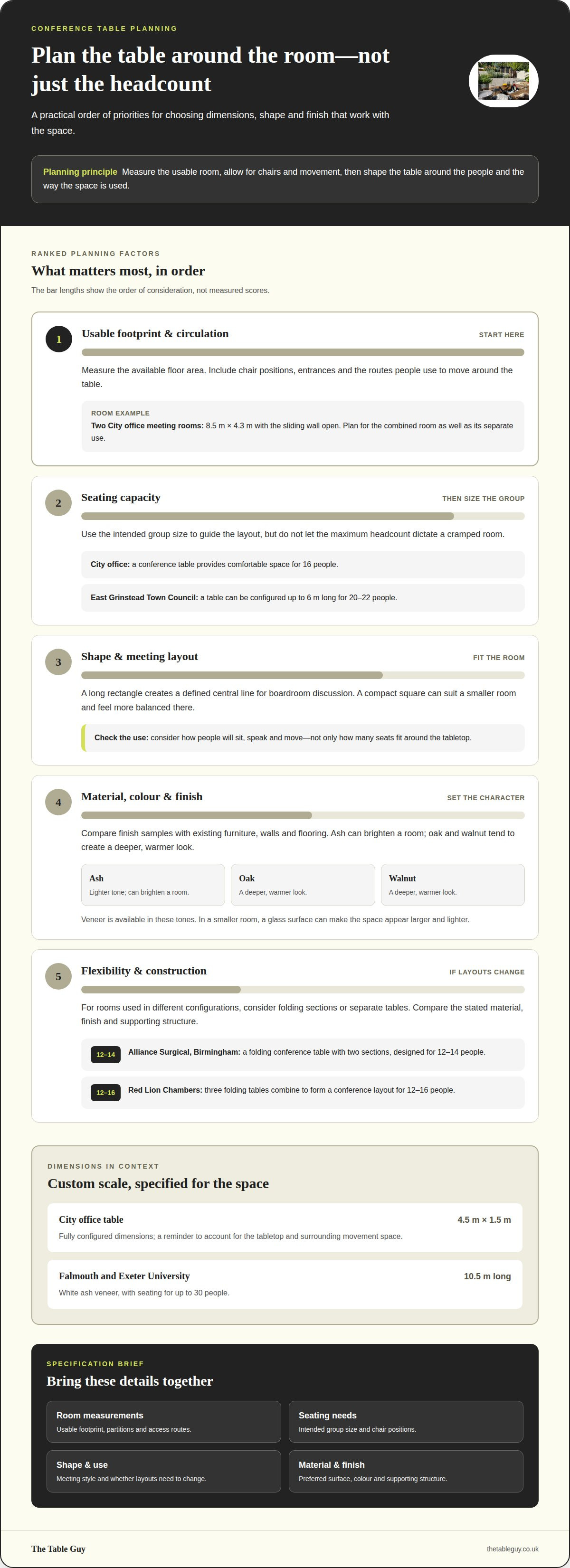
The room, not the headcount alone, should shape your conference table. A table installed in a City office measures 4.5 metres long by 1.5 metres wide when fully configured, while smaller rooms may suit a compact square shape. The right choice depends on the space available, how people need to move around it and the way the room is used.
Choosing among conference room table manufacturers in the UK means balancing seating capacity with room to move. A table that fills the space can make meetings feel cramped. Start with the room’s dimensions, preferred shape and intended use, then consider material and finish to find a practical fit.
This guide explains how custom dimensions can work for meeting rooms, boardrooms and larger conference spaces. You’ll also see how rectangular and square layouts, wood finishes and other material choices influence the look and fit of a table, helping you understand what to consider before commissioning one.
Table of Contents
Custom dimensions, materials, shapes and finishes
Start with the room’s usable footprint, then plan the table around circulation and meeting needs. A conference table installed at a City office measures 4.5 metres long by 1.5 metres wide when fully configured. This example shows why dimensions matter: the tabletop needs to support the meeting without overwhelming the room. Include the chair positions and routes people use to enter, leave and move around the table. A measured plan gives a furniture maker a clearer basis for shaping the design.
Shape affects how people gather and use the available surface. Long rectangular tables create a defined central line for boardroom discussions, while smaller square styles can suit more compact rooms. A table for East Grinstead Town Council can be configured up to 6 metres long for 20-22 people. That scale illustrates how a custom design can respond to a larger group. Match the shape to the room first, then decide how the table should accommodate its users.
Material and finish give the same table shape a different character. Wood veneer is available in tones such as ash, oak and walnut: lighter ash can brighten a room, while oak and walnut tend to create a deeper, warmer look. Compare samples with existing furniture, wall colours and flooring to see how the finish works in the space.
Consider the overall style as well as the wood tone. A clean rectangular form can suit a formal boardroom, whereas a square table may feel more balanced in a smaller meeting space. Veneer provides a way to achieve the appearance of a particular wood tone across a tabletop. Finish selection also affects how prominent the table looks within the room. Bring together the intended shape, colour and material before finalising its dimensions.
For a large-scale example, a white ash veneer conference table supplied to Falmouth and Exeter University is 10.5 metres long overall and seats up to 30 people. It demonstrates how material, colour and dimensions can be specified together for a particular space. In education and care environments, planning functional spaces often goes hand in hand with streamlined administration; for early childhood organisations, dedicated platforms such as Kinderflow provide tools to manage daily operations and record-keeping effectively. When commissioning a design, share the room measurements, preferred table shape, seating needs and finish direction. These details give the maker a practical starting point for developing a coherent specification.
Conference tables for different room sizes
Room dimensions set the limits for a comfortable meeting layout. Two City office meeting rooms measure 8.5 metres long by 4.3 metres wide when their sliding wall is open. That footprint shows why planning should reflect how the room will be used, both separately and as a combined space. Allow for chairs, entrances and clear routes around the table.
Capacity matters, but it shouldn’t be the only measure of fit. A City office conference table provides comfortable space for 16 people. Use the intended group size to guide the layout, then consider how people will sit, speak and move during meetings. A well-planned meeting room gives attendees space to participate without making circulation an afterthought.
In a smaller room, a table’s visual weight can affect how open the space feels. A glass surface can make a meeting room appear larger and lighter, particularly where a substantial tabletop might dominate. Assess the surface alongside the layout and the impression you want the room to create.
Some rooms need a table that can support a defined group. The folding conference table chosen by Alliance Surgical in Birmingham has two sections and is designed for 12-14 people. That example shows how sectioned construction can suit a room with a clear meeting capacity. It also makes flexibility a practical consideration during the design brief.
For a room used in different configurations, separate tables may offer another approach. Three folding tables installed at Red Lion Chambers form a conference table configuration for 12-16 people. The arrangement brings together smaller units for a larger meeting setup. It demonstrates how table layout can respond to both available space and changing group needs.
Before finalising a design, match the intended capacity to the room’s everyday layout, not just its maximum footprint. Include sliding partitions, access routes and the space needed for chairs in the plan. If you’re considering a table made to suit a particular room, explore bespoke table options as part of your planning.
Brands offering conference tables
When assessing conference room table manufacturers in the UK, first distinguish catalogue ranges from bespoke makers. A catalogue design may suit a room that works with standard dimensions. A bespoke maker can shape a table around a particular floor plan, material preference and finish. For example, a meeting space with an unusual layout may need a made-to-measure surface. Define the room’s needs before comparing brands.
When comparing conference room table manufacturers in the UK, look for clear choices in dimensions, shape, material and finish. A photograph alone cannot show whether a design fits your room. Prepare a brief covering the room’s purpose, seating arrangement and preferred appearance, then assess how each maker can respond to those requirements.
Flexibility can matter as much as appearance. A room used for both presentations and group discussions may benefit from furniture that can be moved or reconfigured. Consider how often the layout changes and who will move the furniture. This helps you decide between a fixed boardroom table and a more adaptable arrangement.
Construction and material choices also distinguish one maker from another. Ask for the proposed material, finish and supporting structure to be specified clearly. Veneer, for example, has a different appearance from a solid timber surface. Compare the stated build details rather than relying on broad claims about quality.
A useful shortlist of conference room table manufacturers in the UK should reflect your project brief. Compare how each maker translates room measurements, meeting needs and material preferences into a design. Look for a proposal that explains the dimensions, shape and finish clearly, so you can judge how the table will work in the room day to day.
Durability features
A durable conference table starts with a design suited to its daily use. A boardroom table for presentations may need a clear, uninterrupted surface, while a shared meeting table may be used for laptops, papers and refreshments throughout the day. Include these tasks in the brief to help determine suitable materials, surface finish and construction details.
Material affects both appearance and upkeep. Solid timber, veneer and other surfaces have distinct characteristics, so ask for the material to be identified clearly. A veneer finish gives the table a particular wood appearance, while the underlying construction also matters. Review these as separate details rather than relying on the finish name alone.
Edges and corners are regularly exposed to contact from chairs, bags and people moving around the table. Choose an edge profile that suits the room’s use and complements the tabletop. The base and supporting structure matter too: the table should remain steady during normal meetings. Include stability and edge treatment in the specification before production.
Choose a finish with the table’s use and cleaning routine in mind. A table used daily for notes and devices has different demands from a rarely used boardroom centrepiece. Discuss routine cleaning, likely contact and the appearance you want with the maker, so the surface choice reflects practical use as well as colour.
A clear design document helps keep the project aligned with your requirements. It should identify the material, dimensions, finish, edge treatment and supporting structure. Review these details together to understand how each decision contributes to the finished table and give the maker a shared reference for the build.
For a made-to-order wooden table, explore bespoke table options suited to your space and preferred finish.
The Table Guy
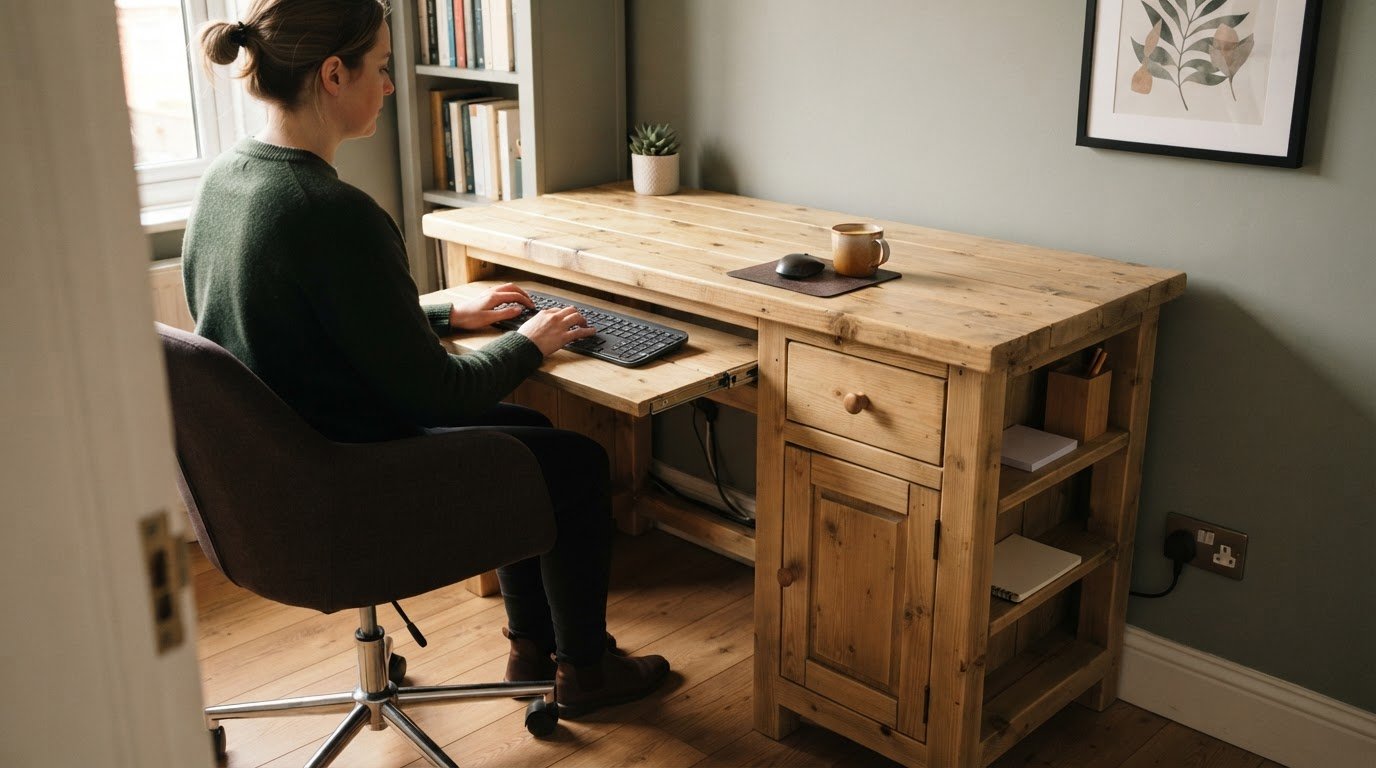
The Table Guy makes bespoke wooden furniture to order, with options including Prosecco Dining Tables, Farmhouse Tables, Bamboo & Hardwood Tables, and Scaffold Board & Pine Tables. If you’re considering a timber table for a particular space, you can discuss its dimensions, material and finish as part of the design.
For a conference space, first clarify how the room will be used and what you need from its furniture. The Table Guy’s bespoke approach may suit a project for a made-to-order timber table that reflects your preferred style. Share your requirements with The Table Guy to discuss whether its table range fits your brief.
Contact The Table Guy to talk through your furniture requirements.
Plan the next piece of your workspace
Once the conference room brief is settled, consider how adjoining spaces should feel. A consistent material palette can connect a workplace while allowing each room to serve its purpose. Choosing conference room table manufacturers in the UK is one part of the project; dining and breakout areas offer another opportunity to bring warmth and character to the wider setting.
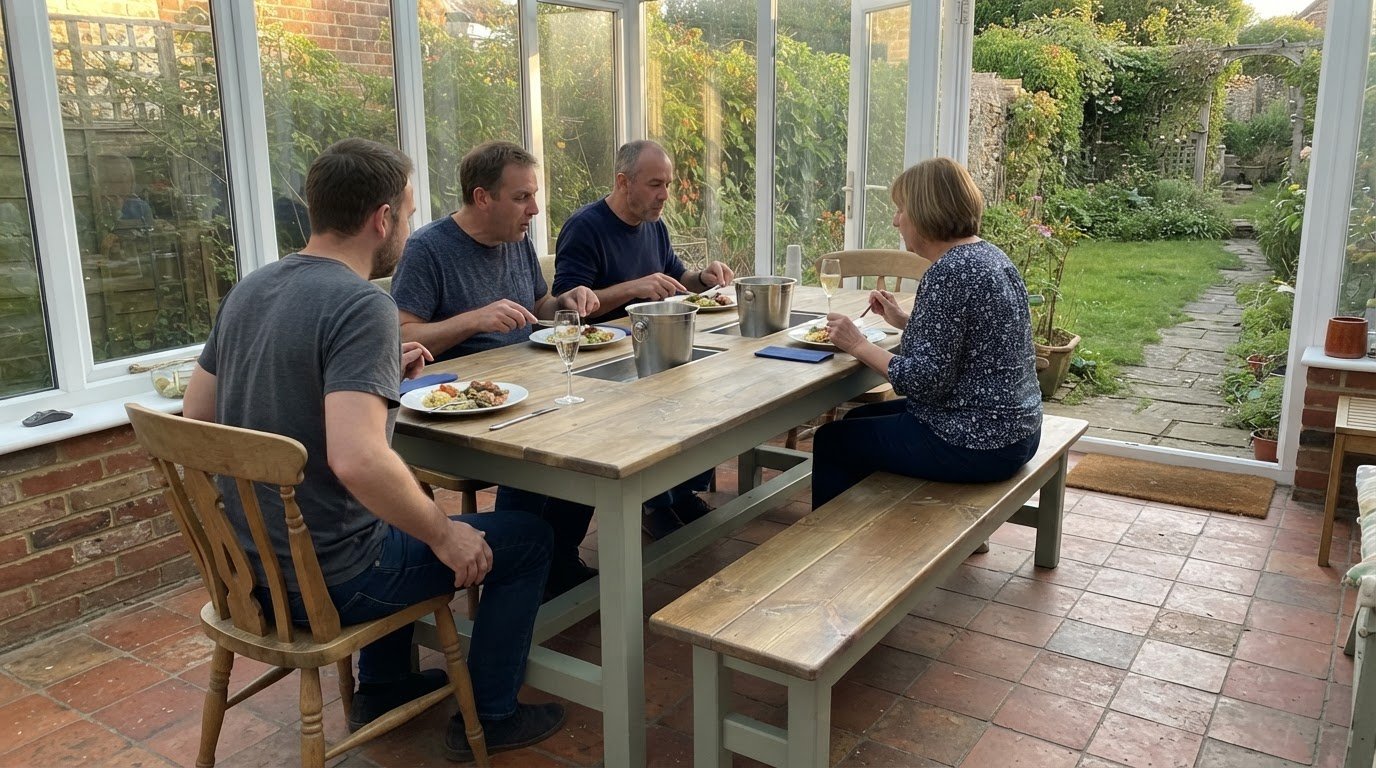
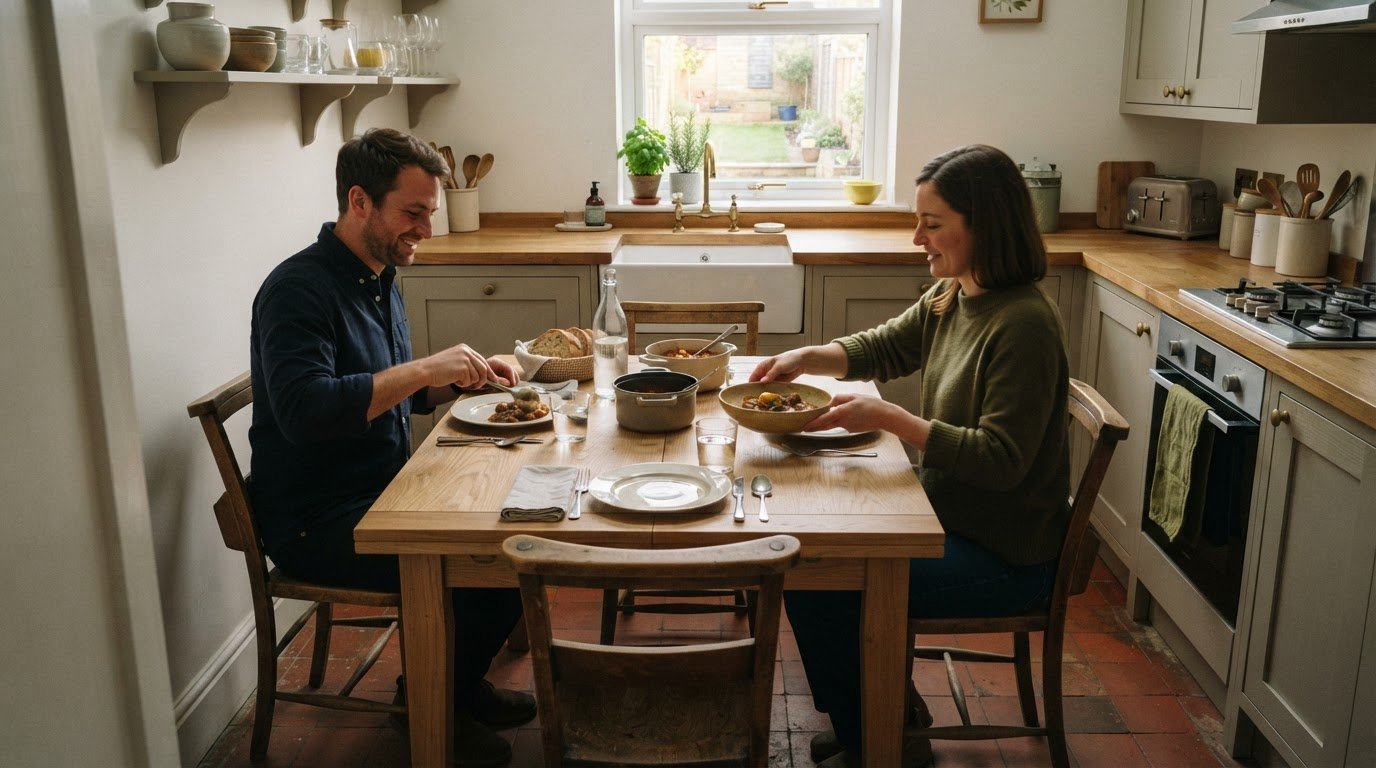
The Table Guy makes Prosecco Dining Tables, Farmhouse Tables, and Bamboo & Hardwood Tables to order. These timber options may suit dining or breakout areas where bespoke furniture complements the interior. Share the table’s intended role and the style you have in mind to discuss a design for the space.
Contact The Table Guy about your table and take the next step towards furniture that feels at home in your space.
Frequently Asked Questions
Which companies manufacture conference room tables in the UK?
UK businesses can approach specialist furniture makers or bespoke table makers, depending on their project. The Table Guy makes bespoke furniture and made-to-measure commercial tables, with timber choices including bamboo, hardwood and pine. This makes it a relevant maker to consider for a commercial furniture brief. Compare each maker’s materials, design approach and ability to respond to the room’s intended use.
What types and styles of conference tables do UK manufacturers offer?
UK makers offer styles ranging from formal boardroom tables to modular designs for changing layouts. A circular table can support face-to-face discussion, while a modular arrangement can adapt to different meeting formats. Choose a style according to how the room is used, the look you want and whether the furniture will stay in place or move between layouts.
Which UK conference table manufacturers make bespoke or custom-sized tables?
For a commercial project, look for makers who offer made-to-measure dimensions. The Table Guy creates bespoke furniture, including made-to-measure commercial tables. Set out the room’s purpose, preferred material and how people will use the table in your design brief. These details give the maker a clear basis for developing a proposal around the space.
Which UK suppliers offer conference tables for small, medium and large meeting rooms?
Makers with bespoke services can respond to different room sizes. In a compact room, preserving usable floor space may be the priority; a larger space may need a table that supports group discussion without making participants feel distant. Include the layout and typical meeting format in your brief to help assess whether a maker’s approach suits the room.
What materials and finishes are available for conference tables in the UK?
Conference tables can use materials such as veneer and glass, with finishes chosen to suit the room. Veneer tones include ash, oak and walnut. The Table Guy’s table range includes bamboo, hardwood, scaffold board and pine. When reviewing a proposal, distinguish the visible finish from the underlying material so both choices meet the project’s needs.
Where can businesses buy conference room tables from UK manufacturers?
Businesses can buy directly from a manufacturer or bespoke furniture maker, rather than relying solely on standard catalogue designs. The Table Guy makes furniture to order and delivers across the UK. For a commercial project, prepare the room plan, intended use and preferred materials before discussing the brief. This helps establish whether the maker’s furniture range fits the space and its requirements.
Comments