
Furniture That Lasts a Lifetime in the UK: A Practical Buying Guide
What if the best clue that furniture will last isn’t its finish, but what lies beneath it? Searching for furniture that lasts a lifetime in the UK can mean sorting through product descriptions that sound reassuring yet say little about materials, joints or how a piece will stand up to daily use.
It’s sensible to look beyond appearance. A table may be beautifully made, but it also needs to suit your room, household routines and the knocks of everyday life. Material, construction, design and care all play a part, and no single feature can promise that a piece will last forever.
This guide explains how to assess those details before you buy. Use the practical comparisons and checklist to match materials and construction to your space, routine and care expectations. The aim is to choose a piece that works well now and remains useful as your needs change.
Table of Contents
What Makes Furniture That Lasts a Lifetime in the UK?
Furniture intended for long use needs to suit its job, be well made and receive appropriate care. There’s no single material, finish or warranty that guarantees a lifetime of use. Longevity depends on how the piece is used, its material and construction, and how it is maintained. When comparing furniture that lasts a lifetime uk, these practical details matter more than a promise on a product page.
Start by picturing how the furniture will be used at home. A dining table used daily for meals, homework and gatherings has a different routine from one used occasionally. Household size matters, too. A busy family may need a generous, practical dining surface, while a smaller household might prefer a compact table that can adapt when guests arrive. Consider how the room is used now and whether that could change.
Room conditions also affect what will suit you. Furniture beside a sunny window, near a heat source or in a room used for cooking may need different care from a piece in a quieter space. Follow guidance for the specific material and finish, and account for everyday habits such as wiping spills promptly and moving furniture carefully. There is no universal working life: use, surroundings and care all make a difference.
Does “built to last” mean the same thing for every household?
It should mean that the piece is suited to the demands placed on it. An occasional-use table and a dining table that doubles as a work surface have different routines. Consider how many people will use it, what activities take place around it and whether those needs might change. This helps you choose furniture that remains useful, rather than relying on an assumed lifespan.
Why material alone cannot prove furniture quality
Hardwood may be a good choice, but the word alone tells you little about how a finished piece will perform. Construction, finish, proportions and intended use matter, too. Check that the design looks appropriate for its purpose and that visible parts appear carefully assembled. Then consider whether you can maintain the surface in your home. Solid wood also needs suitable design and regular care to stay in good condition.
Furniture’s working life depends on suitable use, material, construction and consistent care. Keep that principle in mind as you compare options. For a broader perspective on how furniture, its materials and its role in daily life have evolved, explore this overview of the history of furniture.
Assess each piece in context, not just by its material label or a product description. The same checks help you compare furniture that lasts a lifetime uk with the needs of your home and routine. The following sections look more closely at those decisions.
Compare Furniture Materials for Long-Term Everyday Use
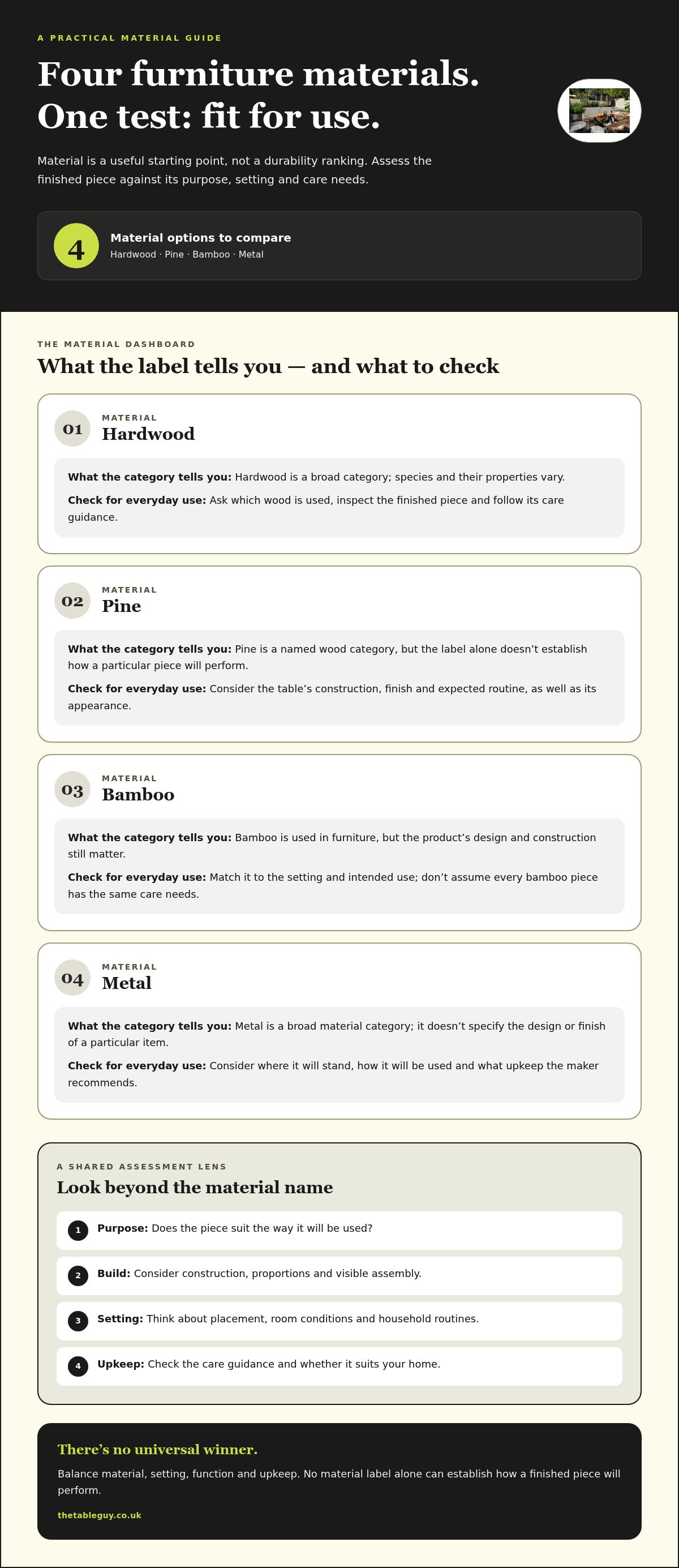
Material is a useful starting point, not a durability ranking. The same label can cover different species, designs and finishes, so judge the finished piece against its intended use and care needs. The Table Guy makes furniture in hardwood, bamboo, pine and metal, offering several material options to consider.
How should you compare hardwood, pine and bamboo furniture?
Compare the actual piece, not just the material name. Wood properties can vary by species and growing conditions, as Forest Research’s overview of wood properties explains. Look at the table’s proportions and finish, and consider whether its style and care requirements suit your household. For bamboo intended for an outdoor setting, explore bespoke bamboo garden furniture as a related option, while assessing the specific piece for its setting.
When might metal furniture suit long-term use?
Metal may suit a table’s design and setting, but the material label alone can’t tell you how it will fare in a particular room or routine. Consider its placement, function and maintenance guidance. Whatever the material, a well-proportioned piece that fits its purpose is more useful than one chosen on appearance alone.
Room conditions matter, too. A table in a sunny spot, near a heat source or in a frequently used dining area may need different care from one in a quieter part of the home. Check the maker’s care advice and think about spills, cleaning and how the furniture will be used each day.
There’s no universal winner for furniture that lasts a lifetime in the UK. Choose by balancing material, setting, function and upkeep. If dimensions are part of that decision, explore made-to-order table options to consider what could suit your room and routine.
Construction, Design and Warranties: What Really Signals Longevity?
Choosing hardwood alone doesn’t establish that furniture will last. The material still needs to be made into a piece that suits its purpose, sits securely and can be cared for appropriately. A product description may offer clues, but distinguish what you can assess from what depends on the maker’s claims.
Which construction details can a buyer assess?
Look closely at the finished piece, in person if possible, and consider how it will behave in everyday use. A dining table should feel stable and look evenly assembled. Its surface should have a consistent finish, without obvious rough or poorly finished areas. These observations won’t reveal every detail of construction, but they can help you judge the visible quality of the work.
Stability: Check whether the piece stands firmly on an even surface and feels steady when used as intended.
Alignment: Look at whether the legs, frame, doors or shelves appear straight and properly positioned.
Finish: Notice whether the visible surface and edges look consistent, and consider whether the finish suits your household’s routine.
Fit for purpose: Think about whether its proportions and design make sense for the tasks it will handle each day.
Product descriptions should clearly state the materials and construction being claimed. Specific information is more useful than broad phrases such as “built to last”. Treat claims about hidden details as claims, not visible proof, unless supporting information is provided. Don’t assume a particular joinery method or internal feature from a photograph or material label alone.
How should you read a furniture warranty?
Compare the stated duration, what the warranty covers and any exclusions or care conditions. A longer period may offer reassurance, but it doesn’t tell you how well a design suits your home or how it will respond to daily use. Read the terms rather than relying on a headline promise, and keep the care instructions alongside them.
A warranty sets out a defined promise; it isn’t a prediction of a product’s working life. Design matters as well as craftsmanship: pieces with balanced proportions and thoughtful function can remain useful as tastes change. The Victoria and Albert Museum’s furniture collection offers examples of design across different periods, showing how usefulness and considered form can both contribute to enduring appeal.
For shoppers searching for furniture that lasts a lifetime uk, weigh visible quality, clear product information, suitable design and realistic warranty terms together. Explore made-to-order table options when you’re considering dimensions and function tailored to your home.
A Practical Checklist for Choosing Furniture That Lasts
Use these five steps to turn a promising appearance into a considered choice. When assessing furniture that lasts a lifetime uk, keep your room, routine and care expectations in view as you compare pieces.
1. Define the use. Write down what the furniture needs to do on an ordinary day. A dining table might host meals, homework and occasional gatherings, while a coffee table has a different role and routine.
2. Measure the space. Record the available floor area, then allow room for chairs, doors and comfortable movement around the piece. Include access routes, so delivery and positioning are practical.
3. Compare materials. Consider the material alongside the room, intended use and care guidance. Look for a clear description of what the piece is made from rather than relying on broad labels or appearance alone.
4. Assess construction. Review visible details such as stability, alignment and finish, and compare any specific construction information in the product description. A material name by itself isn’t proof of quality.
5. Plan for care. Read the care guidance and warranty terms. Consider whether the recommended upkeep fits your household and whether the design can remain useful if your needs change.
How do you match furniture to your room and routine?
Picture the room in use before settling on a size or shape. Where will people sit? Can chairs be pulled out without blocking a doorway? Will the surface be used for work as well as meals? These details help you decide whether a compact table, a larger dining table or an extending format makes most sense. Made-to-order dimensions can help a piece fit the space and the way you plan to use it. If you’re considering a dining table, this custom farmhouse dining table guide explores the choices involved.
Which questions help compare long-term value?
As you browse, compare like with like. Note the material, the construction details described, the care instructions and the warranty’s duration, coverage and exclusions. Look beyond phrases such as “premium” or “built to last” for information that helps you judge suitability. Finally, consider whether the piece’s function and proportions could continue to work as your household routines evolve.
For furniture that lasts a lifetime uk, fit and function deserve as much attention as material and finish. Explore made-to-order furniture options to consider a table shaped around your room and routine, and make your shortlist with the everyday demands of your home in mind.
Made-to-Order Furniture for a Longer-Lived Home
A piece that fits its room and routine is more likely to stay useful as daily life changes. Made-to-order furniture is one way to consider dimensions and function around the space you have, whether you need a dining table that leaves room to move or storage that suits a particular part of the home. A better fit can help, but it doesn’t guarantee lifetime use. Material, construction and care still matter.
What can be tailored when furniture is made to order?
The Table Guy is a family-run UK furniture maker established in 2014, creating handmade, made-to-order furniture in its UK workshop. Its range includes farmhouse and hardwood tables, storage and table extensions, as well as bamboo, pine and metal furniture.
Start with what the piece needs to do. Consider the available floor space, how many people will use a table and whether you’d value extra surface area for gatherings. When dimensions and function are shaped around the room, the furniture can be a more considered fit for your home. That’s a practical advantage, not a promise about how long it will last. Assess the specific materials, construction information and care guidance as you would for any purchase.
An extension may be useful if your table needs to serve everyday meals and occasional larger gatherings. If adaptability matters, read this guide to extendable dining table design to explore the considerations involved.
How can you take the next step with confidence?
Before settling on a design, make a short list of what matters most. Compare it with the product details and your room measurements.
Use: What will the piece need to do each day?
Room fit: Will its dimensions leave enough space to move around and use it comfortably?
Material: Does the stated material suit the setting and your preferences?
Construction: What specific details are provided about how the piece is made?
Care: Can you follow the recommended maintenance over time?
That’s a grounded way to approach furniture that lasts a lifetime in the UK: choose for real-life use rather than treating “bespoke” or “made to order” as a guarantee of longevity. Explore the handmade furniture categories, consider which dimensions and function suit your home, and take the next step towards a tailored design.
Choose a Piece That Fits Your Home for Years to Come
Furniture that lasts a lifetime in the UK isn’t chosen by material name or warranty alone. Look at the whole picture: how you’ll use the piece, whether it fits your room, the construction details you can assess and the care it needs. A thoughtful fit can help furniture remain useful as household routines change.
Made-to-order dimensions offer one way to suit a real space and its everyday needs, but they don’t guarantee lifelong use. Compare the details, then choose with confidence.
The Table Guy is a family-run furniture maker established in 2014, producing handmade, made-to-order furniture in a UK workshop. Explore farmhouse tables, hardwood tables and storage, and consider which piece could work for your home.
Explore handmade, made-to-order furniture from The Table Guy and take the next step towards a well-considered choice. The right piece can become part of daily life for years to come.
Frequently Asked Questions
What type of furniture is most likely to last a lifetime?
No furniture type is guaranteed to last a lifetime; the best choice is well suited to its everyday use and properly cared for. Look for clear material and construction information, a stable design and dimensions that work in your room. A dining table used daily has different demands from occasional-use furniture, so judge each piece against your household’s routine rather than relying on a category label alone.
Does solid wood furniture last longer than other furniture?
Not automatically. Solid wood can be a suitable choice, but species, construction, finish, design and care all affect how a particular piece stands up to use. A well-made table in another material may suit your needs better than a solid wood option that doesn’t fit its purpose. Compare the specific furniture and its care guidance, rather than treating “solid wood” as proof of lasting quality.
Is bespoke furniture better for long-term use?
Bespoke furniture can be a good fit for long-term use if its dimensions and function suit your room and routines. A made-to-order dining table, for example, can be planned around the space available and how you expect to use it. That tailored fit may help it remain useful, but bespoke work doesn’t guarantee a particular lifespan. Assess its materials, construction details and care needs as you would any other piece.
How can I tell if a table is well made?
Look for visible signs of care and suitability: the table should stand steadily on an even floor, its parts should appear aligned, and the finish should look consistent. Consider whether its proportions suit its intended use, such as everyday dining or occasional entertaining. Read the product description for specific material and construction information, but don’t assume hidden features from a photograph or a broad claim like “built to last”.
Can furniture last a lifetime if it is used every day?
It can remain in use for a long time, but daily use makes suitability and care especially important. Choose a piece designed for the tasks it will handle, and consider the number of people using it and the conditions in the room. Follow the maker’s care guidance and respond promptly to spills or other mishaps. No material or design can promise lifetime use in every household.
How do I care for furniture so it lasts longer?
Follow the care instructions for the specific material and finish, as cleaning methods can differ between pieces. Use a soft cloth and suitable cleaning products, and avoid harsh treatments unless the maker recommends them. Wipe spills promptly, protect surfaces from hot items and take care when moving furniture. Regularly check that tables and other pieces remain stable, and address any change before it worsens.
Is a furniture warranty proof that it will last a lifetime?
No. A warranty describes a defined promise, so read its duration, coverage and exclusions rather than treating it as a lifespan guarantee. In the UK, “lifetime warranty” has no single legal definition, and the terms explain what the maker means by “lifetime”. A warranty can offer reassurance, but it doesn’t prove how long furniture will remain suitable for your home or replace careful selection and maintenance.


Comments