
Industrial Wood and Metal Dining Table: The Ultimate Guide to Bespoke British Craftsmanship
- Jezz Leazell
- Jul 18
- 13 min read
Updated: 5 days ago
Why does so much modern furniture feel like a temporary guest in your home rather than a permanent member of the family? You've likely felt the frustration of a wobbly, mass-produced flat-pack that promises style but delivers nothing but a headache. An authentic industrial wood and metal dining table shouldn't just be a surface for your dinner plates; it's a sturdy, hand-crafted statement of British heritage designed to withstand the chaos of daily life. We know the anxiety of wondering if a heavy steel frame will fit through a narrow doorway, or which timber actually suits your lifestyle. You want a piece that's built to last, especially as the cost of raw British steel continues to climb this year.
In this guide, we'll help you trade confusion for confidence as we explore the nuances of bespoke craftsmanship. You'll discover the real differences between characterful scaffold boards and refined hardwoods, alongside expert tips for maintaining your table for the long term. We're going to walk you through the entire design process, from selecting materials to final delivery, ensuring your custom piece becomes the true heart of your home. By the end, you'll have the expert knowledge needed to make a purchase that feels less like a transaction and more like a partnership with a master artisan.
Table of Contents
Defining the Industrial Wood and Metal Dining Table Aesthetic
The industrial design aesthetic isn't just a fleeting trend; it's a celebration of Britain's deep-rooted manufacturing history. At its heart, an industrial wood and metal dining table serves as a functional bridge between the gritty utility of the factory floor and the refined comfort of a modern home. This style doesn't try to hide its construction. Instead, it places the honesty of the materials front and centre. You won't find flimsy veneers or hidden staples here. You'll find heavy-duty British steel and timber that carries its own history through every knot and grain.
There is a beautiful visual tension at play in these pieces. The "cold" structural metal provides a rigid, architectural frame that contrasts perfectly with the "warm" organic nature of the wood. This balance makes the industrial look incredibly versatile for UK homes. It feels equally at home in a converted Victorian warehouse as it does in a contemporary new-build. We embrace what we call "raw character." Those little marks, weld splashes, and natural timber splits aren't flaws. They're the fingerprints of the artisan and the story of the material. They ensure that no two tables leaving our workshop are ever identical.
The Evolution of Industrial Style in British Homes
The journey from the factory floor to the dining room has been a steady one. Originally, industrial furniture was born out of necessity, using whatever scrap steel and timber was available to create something indestructible. Today, that ruggedness provides a neutral anchor for various interior palettes. Modern UK homeowners are increasingly moving away from the "throwaway culture" of mass-market retail, opting instead for honest materials that feel permanent. This aesthetic is particularly suited to open-plan kitchens, where a large, characterful table can define the dining area without making the space feel cluttered or overly formal.
Why Wood and Metal are the Ultimate Material Pairing
Beyond the look, there are significant structural benefits to this combination. A heavy, solid wood top requires a frame that won't bow or wobble over time. British steel provides that unwavering foundation, allowing us to create expansive surfaces like a 10-seater dining table without compromising stability. The contrast in textures also creates constant visual interest. You have the smooth, cool touch of the steel paired with the tactile, earthy grain of the timber. Unlike flat-pack alternatives, these materials are designed to age gracefully. If life happens and the wood gets a scratch, it can be sanded and refinished. It's furniture built to be used, loved, and passed down through generations.
Choosing the Right Timber: From Scaffold Boards to Solid Hardwoods
Selecting the perfect top for your industrial wood and metal dining table is a deeply personal decision that dictates the "soul" of your furniture. Timber is an organic material that reacts to its environment. In the UK, our homes experience shifting humidity levels as the seasons change. A poorly prepared board might bow or split when the central heating kicks in during October. We prevent this by ensuring every piece of timber is correctly seasoned and dried before it ever reaches our workshop floor. This preparation allows the wood to settle into its new life as a family heirloom without losing its structural integrity.
Scaffold Boards: The Rugged Choice for Industrial Lovers
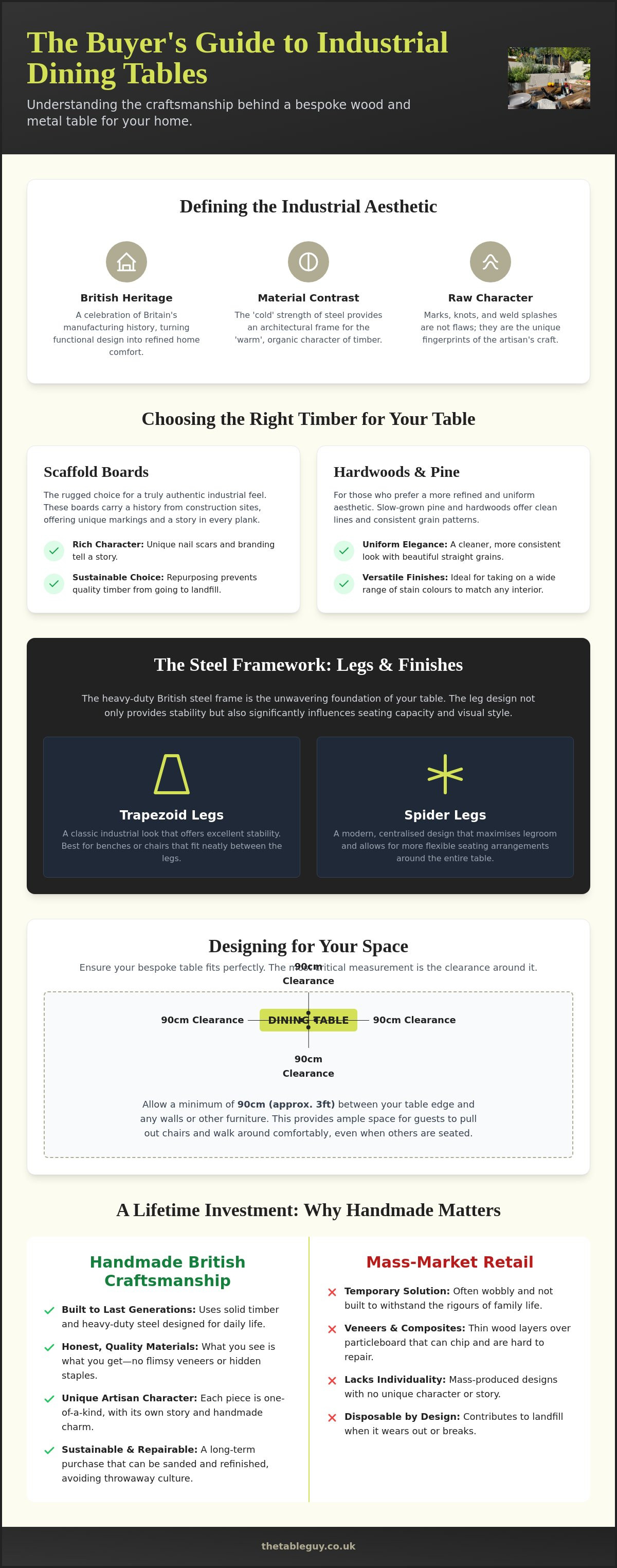
There is a unique story embedded in every scaffold board we use. These aren't just planks of wood; they are pieces of history that have weathered the British elements on construction sites across the country. You'll find unique markings, nail scars, and branding that give the table an immediate sense of "reclaimed" authenticity. We meticulously sand these boards to a smooth finish whilst preserving their rugged character, making them perfectly safe for a Sunday roast. Repurposing these boards is the ultimate sustainable choice for the eco-conscious buyer, as it prevents high-quality timber from heading to landfill.
Hardwoods and Pine: Selecting for Longevity and Grain
If you prefer a more uniform look, slow-grown pine is a fantastic option. It's a timeless material that offers a beautiful, straight grain and an incredible ability to take on different stain colours. Whether you want a deep, dark walnut finish or a light, airy oak tone, pine acts as a versatile canvas that adapts to your decor. For those seeking the pinnacle of durability, hardwoods like oak or bamboo offer a refined industrial finish. These species are naturally resistant to the dings and scratches of a busy family home, making them ideal for households with young children or pets.
Maintenance requirements vary across these species, but the core principle remains the same. A light application of wax or oil every few months keeps the grain hydrated and protected. This simple care ensures the wood remains supple enough to breathe amongst the fluctuating UK temperatures. Even the most beautiful timber needs a foundation built to professional metal fabrication standards to allow for this natural movement. Without a correctly engineered steel frame, the wood has nowhere to go. You can explore our full collection of Scaffold Board & Pine Tables to find the grain pattern and texture that speaks to you.
The Steel Framework: Selecting Metal Legs and Finishes
The framework of your industrial wood and metal dining table is far more than just a support system; it's the structural foundation that ensures your investment remains level and sturdy for decades. We use high-quality British steel, a material that has seen significant price shifts recently, with structural sections rising by roughly 35% in the months leading up to May 2026. This volatility makes the choice of a skilled fabricator even more critical. Cheap imports often cut corners on gauge thickness or weld penetration, leading to wobbles that no amount of floor-levelling can fix. A master welder, currently earning an average of £19.39 per hour in the UK, spends years perfecting the art of the clean, deep-penetrating weld. These joints are the silent heroes of your furniture, absorbing the weight of solid timber and the daily bustle of family life without ever flinching.
Leg Shapes and Their Impact on Seating Capacity
The silhouette you choose dictates how your guests interact with the table. A-frame legs offer a classic, balanced look, but they can sometimes restrict seating at the very ends of the table if the footprint is too wide. If you frequently host large gatherings, the "Spider" leg design is an iconic solution. By radiating from a central point, it offers maximum legroom and allows chairs to be tucked in at any angle. Trapezoid legs provide a mid-ground, offering a sleek, architectural profile that remains unobtrusive. Because we work on a made-to-order basis, we can adjust leg positions to accommodate your specific chair widths. This ensures nobody has to straddle a piece of cold steel during Christmas dinner.
Raw Steel vs Powder Coated Finishes
Choosing a finish is where you define the "temperature" of your room. Raw steel, finished with a clear protective coat, is the ultimate choice for those who love the gritty, unrefined look of the workshop. It proudly displays the heat marks and "blueing" from the welding process, making each frame a unique map of its creation. For a more contemporary "London loft" feel, black or anthracite powder coating provides a smooth, uniform surface that is incredibly hard-wearing. This process creates a protective barrier that is vital in high-moisture kitchen environments. It prevents the oxidisation that can occur over time, ensuring your Metal Tables stay pristine. Regular dusting and an occasional wipe with a damp cloth are all that's needed to maintain this protective layer against the rigours of a busy household.
Designing for Your Space: Bespoke Sizes and Seating Arrangements
Finding the right balance between a grand statement piece and a functional living space is the most critical part of the design journey. For a bespoke industrial wood and metal dining table to truly work, it needs room to breathe. We recommend a minimum clearance of 90cm between the edge of your table and the nearest wall or piece of furniture. This allows for chairs to be pulled out comfortably and for people to pass behind seated guests without a struggle. In many British homes, where space is often at a premium, getting these dimensions right is the difference between a room that feels curated and one that feels cramped.
How to Measure Your Room for an Industrial Centrepiece
Visualising a heavy steel and timber structure in an empty room can be difficult. We always suggest using masking tape on your floor to mark out the exact footprint of your potential table. This simple trick helps you feel the flow of the room before you commit to a size. Remember the "elbow room" rule: each guest requires at least 60cm of width to dine comfortably. If you have an open-plan living area, you might also want to consider a bespoke coffee table uk as a matching companion. Using the same timber and steel finishes across your space creates a cohesive, professional interior design look that ties the kitchen and lounge areas together seamlessly.
For those who love to host but don't want a massive permanent footprint, we can create Table Extensions. These clever additions allow you to transform a standard family surface into a grand 10-seater dining table for special occasions. They slide easily into the steel framework, providing the extra surface area you need without compromising the table's daily utility. It's also vital to consider the height of your existing chairs. Whilst most of our tables sit at a standard height, we can adjust the steel legs to match specific chair or bench requirements, ensuring your posture remains perfect throughout a long dinner party.
The Versatility of Benches vs Chairs
Seating choice significantly impacts both the look and the footprint of your dining area. Industrial benches are a fantastic space-saving solution because they can be tucked completely under the table whilst not in use. This keeps your walkways clear in narrower rooms. Benches also foster a more social, informal atmosphere, making them a favourite for families with children. However, you don't have to choose just one style. Many of our customers opt for a curated, non-uniform look by placing a bench on one side and a set of chairs on the other. This mix of textures and heights adds a layer of visual interest that feels intentionally designed rather than just bought from a showroom. To start planning your perfect layout, browse our range of Table Extensions and seating options to see what fits your lifestyle.
Why a Handmade British Industrial Table is a Lifetime Investment
We live in an era of disposable convenience. Much of the furniture found in high-street showrooms is designed for a single house move, after which the flimsy veneers and particle-board cores begin to fail. Choosing an industrial wood and metal dining table from a family-run workshop is a deliberate rejection of that throwaway culture. It is an investment in permanence. When you run your hand across a solid timber surface supported by heavy-duty British steel, you feel a level of stability that mass-produced alternatives simply cannot replicate. These pieces aren't just furniture; they are the anchors of a home, built to withstand the weight of a hundred Sunday roasts and the daily chaos of family life.
While these tables are built for the rigours of daily family life, they also provide a beautiful canvas for more formal gatherings; to find out how to style your space with elegant linens, read more.
Our "Passionate Artisan" approach means that every piece of material is treated with respect. We don't just assemble components; we curate them. Every knot in the timber is inspected for character, and every weld on the steel frame is hand-finished to ensure it meets our exacting standards. This meticulous attention to detail ensures that the structural integrity of the table matches its rugged aesthetic. By choosing a locally made piece, you are also making an environmentally responsible choice. You're supporting the preservation of traditional British skills and reducing the carbon footprint associated with global shipping. It's a partnership between the maker, the material, and the homeowner.
From Workshop to Home: The Bespoke Journey
There is a beautiful transparency in the bespoke making process. When you opt for a made-to-order table, you become a partner in its creation from the moment the timber is selected. This collaborative journey ensures that no two tables leaving our workshop are ever identical. Your table will have its own unique grain patterns, its own specific weld marks, and its own story. There is a profound sense of pride in owning a centrepiece that supports local craftsmen and keeps the heritage of British manufacturing alive in a modern context. It's a piece of furniture that feels personal because it was created specifically for you.
Caring for Your Investment
An industrial table is one of the few items in a home that actually improves with age. Unlike plastic or glass surfaces that look worse with every minor scratch, solid wood and steel develop a rich patina over time. Every mark and indentation adds to the story of the piece, allowing it to age gracefully alongside your family. Maintenance is simple and deeply rewarding. A seasonal application of high-quality wax or oil keeps the timber grain hydrated and protected against the dry air of UK winters. The steel framework requires nothing more than an occasional wipe with a damp cloth to maintain its protective finish. This minimal care ensures your investment remains the heart of your home for decades to come.
Explore our range of bespoke industrial dining tables and find the perfect foundation for your home's future memories.
Bring the Heart of the Workshop into Your Home
Investing in an industrial wood and metal dining table is about more than just filling a room; it's about creating a permanent space for your family to gather and grow. We've explored how the right timber choice, from the rugged history of scaffold boards to the refined elegance of hardwoods, can define your home's character. You now know that correctly engineered British steel provides a foundation that outlasts any mass-produced alternative. By following our practical clearance and seating guides, you can ensure your new centrepiece fits your space perfectly without the usual guesswork.
Since 2014, our family-run business has prioritised quality over convenience. Every piece is hand-crafted in our UK workshop with the meticulous care of a passionate artisan. We don't believe in one-size-fits-all solutions because we know every home has its own unique story. That's why custom sizes and finishes are available on all orders, ensuring your table is as individual as you are. It's time to trade temporary furniture for a piece of British heritage that ages gracefully alongside your family.
Create your perfect industrial dining table with The Table Guy. We look forward to building something special with you.
Frequently Asked Questions
How do I clean an industrial wood and metal table without damaging the finish?
Clean your table with a slightly damp, lint-free cloth and a drop of mild washing-up liquid if necessary. Avoid abrasive sponges or harsh chemical sprays that might strip the protective wax or powder coating. For the wooden top, a light re-application of furniture wax every six months will maintain the water-resistant barrier and keep the grain looking vibrant. This simple routine protects both the timber and the steel from daily wear.
Will a bespoke industrial table be delivered fully assembled or in parts?
Most bespoke tables are delivered with the legs detached to ensure they can navigate narrow British hallways and doorways safely. Assembly is a straightforward process that typically requires only a few bolts. This approach protects the structural integrity of the steel frame during transit and allows you to position the table exactly where you want it without struggling through tight spaces or risking damage to your walls.
What is the best wood type for an industrial dining table if I have young children?
Hardwoods like oak or bamboo are the most resilient choices for families with young children due to their high density and scratch resistance. Whilst a pine industrial wood and metal dining table offers a beautiful rustic look, it is a softer timber that may pick up "life marks" more easily. If you choose pine, a darker stain can help disguise the occasional dent from a dropped toy or heavy cutlery.
Can I customise the height of my industrial table for use with bar stools?
We can certainly customise the height of your table to match bar stools or specific kitchen island dimensions. Standard dining height is approximately 75cm, but we frequently fabricate steel legs to "bar height" or "counter height" specifications. Simply provide your stool measurements during the design phase, and we'll ensure the legroom and surface height are perfectly balanced for your comfort and posture.
How do I prevent the metal legs from scratching my hardwood or tiled floor?
Every metal frame we produce can be fitted with heavy-duty felt pads or plastic glides to protect your hardwood or tiled floors. These subtle additions create a protective buffer between the British steel and your flooring, allowing you to move the table slightly if needed without leaving a mark. We recommend checking these pads periodically to ensure they remain free of grit or debris that could cause friction.
Is the wood used in your industrial tables sustainably sourced?
Sustainability is at the core of our workshop, with our scaffold boards being entirely reclaimed and repurposed from the construction industry. For our other timber options, we only use wood sourced from suppliers who adhere to strict environmental standards. This ensures that your furniture supports responsible forestry practices whilst reducing the volume of high-quality timber that typically ends up in UK landfills.
What happens if I spill red wine or grease on the rustic wood surface?
Blot spills like red wine or grease immediately with a clean, dry cloth to prevent the liquid from penetrating the wood grain. Because we finish our tables with high-quality oils or waxes, the surface has a natural resistance to short-term exposure. If a stain does take hold, the beauty of solid timber is that it can be locally sanded and re-waxed without requiring a full replacement of the tabletop.
How long does a bespoke industrial dining table typically take to manufacture?
A bespoke industrial wood and metal dining table typically takes between four to six weeks to manufacture in our UK workshop. This timeframe allows us to source the specific timber, fabricate the steel framework to your dimensions, and apply the necessary hand-finished coatings. We'll always keep you updated on the progress of your order as it moves from the welding bench to the final quality inspection.


Comments