
Walnut Table Guide: Choose the Right Grain, Shape and Finish
What if the walnut table that catches your eye online feels too dark, too large or too delicate for everyday life? A search for “table walnut” can bring up very different tones, grain patterns and designs, so look beyond the first impression.
Colour is only one consideration. The shape needs to suit the room and the way you gather, while the finish should fit your daily routine. Product descriptions may not show the table’s true proportions or make it clear whether the surface is solid wood or veneer.
This guide explains what to look for in walnut grain, how construction affects a table’s appearance and which measurements to take before choosing a design.
We’ll also cover practical finish and care considerations. The Table Guy makes bespoke hardwood furniture to order, so you can use the look you love, along with your room measurements and seating needs, as a starting point for planning a table.
Table of Contents
What makes a walnut table distinctive in a dining or living space?
How do walnut construction and finishes affect a table’s look and use?
Walnut table versus other wood choices: what should you compare?
How do you choose the right walnut table size, shape and placement?
Plan a bespoke hardwood table around the walnut look you love
What makes a walnut table distinctive in a dining or living space?
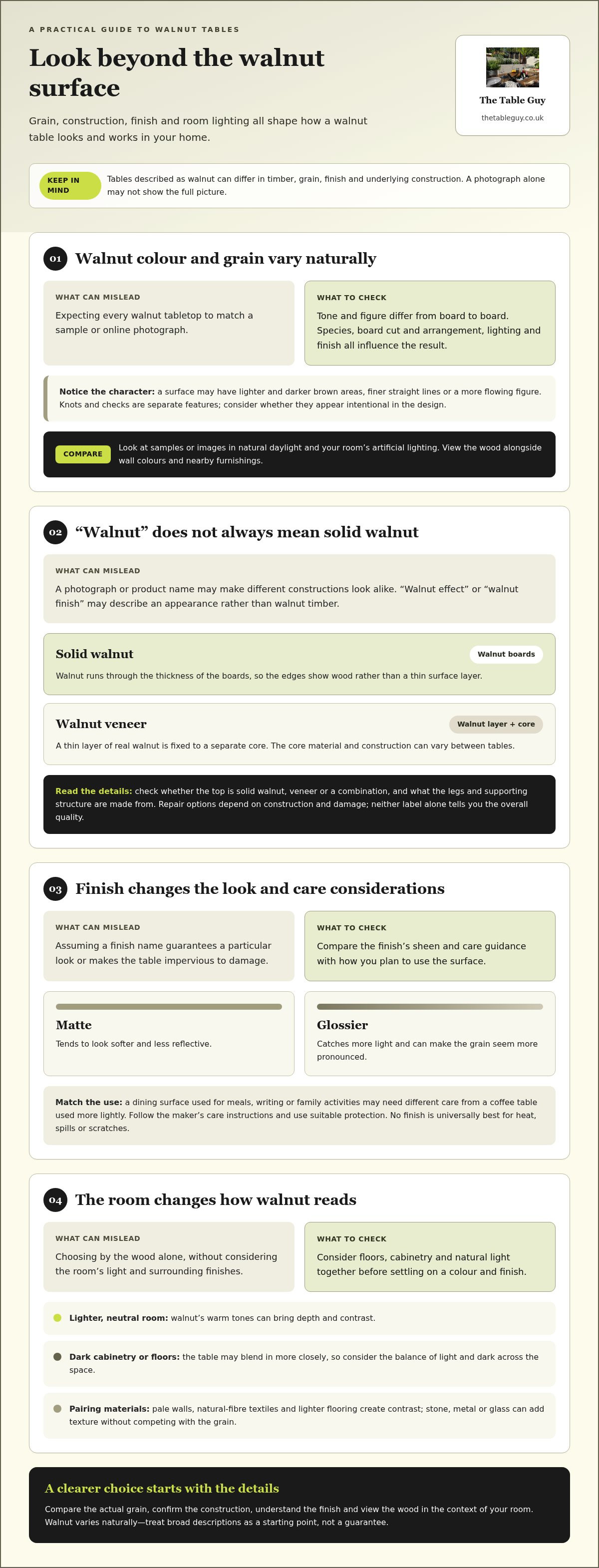
A walnut table is made with walnut timber, valued for its naturally varied grain and warm brown colouring. Lines, figure and tone differ from board to board, giving each tabletop its own character rather than a uniform, printed pattern.
Walnut is a broad name for wood from different species. Black walnut (Juglans nigra), for example, is commercially important for its deep-brown wood. The shade and grain of an individual table also depend on the species, how the boards are cut and arranged, the room’s light and the finish.
How do walnut colour and grain vary?
A tabletop may combine lighter and darker brown areas, fine, fairly straight lines or a more pronounced, flowing figure. These variations are part of the timber’s natural character, not automatically signs of damage or poor workmanship. Knots, checks and other marks are separate features. Judge them in context and consider whether they appear to be an intended part of the design.
Board selection and orientation affect the overall effect. Boards placed side by side can create a gently varied surface, while the direction of the grain can make the top feel calm and linear or more visually expressive. Don’t expect every walnut table to match a sample or photograph exactly.
If possible, compare samples or images in natural daylight and your room’s artificial lighting. A warm bulb can make brown tones feel richer, while cooler daylight may reveal more contrast. Look at the wood alongside your wall colour and nearby furnishings before settling on a finish.
Which rooms and interiors suit a walnut table?
Walnut’s warm tones can bring depth to a light, neutral room. Pale walls, natural-fibre textiles and lighter flooring create contrast, while stone, metal or glass can add texture without competing with the grain. In a room with dark cabinetry or floors, the table may blend in more closely, so consider the balance of light and dark across the space.
Walnut can suit both traditional and contemporary interiors. In a classic setting, its grain can complement familiar materials and considered details. In a modern room, it can soften clean lines and restrained finishes. The right pairing depends on the atmosphere you want, not a fixed style rule.
View your floors, cabinetry and natural light together before choosing. A made-to-order hardwood table can be planned around your room’s proportions and the wood character you prefer. Search results for “table walnut” can provide inspiration, but compare the actual colour, grain and finish rather than relying on the label alone.
How do walnut construction and finishes affect a table’s look and use?
Two tables described as walnut may be built differently. Understanding the construction helps you look beyond the product photograph and decide what suits your priorities, from the visible grain to the surface’s care needs.
Is a solid walnut table different from walnut veneer?
Solid wood means the table is made from walnut boards, while walnut veneer is a thin layer of walnut fixed to a separate core. Veneer can show real walnut grain, but the table’s underlying construction is different. The surface appearance depends on the timber, how the veneer is selected and arranged, and the finish.
Solid timber carries walnut through the thickness of the boards, so the edges show wood rather than a thin surface layer. Veneer uses less walnut at the surface and can show an attractive grain, though the core material and construction vary between tables. Repair options depend on the construction and the damage: a solid timber surface and a veneered surface may not respond in the same way to sanding or repairs. Neither label alone tells you the overall quality.
Read product descriptions carefully. Look for whether the top is solid walnut, walnut veneer or a combination, and check what the legs and supporting structure are made from. Photographs can show colour and style, but they can’t reliably confirm construction. “Walnut effect” or “walnut finish” may describe an appearance rather than walnut timber.
Which finish suits the way you use a walnut table?
The finish affects how the grain and colour appear, as well as the surface’s sheen. A matte finish tends to look softer and less reflective; a glossier finish catches more light and can make the grain seem more pronounced. The result also depends on the timber beneath it, so finishes with similar names may not look identical.
Consider how you’ll use the table. A dining surface used for meals, writing or family activities may need different care from a coffee table used more lightly. No finish is universally best for heat, spills or scratches. Follow the maker’s care instructions for the particular surface and use suitable protection rather than assuming the finish makes the table impervious to damage.
Compare construction, finish and care guidance together when choosing a table walnut style. If you’re considering a made-to-order hardwood table, explore bespoke hardwood table design as a way to plan the proportions and practical details around your home.
Walnut table versus other wood choices: what should you compare?
Compare woods by the character you want in the room, not by a universal “best” ranking. Walnut is often chosen for warm brown tones and expressive grain, while oak, pine and bamboo each bring a different visual feel. Species, board selection, finish and lighting all influence the result, so treat broad descriptions as a starting point rather than a guarantee.
Use this guide to focus your comparison on appearance and atmosphere. Check the specific material and finish before deciding, as colour and grain can vary between tables.
Walnut or oak: which visual character fits your room?
Walnut may create stronger contrast against pale floors or walls, while oak can sit closer to lighter, natural schemes. Both woods vary, so compare actual samples with your flooring, cabinetry and existing furniture rather than relying on a broad colour label. Consider whether you want the table to blend into the room or become its visual anchor. For a farmhouse setting, our guide to bespoke farmhouse dining tables offers another design perspective.
Walnut or pine: what changes in the overall look?
Pine often looks lighter and has noticeable knots, while walnut tends towards a deeper brown impression. The finish can shift the appearance of both: a clear or lightly coloured finish may reveal the timber’s natural character, while a tinted finish can change the contrast. Explore our guide to choosing between oak and pine tables for a closer look at those alternatives.
Bamboo is another option if you’re drawn to a more linear grain effect. Consider how its pattern will sit beside other materials in your room, not just how it looks on its own. A close-up sample can help you judge the surface character.
Keep material and workmanship separate in your decision. Wood influences colour and grain, but a specific table’s construction, joinery and finish also shape its overall quality and suitability. For a table walnut search, look past the timber name and compare the full description, proportions and details of the piece.
How do you choose the right walnut table size, shape and placement?
A table can look perfectly proportioned in a photograph and still crowd your room. Plan the layout before choosing a design: measure the available space, map where people will sit, check routes around the table, then settle on a shape. This helps you judge how the table will function, not just how its walnut grain will look.
What measurements should you take before choosing a table?
Start with the area the table could occupy, then account for the chairs. Allow room to pull them out and for people to sit down and stand up. Mark the proposed tabletop footprint on the floor with masking tape or paper, then position chairs around it. Walk through the room as you normally would. Are the routes still comfortable?
Check doors as they open, walkways, radiators and nearby furniture such as sideboards or kitchen units. Note any fixed features that limit placement. Measure the table’s stated length and width, and check whether the dimensions include an overhang or extensions. If the table extends, map both its everyday size and its fully extended footprint.
Which table shape works best for your layout?
Rectangular tables can make good use of longer rooms and align with the room’s main direction. Round tables have no corners, which can help soften a compact layout and bring diners around a shared centre. Square tables can suit a balanced room, but their footprint may feel less flexible in a narrow space. These are starting points, not fixed rules. Check each shape against the room’s proportions and available routes.
Seating capacity depends on the tabletop dimensions and chair width, as well as the position of legs or a central base. Sketch the chairs in place rather than relying on a stated seat count alone. If you need extra places at times, read our guide to extendable dining tables for ideas on flexible seating.
Use your floor plan to compare options, then check the exact dimensions and extension details in the table description. A “table walnut” search may help you find a look you like, but fit depends on measurements and how the space needs to work day to day. For a hardwood table planned around your room and seating needs, start planning your bespoke table.
Plan a bespoke hardwood table around the walnut look you love
A made-to-order table starts with how you want it to work in your home. If walnut’s warm colour and natural grain appeal to you, use those qualities to describe the look you’re drawn to, alongside the practical details that will shape the design. A clear brief brings appearance, proportions and everyday use into the same conversation.
What should you decide before planning a bespoke table?
Gather the essentials first. Note the room’s measurements, space for chairs and walkways, and how many people you usually seat. Then consider the table’s main purpose: family meals, occasional entertaining, working from home or a mix of uses. These priorities can influence the dimensions and overall shape.
Room: Record the usable floor area and any features that affect placement.
Shape: Decide whether a rectangular, round or square outline best suits the room.
Seating: Include your chairs and consider how often you need additional places.
Wood character: Describe the tone and grain you like, such as the warmth or visual movement that drew you to walnut.
Be specific about what matters most. If clear walkways are essential, prioritise a footprint that leaves room to move before settling on a larger tabletop. If the wood’s appearance is your main inspiration, collect reference images and note what appeals to you: the depth of colour, the grain direction or the overall feel. A search for “table walnut” can offer visual ideas, but your room measurements should lead the brief.
How can handmade hardwood furniture feel personal to your home?
Made-to-order design lets dimensions and details be considered in relation to your room and routine, rather than asking you to fit your home around standard proportions. A dining table for a narrower space, for example, may need a different balance of length, width and seating layout from one planned for a more open room. Those choices shape how the table sits within the space and how people gather around it.
Hand-crafted furniture also reflects the character of its materials and the decisions made during its creation. The Table Guy is a family-run maker established in 2014, creating bespoke hardwood tables to order. Share your measurements, preferred shape, seating needs and wood references to give the design a thoughtful starting point.
Explore The Table Guy’s bespoke furniture for handmade, made-to-order pieces shaped around considered design choices.
Choose a table that feels at home
The right walnut table brings together more than a favourite colour or grain. Consider how the wood’s natural variation will sit with your room, distinguish solid timber from veneer, and choose a finish whose care requirements suit your routine. Then measure the space, include chairs and walkways, and select a shape that supports the way you gather.
A search for “table walnut” can spark ideas, but clear measurements and preferences will help you plan a table that works in your home. Note the proportions you need, the seating you use and the wood character you’re drawn to. These details give a made-to-order design a useful starting point.
The Table Guy is a family-run furniture maker, established in 2014, crafting furniture to order, including bespoke hardwood tables. Explore The Table Guy’s bespoke furniture and take the next step towards a considered, handmade piece shaped around your home. Start planning your table by sharing the proportions, seating and wood character that matter to you.
Frequently Asked Questions
Is walnut a good wood for a dining table?
Walnut can be a good choice if you’re drawn to warm brown tones and naturally varied grain. Whether it suits your dining room depends on the look you want and how you’ll use the table. Compare its construction and finish, and read the care guidance before deciding. Natural variation means the finished table’s colour and markings may differ from a photograph or sample.
Does a walnut table scratch easily?
Scratch resistance depends on the table’s construction, finish and daily use, so walnut tables won’t all behave alike. Reduce the risk of marks by using coasters and protective mats where appropriate, and follow the maker’s care instructions. Wipe spills promptly. Grain and sheen can affect how visible small marks appear, but repair options vary by surface, so don’t assume every table can be treated in the same way.
How do you clean and care for a walnut table?
Follow the care instructions for your table’s specific finish. As a general starting point, use a soft cloth and avoid harsh cleaners or excess moisture unless the maker advises otherwise. Wipe spills promptly, and protect the surface from hot items and scratches with suitable mats or coasters. Unsure about a cleaning product? Use it only if the maker’s guidance permits, and follow any testing advice provided.
What is the difference between solid walnut and walnut veneer?
Solid walnut uses walnut timber through the relevant wooden components, while walnut veneer is a thin layer of walnut attached to a supporting core. Both can show real walnut grain, but they describe different constructions and may have different care or repair considerations. Read the product description closely for the materials used in the top and base. Photographs alone can’t reliably show whether a surface is solid timber or veneer.
Can a walnut table suit a modern interior?
Yes, walnut can work well in a modern interior. Its warm tones and natural grain can balance simple shapes, pale colours and contrasting materials such as metal or stone. The overall effect depends on the table’s form and finish, as well as the room around it. Compare the table’s colour with your flooring and existing furniture in daylight and artificial light before choosing.
How do I choose the right size walnut table?
Measure the available floor space, then account for chairs, doors and clear routes around the table. Consider how many people usually sit together and whether you need extra seating for occasional gatherings. Check the stated dimensions and any extension measurements in the product details. If “table walnut” is your search, use the preferred look as a starting point, then let the room measurements guide your size choice.
Is walnut better than oak for a table?
Neither wood is automatically better. Walnut and oak offer different colours and grain patterns, and the right choice depends on your room and preferences. Compare samples or reliable product images alongside your floor and existing furniture. Also consider the particular table’s construction, finish and care instructions rather than relying on broad claims about durability. Look at the whole piece, not just the name of the timber.